
Looking for US figures? See our US guide: How Many Solar Panels Do I Need to Power My Home?
Summary
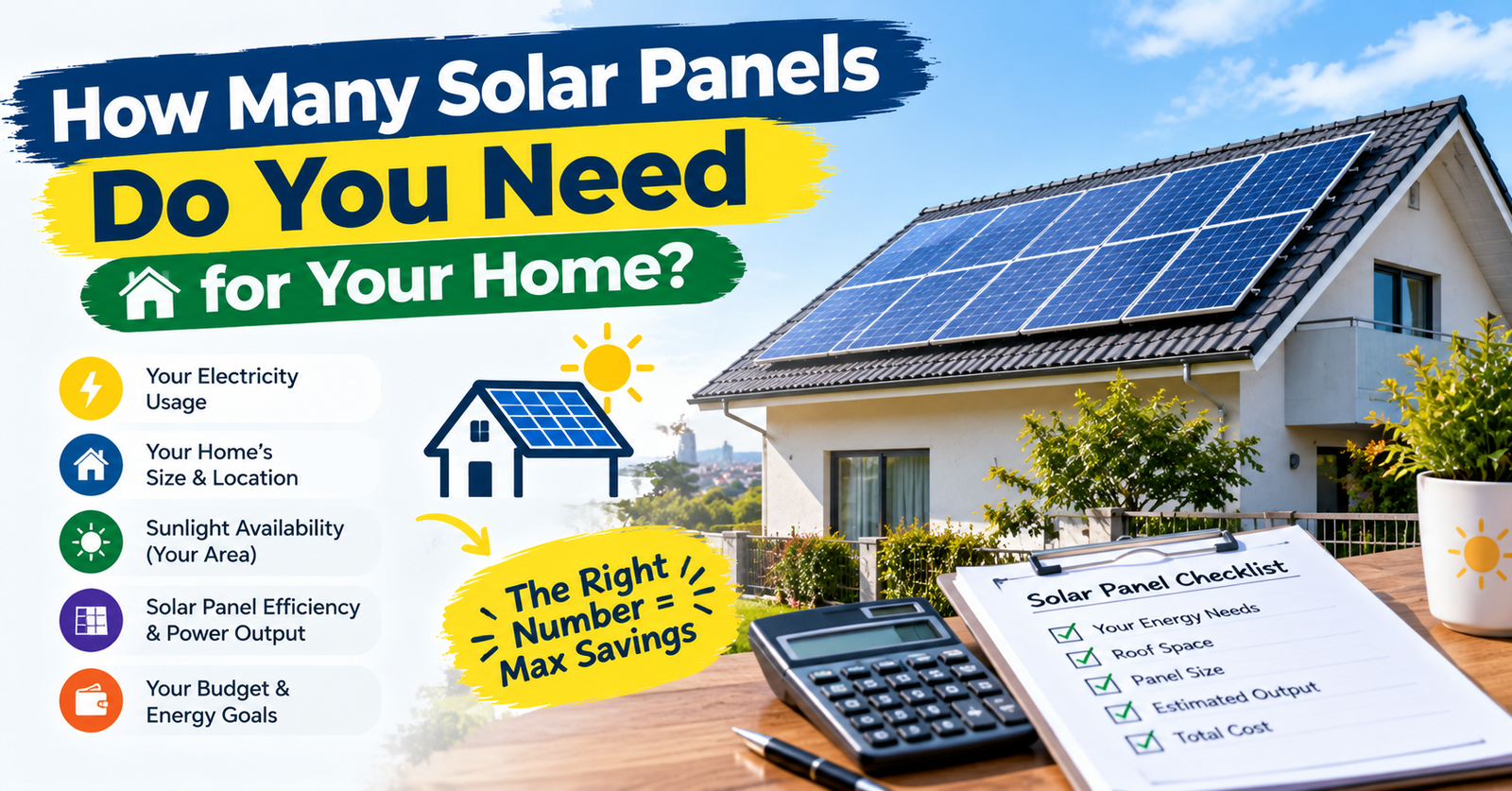
The number of solar panels your home needs depends mainly on how much electricity you use, how much sunlight your roof receives, and the wattage of the panels you choose. Most homes do not need a fixed number — they need a system size in kilowatts, worked out from real electricity bills, and then converted into panels. This guide shows you that calculation step by step, with a worked example, so you can check any installer’s proposal with confidence.
What determines how many solar panels you need?
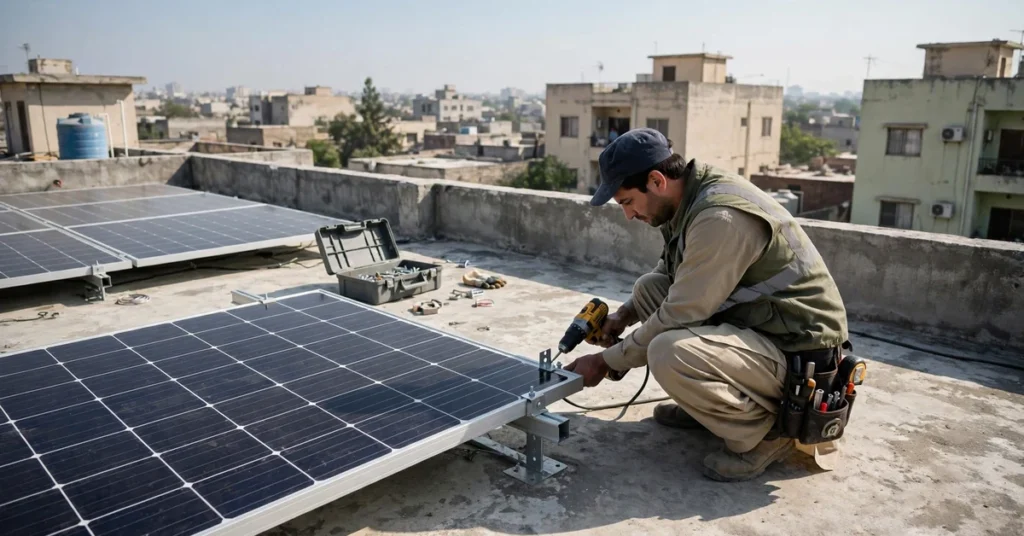
Four things decide the answer: your electricity use, your local sunlight, your roof, and your goal. A home that uses a lot of electricity, or wants to cover most of its bill, needs a larger system than a home that only wants to reduce daytime grid use.
Start with your electricity use, because that is the one figure you can measure exactly. Your bills, or your meter readings, tell you how many kilowatt-hours (kWh) you use in a month or a year. Everything else in sizing is an estimate, but this part does not need to be guessed.
Your goal matters just as much. Covering 100% of your annual use, covering only daytime use, or preparing for a future electric car or battery will each give a different system size. Be clear about the goal before you accept a number of panels from anyone.
How do you calculate how many solar panels you need?
You can work this out in four steps, using only your bill and a little basic maths. No special software is needed for a first estimate, although a professional survey should confirm the final design.
- Find your annual electricity use. Add up 12 months of bills, in kWh. If you only have monthly bills, multiply a typical month by 12, but note that summer and winter use can differ a lot.
- Divide by the number of good sun hours in your area. Solar installers and local solar maps often give an average of peak sun hours per day. Multiply that by 365 to get a yearly figure, then divide your annual use by it. The result is roughly the system size you need, in kilowatts (kW).
- Allow for real-world losses. Panels, inverters, wiring, dust, heat and shading all reduce output. A common planning allowance is around 15 to 20 percent extra capacity, but your installer should explain the exact allowance used in your quotation.
- Divide the system size by the wattage of one panel. If your system needs to be 5,000 watts and you choose 400-watt panels, you need about 13 panels (5,000 divided by 400 is 12.5, rounded up).
Here is a worked example, clearly labelled as an example rather than a rule. Suppose a home uses 9,000 kWh in a year, in an area averaging 4 peak sun hours a day. That is 9,000 divided by (4 × 365), which is about 6.2 kW before losses. Allowing roughly 20 percent for losses gives about 7.4 kW. With 400-watt panels, that is about 19 panels. Change any one input — lower use, more sun, or higher-wattage panels — and the panel count changes too.
How much roof space do solar panels need?
Each residential panel is roughly 2 square metres, so a useful planning figure is about 2 square metres per panel, plus space for access and gaps around the edges. A 19-panel system therefore needs roughly 38 square metres of usable roof, not just 38 square metres of roof in total.
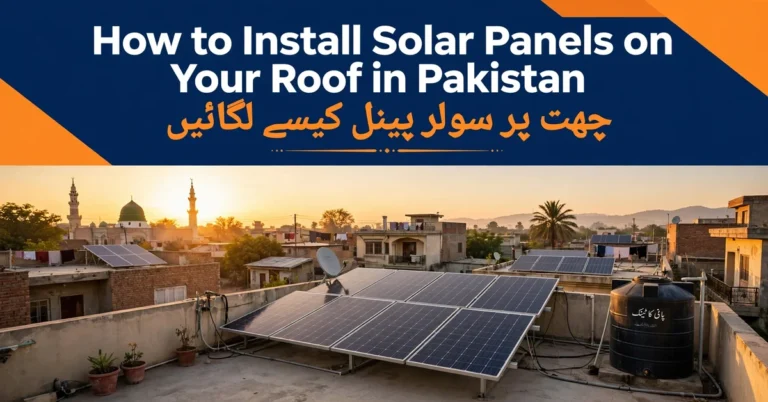
Usable roof is smaller than total roof. Chimneys, vents, skylights, parapets and walkways all take space. A roof that looks large from the street may have only part of its area suitable for panels. This is why a roof survey, with measurements rather than a satellite guess, is worth having before you commit. See also our guide on how to install solar panels on your roof.
If roof space is tight, higher-wattage panels can help, because they produce more power from the same area. They usually cost more per panel, so compare the total system price, not just the panel count.
Does shade, roof direction or tilt change the number?
Yes, and sometimes by a lot. Shade is the biggest single factor after electricity use. Even partial shade on one panel can reduce the output of a whole string of panels unless the system uses optimisers or microinverters, which let panels work more independently.
Roof direction matters because panels facing away from the sun for most of the day produce less. In the northern hemisphere, south-facing roofs generally perform best, while east- and west-facing roofs can still work well, especially if your main electricity use is in the morning or evening. In the southern hemisphere, the pattern is reversed. A good installer will model your exact roof, not just assume a perfect direction.
Tilt matters less than direction, but a very flat or very steep roof still produces less than a roof tilted towards the sun. If your roof direction or tilt is not ideal, the honest fix is usually a slightly larger system, not a promise that the same number of panels will perform the same.
Do you need more panels if you add a battery or an electric car?
Usually, yes — but for different reasons. A battery does not create electricity; it stores what your panels produce during the day for use at night. If you want the battery to cover a large share of your night-time use, you need enough daytime surplus to charge it, which often means a larger panel array. Read our lithium battery buying guide before choosing storage.
An electric car is simpler to size for, because you can estimate its extra electricity use. Work out roughly how many kilometres you drive, how much electricity the car uses per kilometre, and add that to your annual household use before running the calculation above. Adding a car after installation, without adding panels, usually means a larger share of charging comes from the grid.
Practical tip: if a battery or car is likely within the next two or three years, tell your installer now. It is cheaper to leave room for extra panels, and to choose an inverter that can handle them, than to redesign the system later.
Grid-connected vs off-grid: does the answer change?
Yes, fundamentally. A grid-connected home can use the grid as a backup, so the system can be sized for average annual use and shortfalls are covered by imports. Most homes in this guide fall into this category.
An off-grid home has no backup. It must be sized for the worst period — usually winter, with short days and higher use — and it needs enough battery storage for cloudy days. That almost always means more panels and a much larger battery than a grid-connected home of the same size. Never use a grid-connected sizing rule for an off-grid home, and be cautious of any quotation that does.
Also check your local rules. Some areas limit how much solar you can connect, how much you can export, or how you are paid for exported electricity. Those rules change the value of oversizing, even if they do not change the maths of how many panels fit on your roof. Our net metering vs net billing guide explains how export rules affect value.
What are the most common solar sizing mistakes?
The most common mistake is sizing from a rule of thumb instead of your own bill. Two homes of the same size can use very different amounts of electricity, depending on heating, cooling, cooking, water heating and the number of people living there.
- Using one sunny month to size the whole year. A system sized only for summer will underperform in winter.
- Ignoring shade that appears later in the day. Trees, neighbouring buildings and even a chimney can shade panels in the afternoon, when output should be highest.
- Forgetting future changes. A new air conditioner, a home office, a heat pump or an electric car can all change your use within a year or two.
- Chasing the lowest panel count. Fewer, larger panels can be fine, but a system that is too small will not meet the goal you set, and adding panels later is not always straightforward.
- Accepting a proposal without the maths. Ask for your annual use, the assumed sun hours, the loss allowance and the panel wattage in writing. If those four figures are not shown, you cannot check the result.
How much does system size affect cost?
System size is the main driver of cost, but it is not the only one. Panel quality, inverter type, mounting, wiring, battery storage and labour all affect the total. Comparing quotations by panel count alone is therefore misleading — compare the total system size in kW, the exact equipment listed, the warranty terms, and what is included in the price. Start with our solar panel price guide to compare equipment on a like-for-like basis.
As a general principle, larger systems cost more in total but often cost less per kilowatt, because fixed costs such as design, scaffolding and inverter installation are spread over more panels. That does not mean bigger is always better. A system larger than your use, in an area where exported electricity earns little, may take much longer to pay for itself. The right size is the one that matches your use, your roof and your local export rules — not the largest system that fits.
When should you get a professional survey?
Get a survey before you pay a deposit, not after. A survey should measure your roof, check its structure and shading through the day, look at your meter and main electrical panel, and confirm how your home connects to the grid. It should end with a written proposal showing the calculation described above.
Be cautious if a seller will only quote from a satellite image, will not visit, or pressures you to sign the same day. Solar panels last for decades, so a few days spent checking the proposal is time well spent. If two installers give very different panel counts for the same home, ask each one to show their working — the difference is usually in the assumed sun hours, the loss allowance, or the goal they sized for.
Frequently asked questions
How many solar panels do I need for a 3-bedroom house?
There is no fixed number. It depends on how much electricity that house uses, which varies widely. Run the four-step calculation from your own bills, or ask an installer to show their working, rather than trusting a bedroom-based rule.
Can I start small and add more panels later?
Often yes, but it depends on your inverter, roof space and local connection rules. Tell your installer at the start if you plan to expand, so the system is designed with room to grow.
Do solar panels work on cloudy days?
Yes, but they produce less than on clear, sunny days. That is why sizing uses average sun hours over a year, not a single sunny day, and why off-grid systems need larger arrays and batteries.
Is it better to have more panels or a battery?
They solve different problems. More panels increase how much electricity you generate; a battery changes when you can use it. If your main problem is high night-time use, a battery may help more than extra panels, but only if your panels already produce a daytime surplus to store.
What if my roof is too small?
Consider higher-wattage panels, using a second roof face, or a smaller system that covers part of your use rather than all of it. A smaller, well-sized system is better than an oversized promise that does not fit.
Last updated: 28 October 2026
Source: NEPRA — National Electric Power Regulatory Authority


16 Comments