Introduction
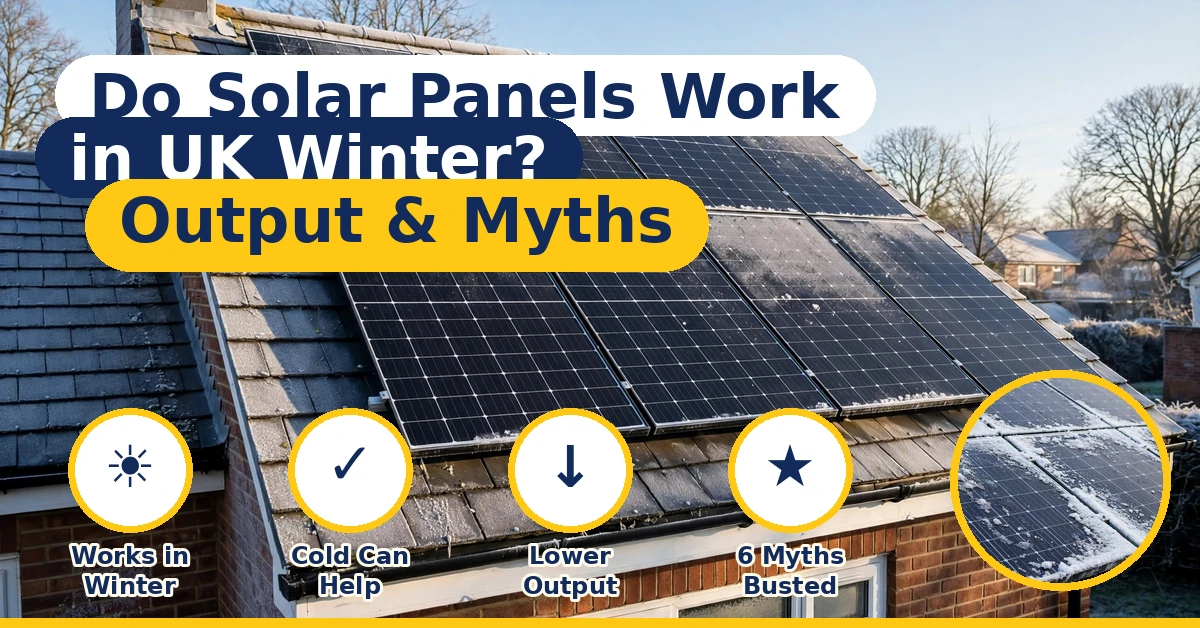
Yes, solar panels work during UK winter. They generate electricity from daylight, not heat, so cold temperatures and cloudy skies do not automatically stop them working. However, winter generation is considerably lower because days are shorter, the sun is lower in the sky and cloud cover is often heavier.
This seasonal change is normal and should be considered when deciding whether solar panels are suitable for your home. A solar PV system is designed to generate electricity throughout the year, with stronger production in spring and summer helping to balance the lower output in winter.
In this guide, we explain how solar panels perform in UK winter, what affects their output, whether snow and frost cause problems, and which common solar myths homeowners should ignore.
Do Solar Panels Work in the UK During Winter?
Solar panels continue to generate electricity during December, January and February. Their photovoltaic cells convert light into electrical energy, so they do not need hot weather or uninterrupted sunshine.
Even when the sky is overcast, some daylight reaches the panels. This allows them to produce electricity, although the amount is usually lower than on a clear day. A bright winter day can still provide useful generation, particularly around midday when the sun is highest.
The main challenge is the amount and intensity of available daylight. Winter days are shorter, the sun follows a lower path across the sky, and cloudy weather is common in many parts of the UK.
The Energy Saving Trust confirms that solar panels work in winter and on cloudy days, while explaining that seasonal output falls because of shorter days, more cloud and less intense sunlight.
How Much Electricity Do Solar Panels Generate in Winter?

There is no single winter-output figure for every UK home. Generation depends on the system’s capacity, location, roof direction, panel angle, shading and local weather.
As an illustration, a modelled 4kWp system on an ideal south-facing roof in central England may generate around 135kWh in December and 147kWh in January. The same example can produce several times more electricity in a strong summer month.
These figures are indicative rather than a promise of performance. A shaded roof in northern Scotland may produce a different result from an unshaded roof in southern England. For a more accurate estimate, homeowners can use the European Commission’s PVGIS tool or ask an installer to provide a location-specific generation forecast.
Why Does Winter Output Drop?
Several seasonal factors affect solar electricity production:
- Shorter daylight hours: Panels have fewer hours in which to generate electricity.
- Lower sun angle: The sun sits lower in the sky, so sunlight reaches many roof surfaces at a less favourable angle.
- Cloud cover: Thick cloud reduces the amount of light reaching the panels.
- Weather and shading: Rain, mist, nearby buildings and winter tree shadows can affect the available light.
A lower monthly total does not mean the system has stopped working. It means there is less solar energy available to convert into electricity.
Why Cold Weather Can Be Good for Solar Panels
It may sound surprising, but solar panels do not need heat to work efficiently. In fact, photovoltaic panels generally operate more efficiently in cooler conditions than in excessive heat.
High panel temperatures can reduce electrical efficiency. On a cool, clear winter day, the panels may operate efficiently whenever sunlight reaches them. The difficulty is that winter offers fewer hours of daylight and weaker overall sunlight.
This is why it is important to separate panel efficiency from total energy generation. Cold conditions can help the panels perform efficiently, but they cannot compensate fully for short days and low winter sunshine.
Do Solar Panels Work on Cloudy and Rainy Days?
Yes. Solar panels can generate electricity under cloudy skies because daylight still passes through clouds. However, output usually falls when cloud cover becomes thick.
Light cloud may have a relatively modest effect, while dark, heavy cloud can reduce generation substantially. Rain itself does not switch off a solar system. Rain may also wash away some loose dust and dirt, although it should not be treated as a substitute for occasional inspection or professional maintenance.
During a particularly dull winter day, your panels may produce only a small amount of electricity. That energy can still help supply appliances running in the home and reduce the amount of electricity you need to buy from the grid.
What Happens to Solar Panels in Snow and Frost?
Solar panels are designed for outdoor conditions, including low temperatures and frost. A cold night will not normally damage a correctly installed system.
Snow is different because a thick covering can block daylight from reaching the photovoltaic cells. If panels are completely covered, generation may fall sharply until the snow clears. A light covering may clear more quickly, especially when panels are installed at a suitable angle.
Should You Remove Snow from Solar Panels?
In most cases, it is safer to let snow clear naturally. Do not climb onto a roof or use a ladder to reach panels, particularly in icy winter conditions. Scraping the glass or applying pressure can also damage the panels.
If heavy snow remains for an unusually long time, contact your installer or a qualified solar maintenance professional for advice. Always follow the system manufacturer’s guidance.
Common Myths About Solar Panels in UK Winter
There are several misconceptions that can make homeowners underestimate the usefulness of solar energy.
Myth 1: Solar Panels Stop Working in Winter
Fact: Solar panels continue generating electricity whenever daylight reaches them. Their output is lower, but they do not shut down simply because temperatures fall.
Myth 2: Solar Panels Need Direct Sunshine
Fact: Direct sunshine gives stronger generation, but panels can also use diffuse daylight on cloudy days. Heavy cloud reduces output; it does not always reduce it to zero.
Myth 3: Cold Weather Damages Solar Panels
Fact: Quality solar panels are designed to operate outdoors through seasonal temperature changes. Cold weather is not normally a problem for a properly specified and installed system.
Myth 4: Solar Panels Are Useless on Rainy Days
Fact: Panels can still generate electricity when it rains, provided daylight reaches them. Rain may also help rinse away some surface dirt.
Myth 5: Solar Panels Produce the Same Amount of Electricity All Year
Fact: Solar generation changes throughout the year. UK systems generally produce much more in spring and summer than in the darkest winter months.
Myth 6: A Solar Battery Solves Low Winter Generation
Fact: A battery stores electricity that your panels have already generated; it does not create additional solar energy. It can shift daytime electricity to evening use, but a prolonged period of low generation may still require grid electricity.
How to Get the Best Performance from Solar Panels in Winter
You cannot control daylight or the weather, but you can make sure your system is configured and used effectively.
1. Check Your System’s Monitoring App
Most modern solar inverters or monitoring platforms show daily and monthly generation. Check the readings regularly and compare similar days or months rather than expecting winter figures to match summer production.
A sudden, unexplained drop compared with typical conditions may indicate a fault, inverter issue or new shading problem. Contact your installer if the system appears not to be operating normally.
2. Use Electricity During Daylight Hours
Try to run suitable appliances when your panels are generating electricity. For example, you could schedule a washing machine, dishwasher or other flexible appliance for the brighter part of the day.
In winter, the useful generation window may be shorter, so check your monitoring app to understand when your system usually produces the most electricity.
3. Consider Battery Storage
A solar battery can store surplus electricity generated during the day and make it available later, including in the evening. This can improve self-consumption, although the amount available to store will depend on how much your panels generate.
Before buying a battery, compare its cost, usable capacity, warranty, efficiency and expected savings. A battery is not automatically financially worthwhile for every household.
4. Keep Panels in Good Condition
Check your system’s performance and arrange professional inspection if you notice persistent problems. Do not walk on panels or attempt unsafe roof cleaning. In many cases, normal rainfall helps remove loose dirt, but professional cleaning may be appropriate if stubborn soiling is affecting output.
5. Reduce Avoidable Shading
Winter shadows can be longer because the sun is lower. Trees, chimneys and nearby buildings may shade panels for more of the day than they do in summer.
If shading appears to be reducing generation, ask a qualified installer to assess the system. They can advise whether panel layout, optimisers or other design changes would help.
Does Solar Panel Direction Matter in Winter?
Yes. Roof direction and pitch influence how much daylight panels receive throughout the year.
In the UK, a south-facing roof is often favourable for overall annual generation. East-facing and west-facing systems can also work well, with generation weighted towards the morning or afternoon. The best arrangement depends on the property’s roof, shading and household electricity use.
A roof should not be judged on direction alone. A clear east- or west-facing roof may perform better than a south-facing roof that is heavily shaded. An installer should assess the complete roof and provide an annual estimate that accounts for seasonal variation.
Are Solar Panels Worth Having in the UK If Winter Output Is Low?
Solar panels can still be worthwhile because the financial and environmental benefits should be assessed across the full year, not just December or January.
Spring and summer generally provide the strongest generation. Homeowners can use some of this electricity directly, store surplus energy in a battery or export eligible excess electricity to the grid through an available export tariff.
The value of a system depends on installation cost, annual generation, the proportion of electricity used at home, electricity import prices, export payments and maintenance costs. Your household’s daytime electricity use also matters.
Ask installers for a realistic annual generation estimate and a clear explanation of the assumptions behind any savings or payback forecast. Avoid relying on a summer production figure as if it applied to every month.
Conclusion
Solar panels do work in UK winter, even when the weather is cold, cloudy or rainy. They use daylight rather than heat, and cooler temperatures can support efficient panel operation. However, shorter days, a lower sun and heavier cloud cover mean winter electricity generation is much lower than in summer.
The best way to judge a solar system is by its expected annual performance. Monitor your generation, use electricity during daylight where practical, and consider battery storage only after comparing the costs and likely benefits. With realistic expectations and a properly designed installation, solar panels can contribute to household electricity needs throughout the year.
Frequently Asked Questions
1. Do solar panels work in winter in the UK?
Yes. Solar panels generate electricity from daylight, so they continue working during winter. Their output is lower because days are shorter, the sun is lower and cloud cover is often greater.
2. Do solar panels work on cloudy winter days?
Yes. Panels can convert diffuse daylight into electricity, even when the sky is overcast. Heavy cloud reduces the amount generated, but does not necessarily stop production completely.
3. Are solar panels less efficient in cold weather?
Generally, photovoltaic panels operate more efficiently in cooler temperatures than in excessive heat. Winter generation is lower mainly because there is less daylight and weaker sunlight, not because the panels are cold.
4. Will snow stop my solar panels from working?
A thick layer of snow can block daylight and sharply reduce generation while it remains on the panels. Light snow may clear naturally. Avoid climbing onto the roof or scraping the panels yourself.
5. Can solar panels power a house throughout winter?
They can contribute electricity to a home during winter, but the amount may not be enough to meet all household demand. The home will usually continue to use grid electricity when solar generation is insufficient. Backup power during a grid outage requires compatible equipment and installation.
6. Should I install a solar battery for winter?
A battery can store surplus daytime electricity for use later, but it cannot increase the amount generated by the panels. Whether it is worthwhile depends on your usage, system size, battery cost, tariff and expected savings.
Further Reading
- Energy Saving Trust: https://energysavingtrust.org.uk/solar-power-facts/
- European Commission PVGIS solar energy calculator: https://re.jrc.ec.europa.eu/pvg_tools/en/
- Ofgem: https://www.ofgem.gov.uk/