

Voc and Vmp are two key solar-module voltage specifications. Understanding the difference is essential when deciding how many panels can be connected in series to an inverter or charge controller.
What Is Voc?
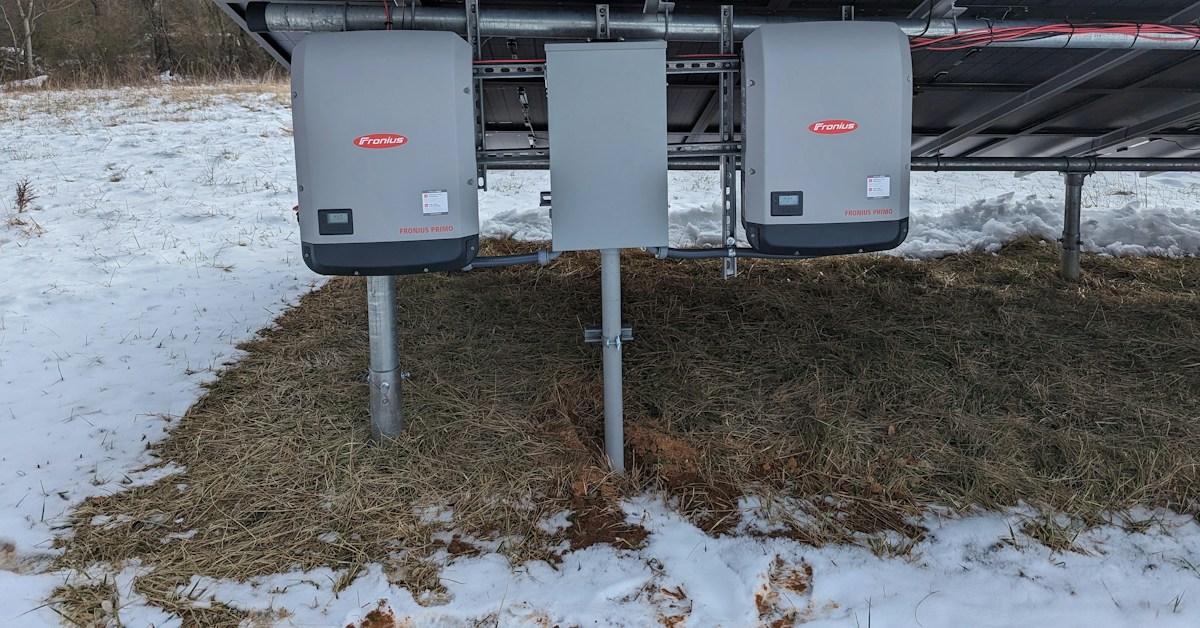
PV string voltage must be checked against the inverter’s published limits. Compare equipment in our hybrid solar inverter guide, and review the physical panel layout in our rooftop installation guide.
Voc means open-circuit voltage: the module voltage measured under specified test conditions when no load is drawing current. Designers use Voc, adjusted for temperature, when checking that a string will remain below the inverter’s maximum DC input voltage.
What Is Vmp?
Vmp is the voltage at the module’s maximum power point under specified test conditions. String Vmp helps determine whether the array will operate inside the inverter’s MPPT voltage range.
Why Voc and Vmp Are Different
A solar module’s current-voltage curve changes with operating conditions. Open circuit represents a different operating point from maximum-power operation, so the two voltage values should not be substituted for each other.
How Series Strings Change Voltage
When compatible modules are connected in series, their voltages add while string current is governed by the series circuit. For a simplified initial check, multiply module voltage by the number of modules, then apply the required temperature corrections and manufacturer rules.
These voltage checks matter even more on oversized arrays, where solar inverter clipping is part of the design trade-off.
Cold Weather and Maximum Voc
Module Voc generally rises as cell temperature falls. Designers therefore check cold-condition string Voc rather than using standard-test Voc alone. Exceeding an inverter’s maximum DC voltage can be unsafe and may damage equipment.
Hot Weather and MPPT Voltage
Module operating voltage generally falls as temperature rises. A string should still remain within the inverter’s useful MPPT operating range under expected hot conditions.
Other Limits You Must Check
- Maximum inverter DC voltage.
- MPPT operating range.
- Startup voltage.
- Maximum input current per MPPT.
- Maximum short-circuit current.
- Module maximum system voltage.
FAQs
Should I use Voc or Vmp to calculate string length?
Both are relevant for different checks. Temperature-corrected Voc is critical for the maximum-voltage limit, while operating voltage helps verify MPPT compatibility.
Can I connect more panels if Vmp is below the inverter limit?
Not based on Vmp alone. You must also check cold-condition Voc, current limits, maximum PV input and manufacturer instructions.
Does parallel wiring increase voltage?
Parallel strings generally increase available current rather than adding string voltage, but all designs must remain within inverter input limits.
Example of a Basic String Check
Assume a module datasheet lists a particular Voc and Vmp. Multiplying those values by the number of panels gives an initial string-voltage estimate at the stated test conditions. That is only the starting point. Voc must then be corrected for the lowest expected cell temperature, while operating voltage should be checked at high temperatures to confirm the string remains inside the inverter’s MPPT range.
Why Maximum DC Voltage Is a Hard Limit
The inverter’s maximum DC input voltage is not a target operating voltage. It is a limit that the designed string must remain below under the applicable worst-case conditions. Exceeding it can create equipment damage, safety problems and warranty issues. Leave appropriate engineering margin according to the manufacturer and applicable design practice.
Panel capacity has to respect the same design balance, so size the array using the solar DC to AC ratio rather than voltage alone.
Current Matters as Much as Voltage
Designers sometimes focus on series voltage and overlook current. When strings are connected in parallel, current increases at the MPPT input. Modern high-current modules can exceed the input capability of older inverter designs even when the string voltage looks acceptable. Check operating current and short-circuit-current limits for every MPPT.
Mixing Different Solar Panels
Mixing modules with different electrical characteristics in one string can create mismatch and complicate design. If an expansion uses a different model, compare Voc, Vmp, current, power and temperature coefficients carefully. Do not assume two panels are electrically interchangeable just because their wattage is similar.
Voc, Vmp and Hybrid Inverters
Hybrid inverters still have PV input limits just like other solar inverters. Battery voltage does not replace the need to design PV strings correctly. The PV MPPT section, battery input and AC output are separate parts of the system with their own limits and operating ranges.
String Sizing Checklist
- Use the exact module datasheet.
- Use the exact inverter datasheet or manual.
- Calculate cold-condition maximum Voc.
- Check hot-condition operating voltage against MPPT range.
- Verify maximum input current and short-circuit current.
- Confirm the number of strings allowed per MPPT.
- Document the final string layout for installation and maintenance.
Why Online String Calculators Need Correct Inputs
String-sizing calculators can be useful, but their result is only as reliable as the values entered. Use the exact module model, inverter model and relevant temperature assumptions. A calculator based on a similar panel or a generic 550W/585W label can produce an unsafe recommendation because modules with similar wattage may have different Voc, Vmp and current ratings.
Voltage limits are only half the spec story — here is how STC and NMOT ratings decide the real output you will see on your roof: STC vs NMOT solar panel ratings explained
Check the Final Design Before Installation
The installer should document how many modules are connected in each series string, which MPPT input each string uses and the calculated maximum and operating voltages. Keeping this information with the inverter and module datasheets also makes future troubleshooting or system expansion easier.
Conclusion: Safe PV string sizing requires both Voc and Vmp plus temperature correction, current limits and the exact inverter and module datasheets. Wattage alone is never enough to determine a safe string configuration.



One Comment