
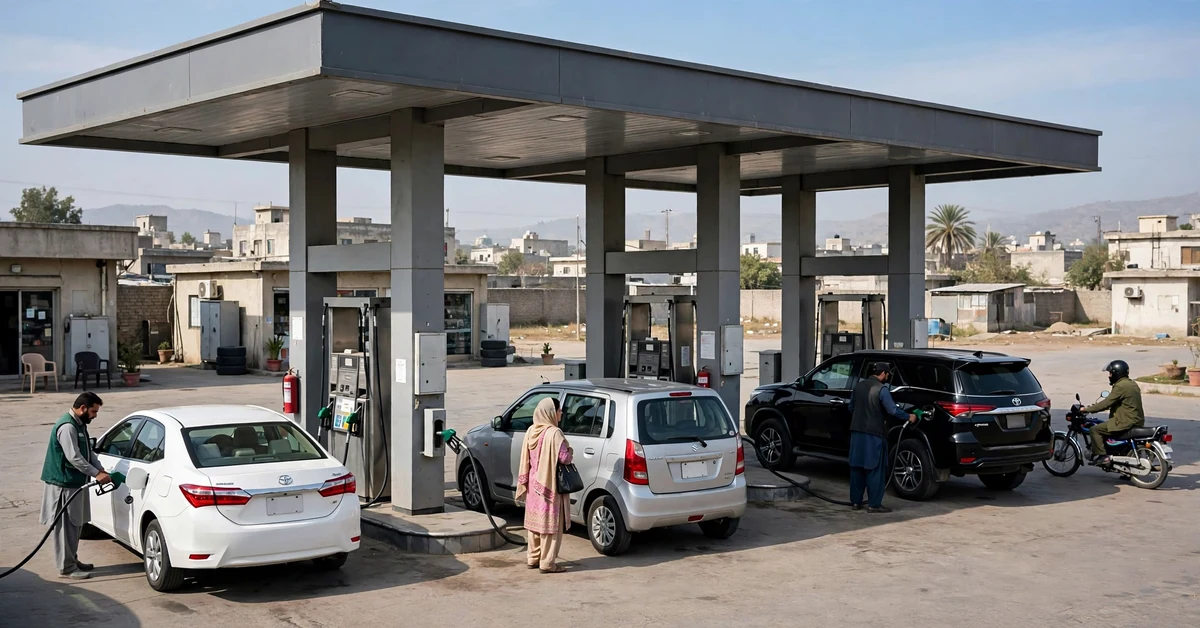
New Fuel Prices at a Glance
The federal government has revised petroleum prices once again under its daily pricing mechanism. Effective Thursday, 22 October 2026, motorists across Pakistan will pay Rs 379.31 per litre for petrol (motor spirit), down Rs 2.71 from the previous day’s rate of Rs 382.02. High-speed diesel (HSD), on the other hand, has become slightly dearer at Rs 390.11 per litre, up Re 0.31 from Rs 389.80.
The new rates were notified late on Wednesday, 21 October, by the Petroleum Division on the recommendation of the Oil and Gas Regulatory Authority (OGRA), in line with the cabinet-approved daily fuel pricing framework.
| Fuel | Previous price (Rs/L) | New price (Rs/L) | Change |
|---|---|---|---|
| Petrol (Motor Spirit) | 382.02 | 379.31 | −2.71 |
| High-Speed Diesel (HSD) | 389.80 | 390.11 | +0.31 |
| Kerosene Oil (SKO) | 326.75* | Unchanged | |
| Light Diesel Oil (LDO) | 267.46* | Unchanged | |
*Kerosene and LDO rates as per the most recently published public breakdown; the Petroleum Division’s 21 October statement highlighted only petrol and diesel revisions.
Why Did Prices Change?
According to the Petroleum Division, the revision was driven by developments in the international market, including changes in Platts benchmark rates, supplier premiums and incidental import costs. Under the daily pricing mechanism approved by the federal cabinet, OGRA now determines ex-depot prices every day using a seven-day average of international market prices, and publishes them on its website to improve transparency.
Petroleum Minister Ali Pervaiz Malik has said the seven-day average approach follows international practice and lets global price movements reach domestic pumps faster. The system was adopted after renewed Middle East hostilities raised concerns about energy supplies through the Strait of Hormuz — Pakistan had earlier moved from fortnightly to weekly reviews after the conflict flared on 28 February 2026, before switching to the daily system.
The split movement this time — petrol down, diesel up — reflects divergent product markets. In recent weeks, international petrol product prices have softened while middle-distillate (diesel) premiums have held firmer on regional refinery maintenance and freight costs.
A Volatile Fortnight: How Rates Moved This Month
Petrol and diesel prices have swung several times in October under the daily system. Here is the recent trail on this site:
- 17 October: Petrol cut by Rs 3.93 to Rs 386.30 per litre; diesel at Rs 396.96 (see our 17 October report).
- 20 October: Petrol reduced by Rs 5.16 to Rs 381.14 per litre in a sharp downward revision (see our 20 October report).
- 21 October: Petrol edged up 88 paisas to Rs 382.02; diesel rose 53 paisas to Rs 389.80 (see our 21 October report).
- 22 October: Petrol down Rs 2.71 to Rs 379.31; diesel up Re 0.31 to Rs 390.11.
The pattern shows how the daily mechanism passes international volatility through almost immediately — good news one day can be partly reversed the next.
What Is Inside Your Per-Litre Price?
Only a portion of what you pay at the pump is the fuel itself. Official breakdowns shared earlier this month show the structure behind the pump price:
- Import cost: roughly Rs 279–283 per litre for petrol, the largest single component.
- Petroleum levy: Rs 80 per litre on petrol — a major revenue line for the exchequer.
- Climate support levy: Rs 5 per litre.
- Dealer and OMC margins: fixed margins for dealers and oil marketing companies.
- Total taxes and duties: reported at around Rs 114 per litre on petrol and about Rs 100 per litre on diesel.
This fixed tax wedge is why headline international price drops translate into only partial relief at Pakistani pumps — the levies do not move with crude.
Rs 100/L Targeted Relief Still in Place
The government’s targeted relief of Rs 100 per litre for motorcycles, three-wheelers and small cars remains in place, cushioning the most fuel-dependent small commuters from the swings. However, transporters and farmers warn that any sustained rise in diesel — the backbone of freight and agricultural tube wells — feeds into food and transport inflation. With diesel now back above Rs 390, that pressure point bears watching. Farmers considering a permanent escape from diesel irrigation costs can read our guide on the CM Punjab solarisation of tube wells scheme.
How to Trim Your Fuel Bill
- Track the daily rate: under the daily mechanism, filling up a day early or late can genuinely change what you pay. Check OGRA’s published price before a long trip.
- Maintain tyre pressure: under-inflated tyres can raise consumption by 3–5%.
- Ease off the throttle: aggressive acceleration and high-speed cruising are the biggest fuel wasters in city driving.
- Service on schedule: a clogged air filter or worn spark plugs quietly add to every litre burned.
- Plan refuelling around revisions: when international markets are falling, the daily system usually passes relief within days — avoid panic filling.
Frequently Asked Questions
What is the petrol price in Pakistan today?
Petrol costs Rs 379.31 per litre effective 22 October 2026.
What is the diesel price today?
High-speed diesel costs Rs 390.11 per litre effective 22 October 2026.
How long will these rates stay?
Under the daily pricing mechanism, rates can be revised every day. These prices apply for Thursday, 22 October, until OGRA issues the next notification.
Why are petrol and diesel moving in opposite directions?
Petrol and high-speed diesel are priced off different international product benchmarks (Platts), premiums and freight costs, so they can move independently day to day.
Where can I check the official notification?
OGRA publishes the daily ex-depot prices on its official website, and the Petroleum Division issues the formal press release each evening.
Solar Price Pro tracks every fuel price revision and what it means for your energy choices — follow our Solar News section for daily updates.



One Comment