
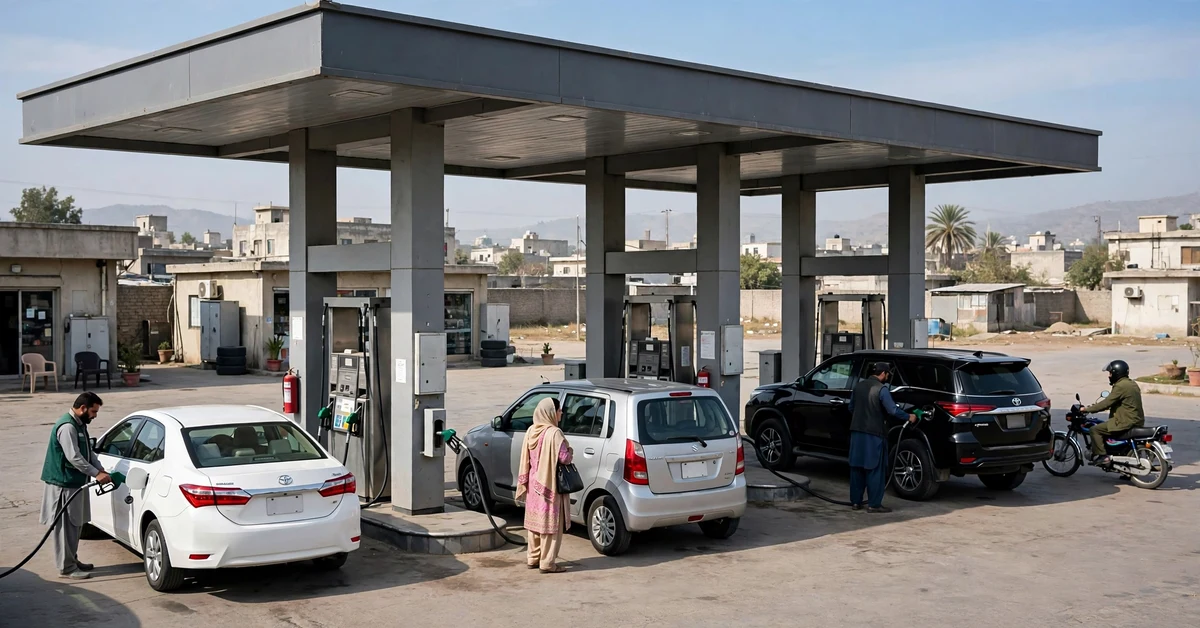
Motorists across Pakistan found relief at the pumps on Saturday, 17 October 2026, as the federal government cut the price of petrol (Motor Spirit) by Rs 3.93 per litre. The new price of Rs 386.30 per litre takes effect immediately and stays in force through Sunday, 19 October 2026 — welcome news for millions of car owners, motorcyclists and daily commuters.
The revision was notified by the Petroleum Division on OGRA’s pricing working. It is the latest adjustment under the daily fuel pricing mechanism introduced in July 2026, which replaced the old fortnightly — and later weekly — review system. Fuel prices are now recalculated every working day from Monday to Friday, while weekend rates stay frozen at the last working day’s level.
While petrol became cheaper, High-Speed Diesel (HSD) — the fuel that powers trucks, buses and farm machinery — remains unchanged at Rs 396.96 per litre. Kerosene and Light Diesel Oil are also unchanged, while LPG has become dearer. Here is the complete picture of today’s notified rates.
Petrol, Diesel, Kerosene and LPG Prices Today (17–19 October 2026)
The following rates were notified for the period 17 to 19 October 2026. They apply uniformly across the country — Karachi, Lahore, Islamabad, Peshawar and Quetta all pay the same price at the pump.
| Product | New price | Change |
|---|---|---|
| Petrol (Motor Spirit) | Rs 386.30/litre | Down Rs 3.93 |
| High-Speed Diesel | Rs 396.96/litre | Unchanged |
| Kerosene Oil | Rs 330.14/litre | Unchanged |
| Light Diesel Oil | Rs 266.41/litre | Unchanged |
| LPG | Rs 279.34/kg | Up Rs 20.69 |
For motorists, the headline figure is the Rs 3.93 cut in petrol — the steepest single-day reduction in recent weeks. A 40-litre fill-up now costs Rs 15,452, which is Rs 157 less than on Friday. At an average consumption of 13 kilometres per litre, the running cost of a small car works out to roughly Rs 29.72 per kilometre.
Petrol Price History: October 2026
Because prices now move every working day, the recent trend matters as much as today’s number. The table below tracks petrol and diesel prices through October 2026:
| Date | Petrol (Rs/litre) | Diesel (Rs/litre) |
|---|---|---|
| 14 October 2026 | 392.66 | 396.82 |
| 15 October 2026 | 393.86 | 396.65 |
| 16 October 2026 | 390.23 | 396.96 |
| 17–19 October 2026 | 386.30 | 396.96 |
The data shows how fluid the market has become. Petrol swung by more than Rs 7 per litre within four days — rising to Rs 393.86 on 15 October, then falling two days running to Rs 386.30 for the weekend. Diesel, by contrast, has barely moved all month.
Why Did the Petrol Price Fall?
The daily pricing mechanism links domestic fuel prices directly to international benchmarks. Each working day, OGRA works out the import parity price of refined petrol using Platts quotations — the global reference prices for petroleum products — adjusted for the rupee-dollar exchange rate. When Platts benchmarks soften, consumers feel the benefit the very next working day.
Currency movements play a part as well. Because Pakistan imports most of its petroleum products, even a modestly stable rupee lowers the landed cost of every litre. Market watchers attribute this weekend’s cut to softer international product prices combined with a steady exchange rate.
How Fuel Prices Are Set in Pakistan
Setting the retail fuel price is a daily exercise. OGRA starts from the import parity price — essentially what it costs to land a litre of refined fuel in Pakistan. Added to that are the petroleum levy (Rs 80 per litre on petrol), the climate support levy (Rs 5 per litre), dealer and oil marketing company (OMC) margins, the Inland Freight Equalization Margin (IFEM) that keeps prices uniform nationwide, and customs duty.
Once OGRA finalises the working, it goes to the Petroleum Division, which issues the official notification — usually late in the evening — and the new prices take effect from midnight. Consumers can verify the notified rates through the Petroleum Division’s and OGRA’s official channels.
What the Cut Means for Households and Transporters
For households, cheaper petrol directly lowers commuting costs. A car owner driving 1,000 kilometres a month at 13 km/litre uses about 77 litres — roughly Rs 29,750 at the new price, around Rs 300 less than at Friday’s rate. Motorcycle riders will feel the difference at every fill-up.
Transporters and farmers, however, run mostly on diesel — unchanged at Rs 396.96 per litre. Freight charges, bus fares and the cost of running tube-wells and tractors therefore stay exactly where they were. The relief is partial: private motorists benefit, but the movement of goods sees no change this time.
The one sour note is LPG, up Rs 20.69 per kg to Rs 279.34 per kg. A standard 11.8 kg domestic cylinder now costs about Rs 3,296 — roughly Rs 244 more than before — squeezing kitchen budgets, particularly for families in areas without piped natural gas.
Practical Tips to Save Fuel
Whatever the price at the pump, efficient driving stretches every litre. These proven habits cut fuel use:
- Keep tyres inflated to the recommended pressure; under-inflated tyres raise consumption.
- Drive smoothly — gentle acceleration and steady speeds beat harsh braking.
- Switch off the engine rather than idling for more than a minute.
- Service your vehicle on schedule: clean filters, fresh oil and tuned plugs improve mileage.
- Lighten the load and remove roof racks when not in use.
- Plan trips and combine errands to avoid repeated cold starts.
- Use the fuel grade your manual recommends — costlier octane adds no benefit otherwise.
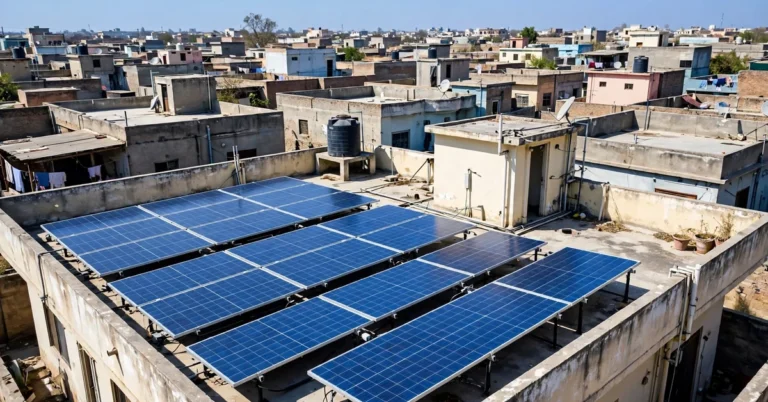
Volatile Fuel Costs Push Households Toward Rooftop Solar
Daily price swings show how exposed households are to imported energy — and grid tariffs and generator diesel keep climbing too. That volatility is why more Pakistani families are investing in rooftop solar: once installed, a system generates free electricity for decades. Compare current solar panel prices in Pakistan, size your system with a solar system calculator, and check lithium battery prices for load-shedding backup.
The relief continued on Monday, when the petrol price was cut again to Rs 381.14 in the 20 October update.
Prices then edged up slightly the following day, as shown in the 21 October petrol update.
Frequently Asked Questions
What is the petrol price in Pakistan today?
Petrol (Motor Spirit) costs Rs 386.30 per litre from 17 October 2026.
How long will these prices remain valid?
The rates are valid from 17 to 19 October 2026; weekend rates stay frozen.
When is the next fuel price revision?
Monday, 20 October 2026 — the next working day.
Is the petrol price the same in all cities?
Yes. The Inland Freight Equalization Margin (IFEM) keeps notified prices uniform nationwide.
Why did diesel prices stay unchanged?
OGRA’s daily working showed no major movement in diesel’s import parity price.
Where can I check the official notification?
The Petroleum Division issues the notification, also published via OGRA’s channels.
To recap: petrol now costs Rs 386.30 per litre, down Rs 3.93, while diesel holds steady at Rs 396.96 per litre. These rates are valid from 17 to 19 October 2026, and the next revision is expected on Monday, 20 October 2026.
3 Comments