
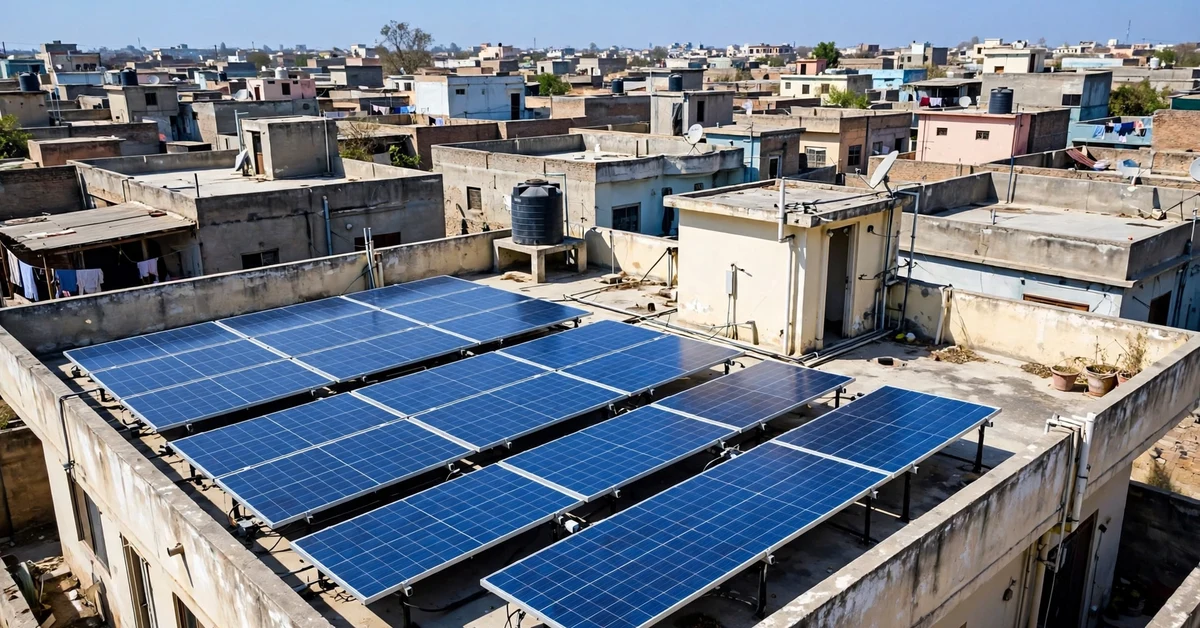
The battle over the future of rooftop solar in Pakistan has flared up again. The Pakistan Solar Association (PSA) has warned that proposed changes to the country’s net metering and buyback rules could slash consumer savings by up to 85% and bring the rooftop solar boom to a grinding halt — while the government insists the reforms are necessary and points to its renewable energy targets as proof of commitment.
The clash, reported afresh this week, pits the solar industry against policymakers over how much solar households should be paid for the electricity they export to the grid, and whether that exported power should be taxed. With an estimated US$2 billion already invested by Pakistani consumers in rooftop solar, the stakes are enormous.
What the Solar Industry Is Warning About
According to the PSA, the proposals on the table include a flat buyback rate of just Rs 10 per unit for electricity exported to the grid — replacing the unit-for-unit offset that made rooftop solar so attractive — along with an 18% sales tax on solar exports.
The association illustrates the impact with a simple example. Under the current arrangement, a household exporting 1,000 units can offset Rs 50,000 to Rs 70,000 of its power bill — effectively wiping the bill out. Under the proposed flat buyback, those same 1,000 units would earn only Rs 10,000. Payback periods that currently run at 2 to 2.5 years would stretch far beyond typical loan periods, and the PSA argues small residential systems would no longer make financial sense at all.
The proposed 18% sales tax has drawn particular anger. It would mean electricity generated and exported by solar users is taxed even when those same users import more electricity from the grid than they export. The PSA calls this a direct hit on clean energy and a move out of sync with global practice, where solar and renewables are typically tax-exempt or zero-rated to encourage adoption.
If implemented, the PSA warns the policy would undermine Pakistan’s goal of 30% renewable energy by 2030, keep the country reliant on costly capacity payments to independent power producers (IPPs), sustain high electricity tariffs for all consumers, and deter future green investment from local and international players.
The Government’s Counter-Argument
The government sees the arithmetic differently. A government adviser noted that Pakistan now meets up to 55% of its electricity needs from renewable sources — a significant rise from when net metering was introduced over a decade ago amid severe power shortages — and aims to meet over 90% of electricity demand through renewables by 2035.
The adviser also pointed to the falling cost of large-scale solar: the purchase price from major projects like the Quaid-e-Azam Solar Park has dropped from 14 to approximately 3 US cents per unit, a rate described as comparable to what is being proposed for net-metering consumers. In the government’s view, paying rooftop exporters far above utility-scale rates is no longer justifiable.
Industry Voices: From Batteries to IPPs
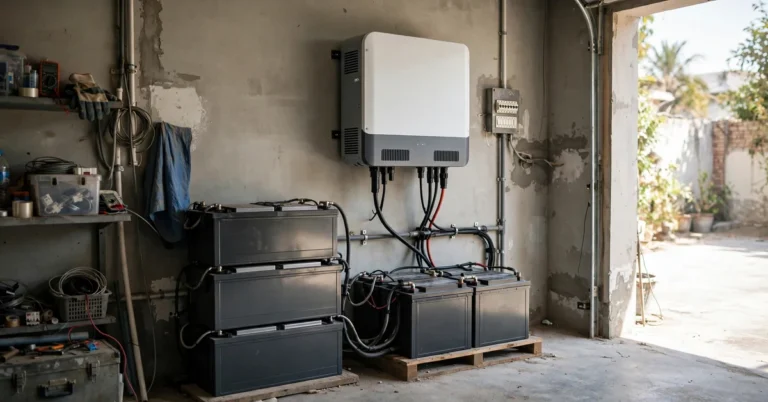
PSA Chairman Waqas Moosa warned that drastic revisions could push rooftop solar users toward battery storage systems, cutting their reliance on the national grid — a shift that would shrink the utilities’ paying customer base further. He argued that consumers who invested their savings in solar systems to escape soaring power bills should not be financially penalised by policy shifts that appear designed to favour IPPs receiving substantial capacity payments.
Moosa also called for greater automation in the licensing process, pushing for a one-window operation and proposing that distribution companies (DISCOs) directly process applications for systems up to 25 kW, avoiding bureaucratic delays. Notably, NEPRA has already moved part-way in this direction: its August 2026 amendment removed the requirement of NEPRA concurrence for systems of 25 kW or less.
Businessman Mian Zahid Hussain described it as “utterly unwise” for the government to pay high capacity charges to under-utilised IPPs while simultaneously resisting fair payment for surplus power from domestic solar installations. Financial analyst Moin M Fudda challenged the idea that buying excess solar power burdens the system, arguing that at Rs 25.98 per unit it is cheaper than electricity from conventional IPPs and involves no line losses. Waqas Khaleeq, CEO of Smart Solar, added that greater solar utilisation could significantly cut Pakistan’s annual US$15 billion oil import bill and lower carbon emissions from fossil fuels.
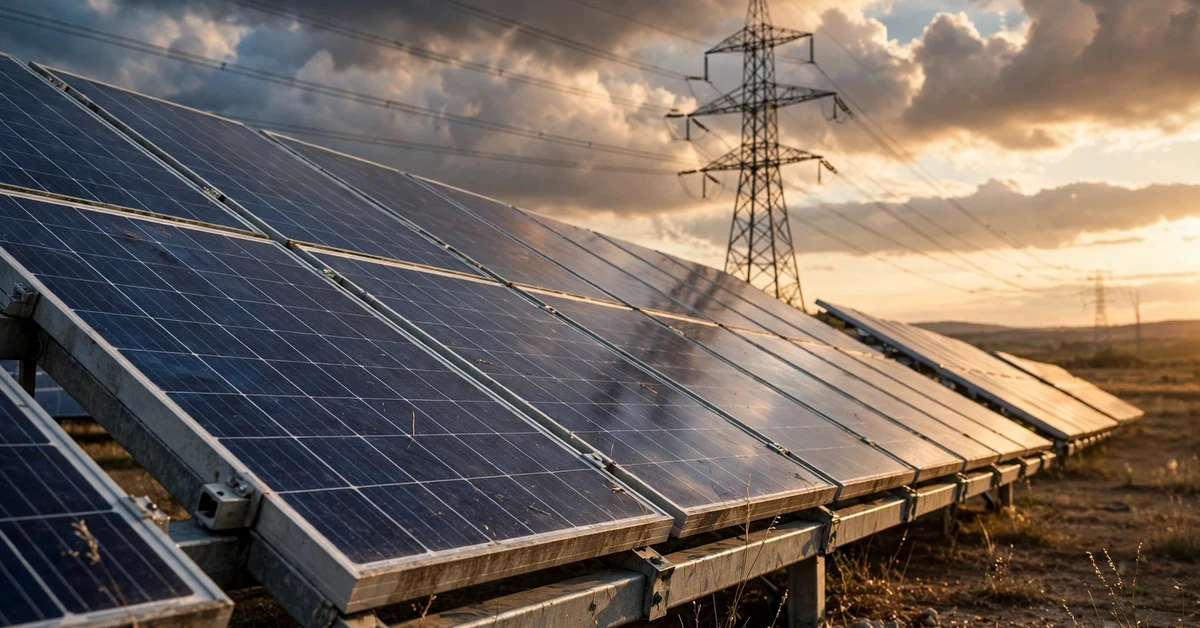
What the PSA Is Asking For
The association is not only criticising — it has put forward a set of recommendations:
1. A minimum one-year transition period to maintain investor confidence and avoid stranding recent investments.
2. Regional best practices. The PSA urges Pakistan to study how India and Bangladesh structure their rooftop solar incentives before rewriting its own rules.
3. An expert committee under the Ministry of Energy and the Economic Coordination Committee (ECC), bringing industry specialists into the policymaking process.
4. Regional engagement with SAARC and bilateral partners for collaborative energy planning.
The Bigger Picture: Net Billing Is Already Here
Some context matters. In February 2026, NEPRA notified the NEPRA (Prosumer) Regulations 2026, which replaced net metering with net billing for new connections: imports are billed at the full tariff while exports are credited at the national average energy purchase price, under five-year agreements. Existing net metering agreements were protected until expiry. The current debate is therefore not about whether the old 1:1 system returns, but about how the buyback rate is set, whether it can be revised mid-agreement, and now whether exports should carry an 18% sales tax.
Research on Pakistan’s solar boom published this month underscores why the fight is so heated. One study estimates around 40 GW of solar has been installed nationwide — with only about 6 GW of it in the official net-metering statistics — after consumers invested roughly US$2 billion in rooftop systems. Analysts warn that pushing export payments too low risks driving marginal adopters into unregistered, off-grid systems, making batteries and pure self-consumption more attractive than the grid itself.
For the utilities’ side of that same shift, the PIDE study on net billing explains why financial pressure on DISCOs will persist despite lower revenue exposure.
What Should Homeowners Do Right Now?
If you are considering solar, the message from this debate is clear: design for self-consumption first. Under net billing, the electricity you use yourself is worth your full retail tariff, while exported units earn far less. Sizing your system to your daytime load — rather than oversizing to sell to the grid — is the safest strategy whatever the final buyback rate turns out to be. Our complete net metering and net billing guide for 2026 walks through the current rules, and what net metering means in Pakistan explains the basics.
If you already have a system with a protected agreement, its terms hold until expiry — but watch this space, because any new tax or rate decision could affect your next renewal. And if you are shopping for panels, check the solar panel price in Pakistan 2026 tracker and our top 10 solar panels compared by price and performance before you sign. Also see how green meters are being replaced by AMI meters and how to size your system with our solar inverter size guide.
Frequently Asked Questions
Q: Is net metering ending in Pakistan?
A: For new connections, net metering was already replaced by net billing in February 2026 under NEPRA’s Prosumer Regulations. Existing net metering agreements continue until they expire. The current debate is over proposed further changes to buyback rates and a possible 18% sales tax on exports — these are proposals, not final decisions.
Q: What buyback rate is being proposed?
A: According to the Pakistan Solar Association, the proposal under discussion is a flat buyback rate of Rs 10 per unit for exported electricity, plus an 18% sales tax on solar exports. The government has not confirmed these figures as final policy.
Q: Will existing solar users be affected?
A: Existing net metering agreements are protected until they expire. But any change to the buyback rate or a new tax could affect renewals and new installations, so the outcome of this debate matters to everyone considering solar.
Q: Should I still install solar panels?
A: Solar still pays for itself, mainly through the power you consume yourself rather than export. Size your system to your daytime usage, prioritise quality panels and a good inverter, and keep an eye on the final policy decision. For the numbers behind that payback, see what net metering currently costs and how fast it pays back in Pakistan.
We will keep tracking this story as the government and industry positions develop. For the full background, read our net metering and net billing guide and the net metering explainer.

One Comment