
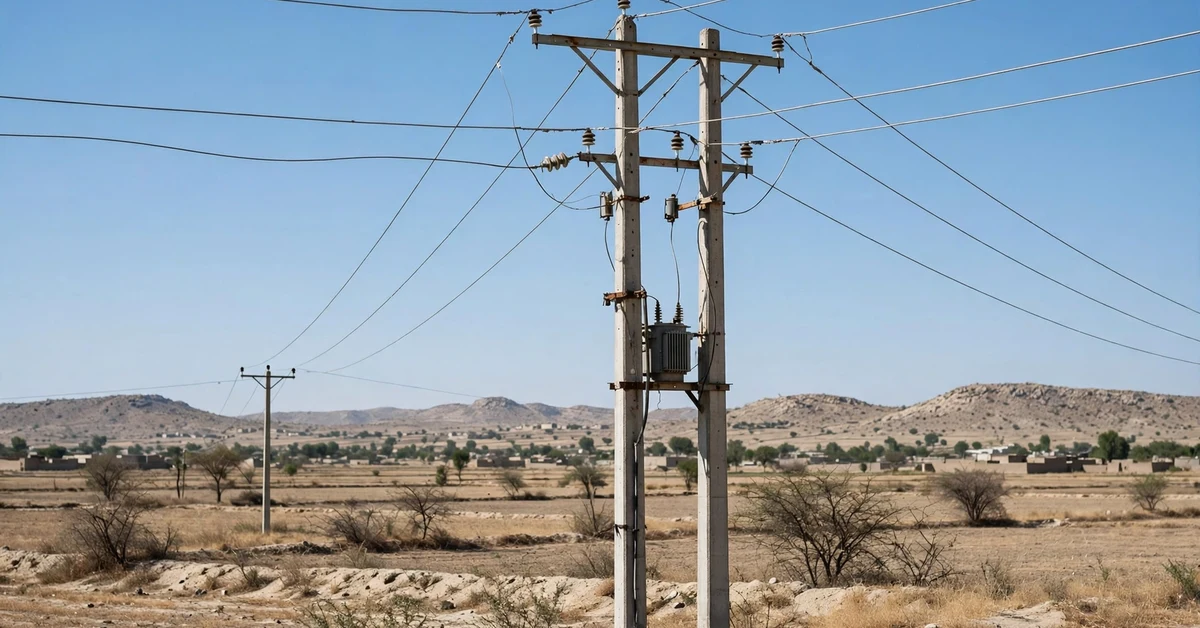
NEPRA approves Rs 1.1086 per unit fuel charge for August 2026
The National Electric Power Regulatory Authority (NEPRA) has approved a fuel charge adjustment (FCA) of Rs 1.1086 per unit for August 2026, which will appear as a separate line on October electricity bills across the country. The decision, dated 7 October 2026, applies to consumers of all Ex-WAPDA distribution companies as well as K-Electric customers in Karachi.
The adjustment means that a household which consumed 300 units in August will pay roughly Rs 332.58 extra on its October bill, while a 700-unit consumer will see an additional Rs 775.02. The charge is calculated by multiplying the units billed in August by Rs 1.1086.
What is a fuel charge adjustment?
A fuel charge adjustment is a monthly mechanism that passes the difference between the fuel cost NEPRA assumed while setting tariffs and the fuel cost that power plants actually incurred through to consumers. When generation companies pay more for fuel than the reference price, consumers pay a positive FCA; when actual costs come in lower, consumers receive a negative adjustment.
For August 2026, NEPRA determined the actual fuel cost at Rs 8.2084 per unit against a reference cost of Rs 7.0998 per unit. The gap of Rs 1.1086 per unit is what is now being passed on to consumers. Notably, the Central Power Purchasing Agency (CPPA-G) had requested a higher adjustment of Rs 1.7267 per unit, but NEPRA approved only Rs 1.1086 after its formal review — a decision that kept roughly Rs 19 billion of the originally claimed burden off consumers’ bills.
Why did fuel costs rise in August?
According to official submissions from the CPPA-G, the elevated adjustment was driven by a generation mix that leaned heavily on expensive fuels. Power generated from imported re-gasified liquefied natural gas (RLNG) and imported coal came in well above baseline expectations, while cheaper sources such as hydropower and nuclear generation fell short of projections during the month.
This mismatch between the projected and actual generation mix is a recurring feature of Pakistan’s power sector. Pakistan remains heavily dependent on imported fuels for a large share of its electricity, so global fuel price movements feed directly into domestic bills with a lag of a few weeks. For households and businesses, the result is a bill that can swing noticeably from month to month even when their own consumption stays the same.
Who has to pay it — and who is exempt?
The August FCA applies to all consumer categories billed by Ex-WAPDA distribution companies (including LESCO, IESCO, GEPCO, FESCO, MEPCO and PESCO) and by K-Electric, at the same rate. Three groups are explicitly exempt:
- Lifeline consumers — the lowest-consumption protected category
- Prepaid tariff consumers of all categories
- Electric vehicle (EV) charging stations
The decision also confirms that the FCA applies to consumption under the Incremental Consumption Package. If you are on a prepaid meter or a lifeline slab and still see the FCA line on your bill, NEPRA’s framework says you should ask your distribution company for a breakdown, because the charge should not have been applied.
When will the charge appear on your bill?
NEPRA directed that the FCA must be shown as a separate line in the billing month of October 2026, calculated on the units you were billed for in August 2026 — not October’s consumption. This is a common source of confusion: the extra line on your October bill reflects what you used two months ago.
If your October bill was issued before NEPRA’s notification reached your distribution company, the FCA may instead be applied in the following month. In that case a November bill can carry the August FCA. A missing FCA line on an early October bill is therefore not necessarily an error — check the next bill before raising a dispute.
How to check the FCA line on your bill
Verifying the line takes less than a minute:
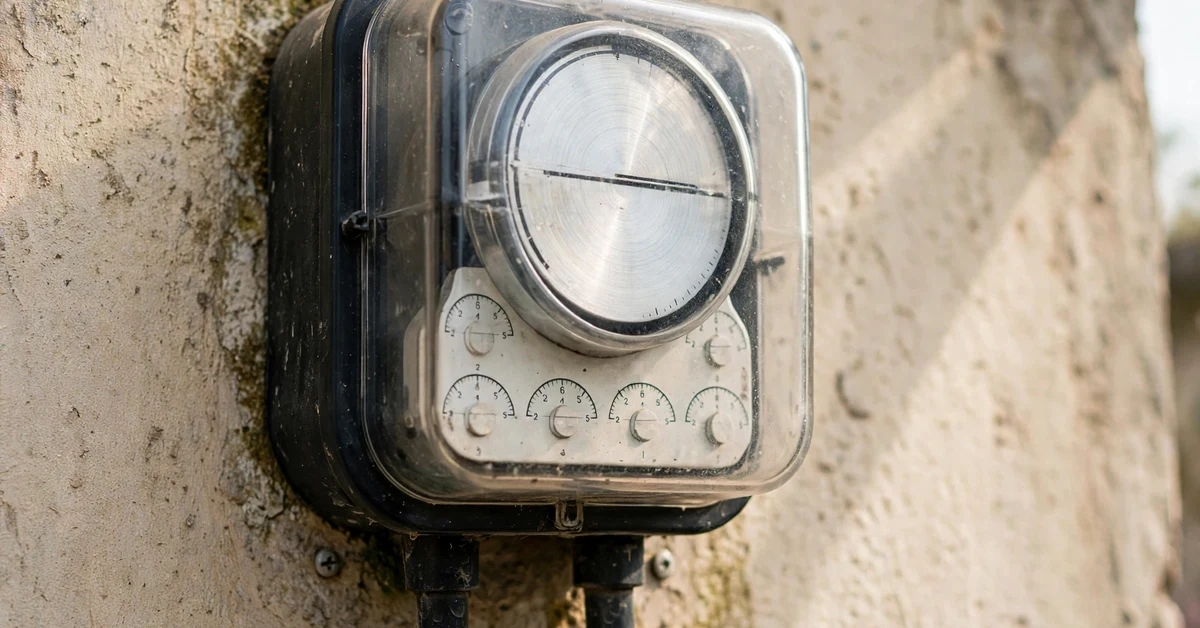
- Find the units billed in August 2026 — your October bill or your company’s online bill portal usually shows a consumption history.
- Multiply those units by 1.1086 and round to the nearest paisa.
- Locate the FCA line on your October bill, which must be shown separately.
- Compare the two figures. If they match, the base amount is correct.
NEPRA’s decision does not spell out the tax treatment of the FCA line, so the total on your bill can be slightly higher than this calculation once taxes are applied. Compare the pre-tax line first, because that is the part the regulator fixed. If the line is clearly higher than units × 1.1086 plus tax, ask your distribution company for a breakdown in writing, keep a photograph of the bill, and pay the undisputed portion by the due date so no late-payment surcharge starts.
What this means for solar users
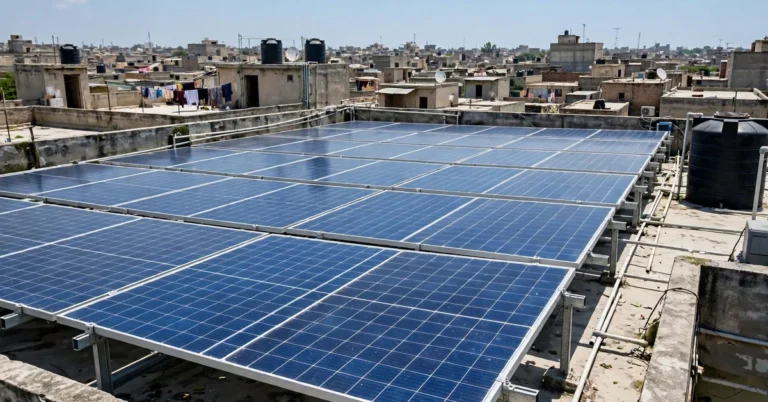
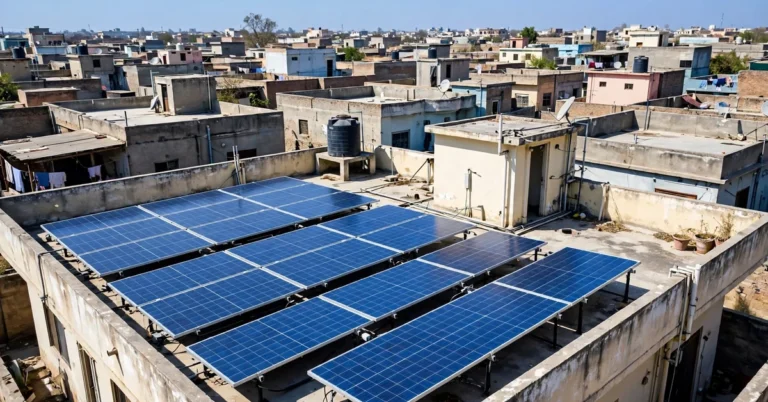
Fuel charge adjustments are one of the most underappreciated arguments for rooftop solar in Pakistan. A grid-connected household absorbs every FCA, every quarterly tariff tweak and every slab-rate change in full. A solar household that meets most of its daytime demand from its own panels simply has fewer grid units for these adjustments to attach to.
Under the current net billing framework introduced by NEPRA’s Prosumer Regulations 2026, electricity imported from the grid is billed at the full consumer tariff — including FCA lines like this one — while exported units are credited at the national average energy purchase price. The financial logic has therefore shifted decisively toward self-consumption: the more of your own solar power you use directly, the less exposure you have to fuel-cost volatility. Our complete guide to net metering and net billing in Pakistan 2026 explains how the new rules change payback calculations.
Battery storage is becoming part of the same calculation. With grid electricity carrying ever more variable add-ons, storing daytime surplus for evening use insulates a household from both peak tariffs and monthly adjustments — a trend reflected in the growing demand for high-efficiency panels and hybrid systems in 2026.
The bigger picture
The August FCA lands at a time when household energy budgets are already under pressure. Petrol prices have been revised almost daily under the new pricing mechanism — most recently settling at Rs 386.30 per litre on 17 October 2026 — and electricity remains one of the largest fixed costs for urban families.
The government’s parallel push toward solar offers one way out. The CM Punjab Free Solar Panel Scheme continues to target low-consumption households with free systems, while federal initiatives are extending solar to underserved regions. For households above the subsidy brackets, the economics increasingly speak for themselves: every unit generated on your own roof is a unit that no FCA can touch.
There is a climate dividend in that shift as well, because a recent study finds that expanding solar could cut power sector emissions by 63% by 2035.
Frequently asked questions
How much is the FCA on October 2026 bills?
Rs 1.1086 per unit, calculated on the units you were billed for in August 2026.
Does K-Electric apply the same FCA?
Yes. NEPRA’s decision states the Ex-WAPDA rate applies equally to K-Electric consumers over the same period.
Who is exempt from the August FCA?
Lifeline consumers, prepaid tariff consumers of all categories, and EV charging stations.
Why is the FCA line missing from my October bill?
Your bill may have been issued before NEPRA’s notification. In that case the FCA may appear on your November bill instead.
Can solar reduce my exposure to fuel charge adjustments?
Yes. FCA is charged per grid unit consumed, so a rooftop solar system that covers most of your daytime demand directly reduces the units the adjustment applies to.



2 Comments