
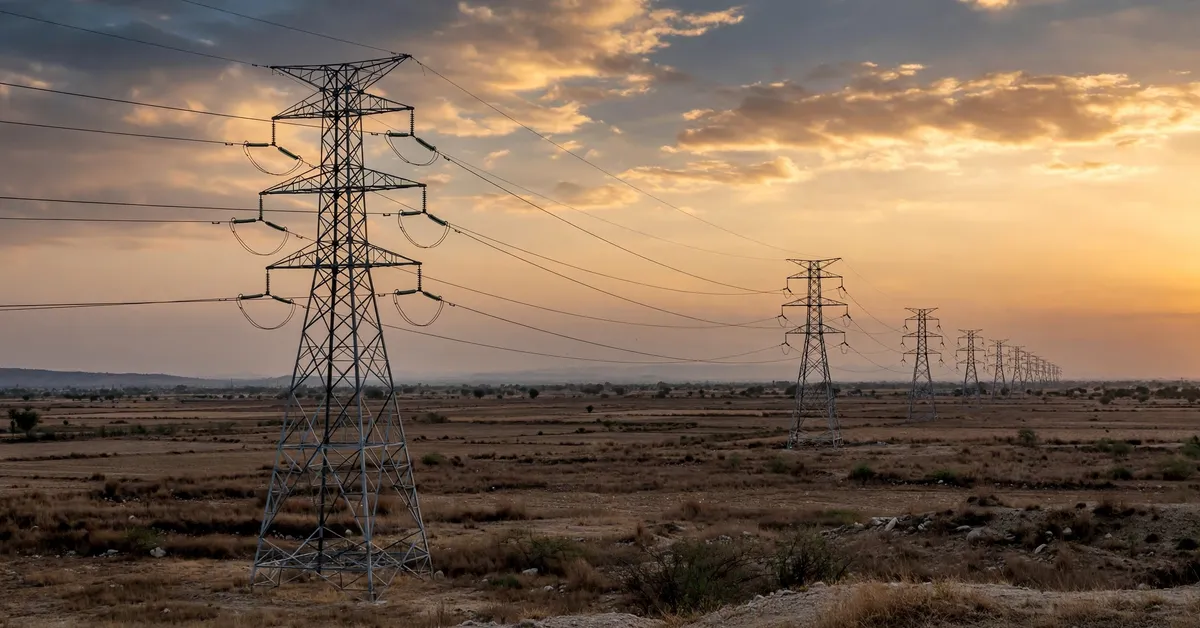
The country’s next electricity tariff cycle has its first official price signal. The Central Power Purchasing Agency-Guarantee (CPPA-G) has projected the power purchase price (PPP) for calendar year 2027 at Rs 3.55 trillion — Rs 27.31 per unit (kWh) in its base case — as part of the rebasing of consumer-end tariffs for ex-WAPDA distribution companies (XWDISCOs) from 1 January 2027, as reported by Mettis Global. NEPRA will examine the projections at a public hearing on 3 November 2026 at 2:00 pm at NEPRA Tower, Islamabad, also online via Zoom, where affected and interested parties may submit written or verbal comments. For anyone weighing rooftop solar, the key figure sits inside the headline: capacity charges, not fuel, form the largest slice of the projected cost — and that strengthens the solar case considerably.
These are projections, not final tariffs, and NEPRA’s process will test CPPA-G’s assumptions before any consumer tariff is determined. Still, the filing is the clearest early signal of where 2027 grid costs are heading — and the cost structure is what matters. When more than half of the per-unit purchase cost comes from fixed capacity payments to power producers, the tariff becomes less sensitive to fuel prices and more “sticky” on the way down. That is exactly the environment in which generating your own electricity pays back fastest.
The base case assumes 2.60% demand growth, with 130,081 GWh sold to distribution companies, and an exchange rate of Rs 279 per US dollar — significant because much of the capacity and fuel bill is dollar-indexed. Around it, CPPA-G has modelled five more scenarios, from an ideal Rs 25.88 per unit to a worst case of Rs 29.26 per unit.
The Six Scenarios, in Brief
The scenarios are a range of possibilities, not predictions. The ideal case assumes the kindest mix of demand, fuel prices and exchange rate; the two worst cases model the opposite. Between them sit a demand-sensitivity case (Rs 27.57/kWh) and an RLNG and gas-mix case (Rs 26.44/kWh).
| Scenario | Projected power purchase price (Rs/kWh) |
|---|---|
| Ideal case | 25.883 |
| RLNG & gas-mix case | 26.441 |
| Base case | 27.309 |
| Demand-sensitivity case | 27.568 |
| Worst case-I | 28.835 |
| Worst case-II | 29.255 |
Two things stand out. Even the ideal case sits near Rs 26 per unit at the purchase level — before distribution margins, taxes and surcharges lift the consumer tariff further. And the Rs 2 gap between base and worst case shows how exposed the national power bill remains to fuel and currency shocks. All figures await NEPRA’s determination after the hearing.
Where Every Rupee of the Rs 27.31 Goes
The breakdown is where the filing matters most for solar planners. Capacity charges — fixed payments to producers for keeping plants available, used or not — total Rs 1.91 trillion, or Rs 14.72 per unit: nearly 54% of the projected purchase price, and by far the biggest component.
| Cost component (base case) | Total (Rs billion) | Per-unit cost (Rs/kWh) |
|---|---|---|
| Capacity charges | 1,910 | 14.717 |
| Fuel cost | 1,320 | 10.141 |
| Transmission & Ministry of Finance charges | 248.30 | 1.909 |
| Variable operation & maintenance | 70.58 | 0.543 |
| Total projected power purchase price | 3,550 | 27.309 |
Fuel, the component that dominates headlines when oil and LNG prices move, comes second at Rs 1.32 trillion (Rs 10.14 per unit). Transmission and Ministry of Finance charges add Rs 248.30 billion (Rs 1.91), with variable operation and maintenance at Rs 70.58 billion (Rs 0.54). The message: capacity payments are contractual and fixed, so even sharply cheaper fuel would leave most of the per-unit cost untouched. Grid electricity has a high floor — set by contracts, not commodities.
What This Means for Solar Users
This is the part rooftop solar owners should read twice. Bills do move with fuel costs, as the recent fuel cost adjustment on electricity bills showed. But the rebasing numbers reveal the fixed portion now dominates the cost stack. A tariff built on Rs 14.72 per unit of capacity charges cannot fall far even when fuel is cheap — grid power is likely to stay expensive whatever happens in global energy markets.
Rooftop solar attacks exactly this. Every self-consumed unit is one not bought at the full consumer tariff — a tariff built on this Rs 27.31 purchase price plus retail add-ons. A solar system’s cost is fixed upfront, so savings grow mechanically as tariffs rise. In a world of Rs 26–29 per unit, a net-metered rooftop system locks in today’s generation cost for 20 to 25 years. Our net metering guide explains how exported surplus is credited against the bill, which shortens payback further when tariffs are high.
Timing matters too. Rebasing takes effect on 1 January 2027, so systems installed in the coming months will be running before the new cycle bites. And when each self-consumed unit is worth more, high-efficiency modules earn their premium — see our comparison of the best solar panels for Pakistani rooftops in 2026. The filing’s lesson is simple: when fixed charges dominate, the cheapest unit is the one you generate yourself.
FAQs
Is Rs 27.31 per unit the final electricity tariff for 2027?
No. It is CPPA-G’s projected purchase price — the expected procurement cost before distribution margins, taxes, surcharges and other adjustments. The consumer-end tariff will be determined by NEPRA after the 3 November hearing and could differ from these projections.
Why are capacity charges so high?
They are contractual, fixed payments to power producers for keeping generation capacity available, due whether or not the electricity is consumed. Past capacity contracts now make up nearly 54% of the projected 2027 purchase cost.
How does this affect the payback period of rooftop solar?
A higher tariff shortens payback, because each self-generated unit displaces a pricier grid unit. With the purchase price projected near Rs 27.31 before retail add-ons, correctly sized net-metered systems installed now should pay back faster than under lower tariff assumptions.
Can the public participate in the NEPRA hearing?
Yes. The hearing on 3 November 2026 at 2:00 pm takes place at NEPRA Tower, Islamabad, and online via Zoom, and affected or interested parties may submit written or verbal comments.
Conclusion
CPPA-G’s filing puts the 2027 purchase cost at Rs 3.55 trillion — Rs 27.31 per unit in the base case, with scenarios from Rs 25.88 to Rs 29.26. But the composition matters more than the headline: Rs 14.72 per unit of capacity charges gives grid electricity a high, contractually fixed floor that cheaper fuel alone cannot lower. NEPRA’s 3 November hearing will decide how much reaches consumer tariffs from 1 January 2027. Until then, the takeaway for households is clear — every unit from your own roof is a unit insulated from this entire cost stack, and that insulation grows more valuable with each rebasing cycle.


2 Comments