
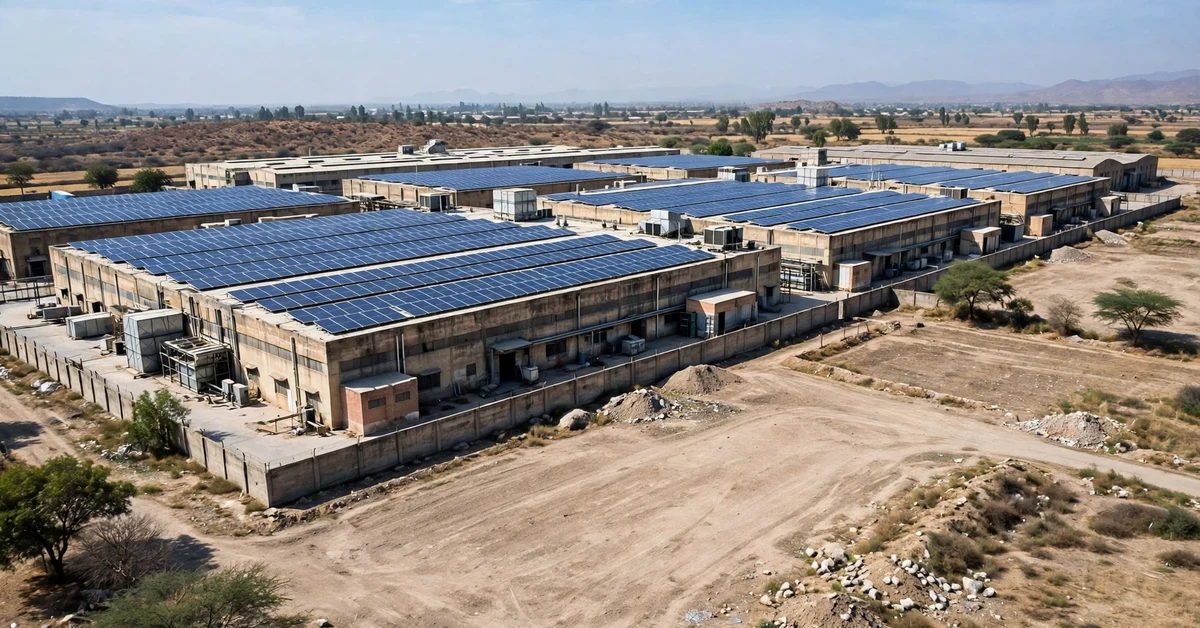
A textile giant bets on wind, solar and batteries together
Gul Ahmed Textile Mills Limited, one of Pakistan’s largest textile companies, has approved a package of renewable energy projects alongside a major land expansion at SITE Nooriabad, in Jamshoro district, Sindh. The decisions were taken at a board meeting held on 24 October 2026 and disclosed to the Pakistan Stock Exchange (PSX) on Monday, 26 October 2026, in a notice reported by Business Recorder and Profit (Pakistan Today).
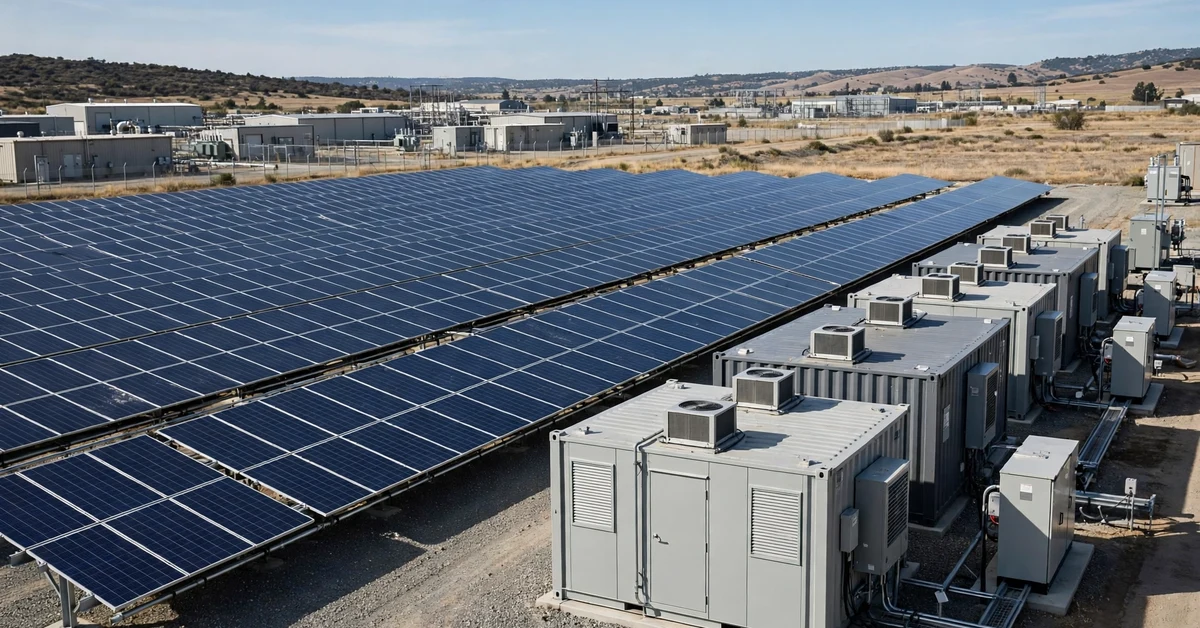
The energy package has three parts: a 7.5 megawatt (MW) wind turbine, a solar power plant of up to 6 MW, and a 20 megawatt-hour (MWh) battery energy storage system. Together they sketch a model that is becoming familiar across Pakistani industry — generate your own power from more than one renewable source, and store it so it is there when the grid is expensive or unreliable. For a textile mill, where looms and processing lines cannot simply stop when the power dips, that combination matters more than any single technology on its own.
What the board approved
| Project | Capacity | Supplier / partner |
|---|---|---|
| Wind turbine | 7.5 MW | Goldwind turbine, through Orient Energy Systems (Private) Limited |
| Solar power plant | Up to 6 MW | JinkoSolar panels; local works by A2Z Energy Systems (Private) Limited |
| Battery energy storage system (BESS) | 20 MWh, 0.5C rating | Sungrow, through Orient Energy Systems (Private) Limited |
The wind component is a single 7.5 MW turbine supplied by Goldwind, one of the world’s largest wind turbine manufacturers, through Orient Energy Systems. The solar plant, of up to 6 MW, will use panels from JinkoSolar, another of the world’s biggest module makers, with local works handled by A2Z Energy Systems. The battery system comes from Sungrow, again through Orient Energy Systems. Using established international suppliers for all three parts suggests the company is buying proven, warrantied equipment rather than experimenting — an important signal for other industrial buyers watching the deal.
Alongside the energy projects, the board approved the acquisition of five additional industrial plots at SITE Nooriabad covering a combined 43.75 acres: B-80A (12 acres), B-153 (18 acres), B-236 (4 acres), A-473 (8 acres) and B-268 (1.75 acres). The B-80A deal includes land, building, allied equipment and fittings. All five acquisitions remain subject to due diligence and the completion of corporate, regulatory and legal formalities. Separately, the company confirmed that its previously announced acquisition of Plot A-44 at SITE Nooriabad — land, building, plant, machinery and fittings, first disclosed on 20 November 2025 — has now been completed.
Why wind, solar and storage together
Each technology covers a weakness of the others. Solar panels generate in the daytime, when a textile mill is running at full tilt, but produce nothing after sunset. Wind turbines can generate at night and in cloudy weather, when solar output falls. Batteries bridge the gaps: they soak up surplus power when generation exceeds demand and release it during the expensive evening peak, when the sun has set and factory and household demand collide.
The battery’s 0.5C rating is worth understanding. The “C” rating describes how fast a battery can charge or discharge relative to its capacity — our guide to LiFePO4 battery C-ratings explains what the numbers on a datasheet mean in practice. A 20 MWh battery rated at 0.5C can deliver power at up to 10 MW (half its capacity per hour), so it can discharge fully over about two hours. That is well matched to covering an evening peak rather than carrying a factory through a whole night — and it is the same logic behind pairing batteries with rooftop solar at home, where storage is most valuable for the few hours after sunset.
For industry, the economics are driven by two pressures that households know well: high grid tariffs and unreliable supply. Manufacturers have repeatedly said that power costs decide whether Pakistani textiles can compete with regional rivals, and outages disrupt shift work and damage machinery. A mill that generates part of its own power, stores the surplus, and still buys the rest from the grid is less exposed to both problems. It is the industrial version of the calculation every solar household makes: a unit you generate yourself is a unit you do not buy at a rising price.
Businesses weighing a similar move can compare home solar vs commercial solar design differences before sizing a system.
What this means for the wider market
Gul Ahmed is a listed company, so its disclosure is public and detailed in a way that private factory projects are not. That makes it a useful bellwether. When one of the country’s biggest textile groups commits to solar, wind and storage in a single board decision, it tells suppliers, banks and rival manufacturers that industrial renewable energy has moved from pilot projects to boardroom strategy.
It also fits a wider redesign of Pakistan’s electricity market. The country has proposed a competitive retail electricity market ahead of DISCO privatisation, which would eventually let larger consumers choose their supplier rather than buying everything from their local distribution company. In that world, owning generation and storage becomes a competitive advantage, not just a cost-saving measure. Punjab, meanwhile, is shifting 256 higher secondary schools to solar power — a sign that solar-plus-storage thinking is spreading from homes to public buildings to industry at the same time.
For smaller businesses and households, the lesson is practical rather than abstract. Industrial projects of this kind push down the cost and improve the availability of the same equipment — panels, inverters and batteries — that homes buy. Anyone planning a system now should start from current market rates: our October 2026 panel price guide tracks what Tier-1 panels actually cost, and our net metering and green meter guide explains how grid-connected systems are billed under the new net billing rules.
What is still unknown
Honesty matters here: the disclosure does not give a cost figure, a construction timeline, or an expected completion date for any of the three energy projects, and it does not say how much of the mill’s total electricity demand the 6 MW of solar, 7.5 MW of wind and 20 MWh of storage will cover. The land deals are also not done yet — they depend on due diligence and formalities. Those details will decide whether this becomes a working industrial energy system within months or a longer-term programme. Watch for the company’s next PSX filings, which should confirm completion of the land deals and the start of installation work.
Frequently asked questions
What renewable energy projects has Gul Ahmed approved?
A 7.5 MW wind turbine (Goldwind, via Orient Energy Systems), a solar plant of up to 6 MW (JinkoSolar panels, local works by A2Z Energy Systems) and a 20 MWh Sungrow battery storage system (0.5C, via Orient Energy Systems), approved at a board meeting on 24 October 2026.
Where will the projects be built?
At SITE Nooriabad in Jamshoro district, Sindh, where Gul Ahmed is also acquiring five plots totalling 43.75 acres and has completed its earlier Plot A-44 acquisition.
What does a 0.5C battery rating mean?
It means the battery can discharge at up to half its capacity per hour — so a 20 MWh battery can deliver up to 10 MW, discharging fully over about two hours. It is sized for peak-hour coverage rather than all-night backup.
Has a cost or completion date been announced?
No. The PSX disclosure gives no cost estimate or timeline for the energy projects, and the land acquisitions remain subject to due diligence and formalities.
Why would a textile mill invest in its own power?
To cut exposure to high grid tariffs and unreliable supply. Solar covers daytime load, wind can generate at night, and batteries cover the evening peak — the same logic that drives rooftop solar and storage at home, scaled up to factory level.
Sources: Business Recorder, “Textile giant Gul Ahmed approves acquisition of 43.75 acres, renewable energy projects”, 26 October 2026; Profit (Pakistan Today), “Gul Ahmed approves land acquisition, renewable projects”, 26 October 2026; PSX disclosure by Gul Ahmed Textile Mills Limited, board meeting 24 October 2026.


One Comment