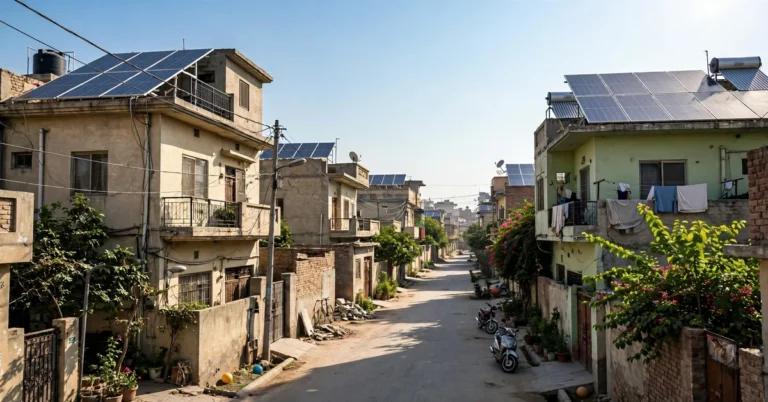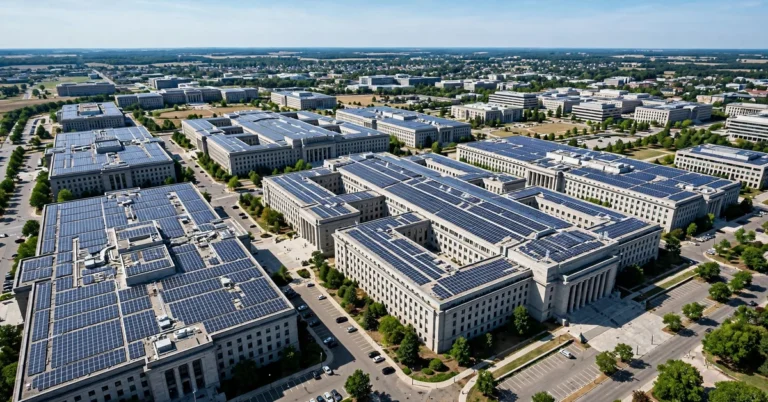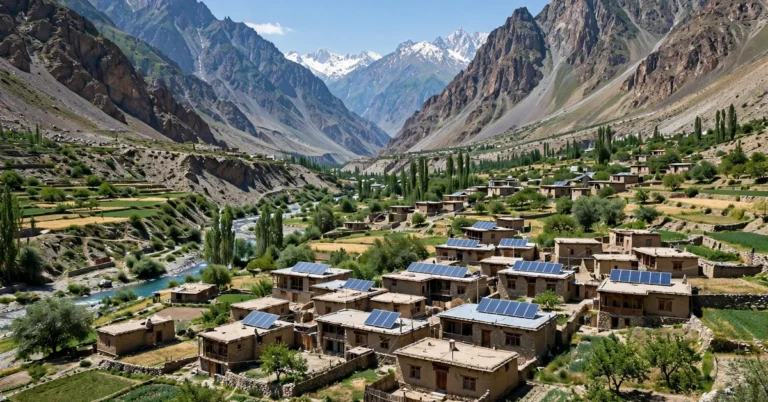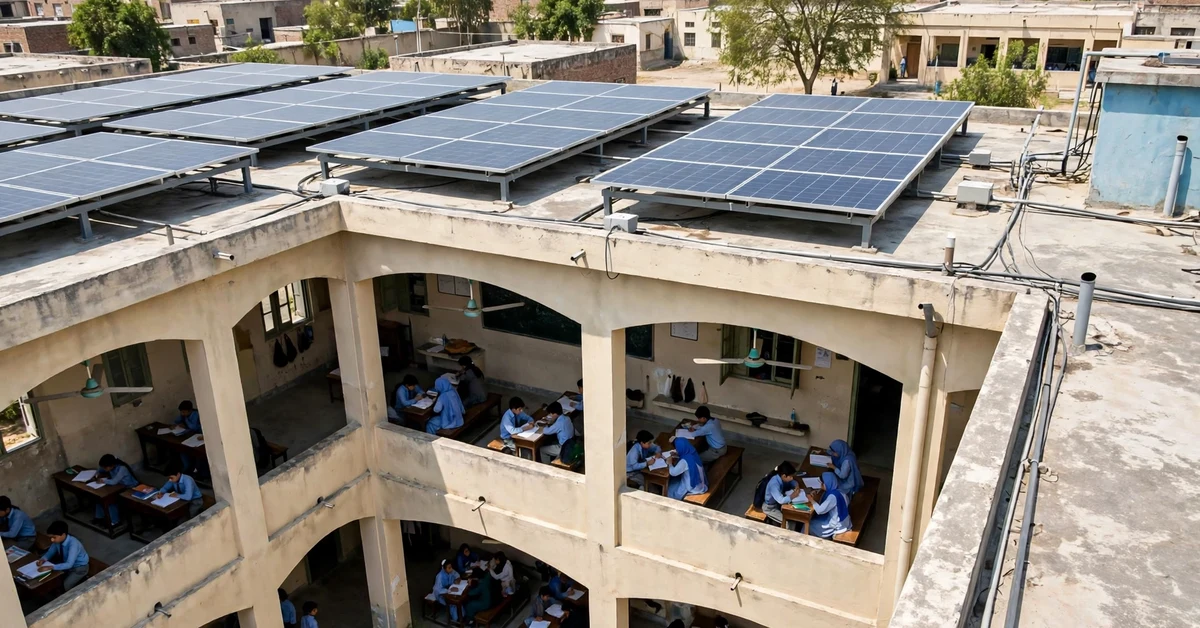
The Punjab government has decided to shift 256 higher secondary schools across the province to solar energy, in a move aimed at cutting electricity costs and reducing the schools’ dependence on the conventional grid. The list of selected schools has been released, and it includes 15 higher secondary schools in Lahore alone.
The decision, reported on 21 October 2026, is the latest in a series of Punjab government drives to put public buildings on solar power. Schools are a natural fit: their heaviest electricity use falls during daylight hours, exactly when solar panels produce the most, and their bills are paid from the public purse — so every unit a school generates itself is a unit the government does not have to buy.
Which Schools Are Included?
The 256 schools are higher secondary schools spread across Punjab. The Lahore list includes Government Higher Secondary Schools in Awan Town, Barki, Chuhng, Jallo Mor, Singhpura, Shahdara, Samanabad, Kot Lakhpat, Gulberg, Manga, Mori Gate and Garhi Shahu, among others. The report does not yet give a district-by-district breakdown for the remaining schools, nor does it publish the total capacity to be installed, the project cost, or a completion timeline — details that will matter a great deal to parents, teachers and school administrators waiting to see when work actually begins at their school.
That missing detail is worth stating plainly. Announcements of school solarisation in Punjab are not new, and the gap between announcement and installation has varied widely in past programmes. Until the School Education Department or the Energy Department publishes the full list with timelines, this announcement should be read as a decision taken and a list released — not as panels already on roofs.
Why Schools Are a Good Solar Investment
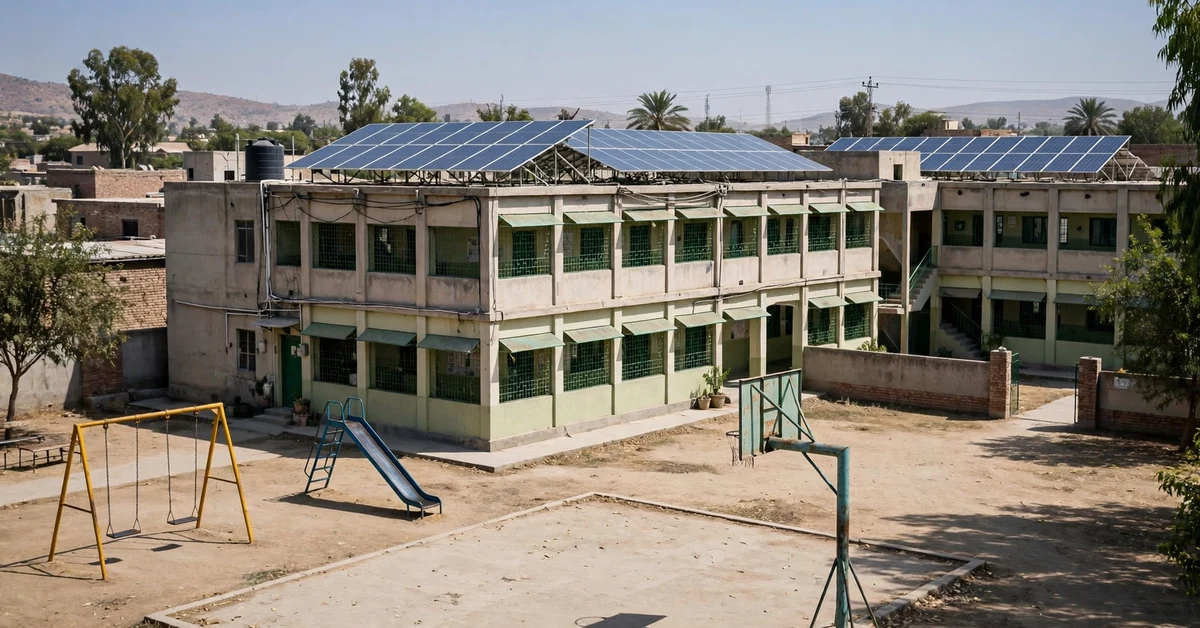
A school’s electricity profile is almost tailor-made for solar. Classes run from morning to early afternoon, which matches the solar generation curve far better than a home, where much of the demand comes in the evening after the sun has set. Fans, lights, computer labs, science laboratories and, increasingly, multimedia classrooms all draw power during the day. A rooftop system sized to that daytime load can cover a large share of a school’s consumption directly, without needing a large battery bank.
There is also a resilience argument. Load shedding and voltage fluctuation disrupt teaching: fans stop, projectors die, computer labs go dark, and in summer the heat in a crowded classroom quickly becomes unbearable. A solar system with even modest storage keeps the essentials running through an outage. For schools in areas with unreliable supply, that continuity matters more than the bill saving.
And then there is the bill itself. The government expects the shift to reduce electricity expenses significantly, saving millions of rupees in utility bills over time. Public schools are heavy, constant consumers — hundreds of fans and lights across dozens of classrooms — so even a partial offset adds up across 256 buildings. Money not spent on electricity is money that can go to books, labs and teachers.
Part of a Bigger Punjab Pattern
This is not Punjab’s first school solarisation drive, and the context helps explain why the government keeps returning to it. In October 2025, the province launched a Rs 2.94 billion project to solarise 355 public colleges by 2028, with a planned capacity of 18,825 kilowatts expected to generate around 24.47 million units of electricity a year and save roughly Rs 1.34 billion annually. Around the same period, officials announced plans to shift 1,000 public schools to solar energy as part of a broader education renovation drive.
Separately, Punjab’s household solar programme — the CM Punjab solar panel scheme — has targeted up to 100,000 low-consumption households with free small systems, and the province has been converting other public institutions too: registered seminaries in Khyber Pakhtunkhwa have been surveyed for a similar conversion under a KP government programme, showing that the public-building solar model is spreading beyond Punjab.
The pattern is consistent: governments have learned that putting solar on their own buildings is one of the fastest ways to cut their own energy bills, demonstrate the technology, and create steady demand for local installers. Schools add an educational bonus that colleges and offices do not: students who study under solar panels grow up seeing clean energy as normal infrastructure, not as a novelty.
What Should Parents and Teachers Watch For?
First, the full school list. Families in districts outside Lahore will want to know whether their school is among the 256, and in which phase it falls. Second, the system design: will schools get grid-connected systems that export surplus power during holidays, battery backup for outages, or a hybrid of both? Under the current net billing rules, new grid-connected systems are paid for exports at the national average energy purchase price rather than netted unit-for-unit, which changes the economics of oversizing a school’s system — a point the province’s engineers will have to factor into their sizing.
Third, maintenance. Solar panels are low-maintenance, not no-maintenance: dust, bird droppings and monsoon grime cut output if panels are not cleaned, and inverters need periodic checks. Past public solar installations have sometimes faded because nobody owned the maintenance after the ribbon-cutting. A clear maintenance contract, with responsibility assigned to a department or vendor, will decide whether these 256 systems still perform in five years’ time.
Fourth, safety and quality. School rooftops carry children below them, so mounting structures, wiring and earthing must meet proper standards, and the equipment should be documented, warranted stock — the same advice we give households comparing solar panel prices in Pakistan, where the cheapest quote is not always the best value.
What This Means for Households Near These Schools
For families, the direct benefit is better schooling: cooler classrooms, working computer labs, and fewer lessons lost to power cuts. The indirect benefit is a local proof point. When a neighbourhood school runs on solar, local installers gain experience, neighbours see the technology working, and households considering their own system can ask the school’s installer real questions. A 5kW home system is a very different purchase from a school’s rooftop array, but the confidence effect is real.
There is also a question worth asking at the next parent-teacher meeting: if the school is on the list, when does installation start, and who maintains it? Public announcements create accountability only when the public follows up. The 256-school decision is welcome news, but its value will be measured in installed, working systems — not in lists.
Frequently Asked Questions
How many schools are being shifted to solar?
256 higher secondary schools across Punjab, including 15 in Lahore.
Which Lahore schools are included?
The reported Lahore list includes Government Higher Secondary Schools in Awan Town, Barki, Chuhng, Jallo Mor, Singhpura, Shahdara, Samanabad, Kot Lakhpat, Gulberg, Manga, Mori Gate and Garhi Shahu, among others.
When will the work be completed?
No completion timeline has been published in the report of the decision so far. Watch for a district-wise schedule from the School Education Department or the Energy Department.
Will this cut school electricity bills?
Yes, that is the stated aim: solar generation during school hours should significantly reduce each school’s grid consumption and, across 256 schools, save millions of rupees over time.
Is this the same as the CM Punjab free solar panel scheme?
No. The household scheme gives small free systems to low-consumption homes, while this decision covers public higher secondary schools as institutional buildings.
Punjab’s schools have waited through enough power cuts. If this list turns into working rooftop systems with proper maintenance, 256 schools will teach their students something no textbook can: that clean energy is not a promise for the future, but infrastructure that already works above their heads.