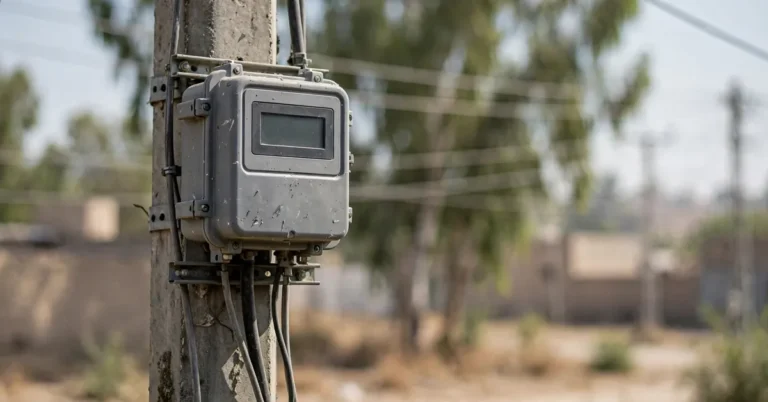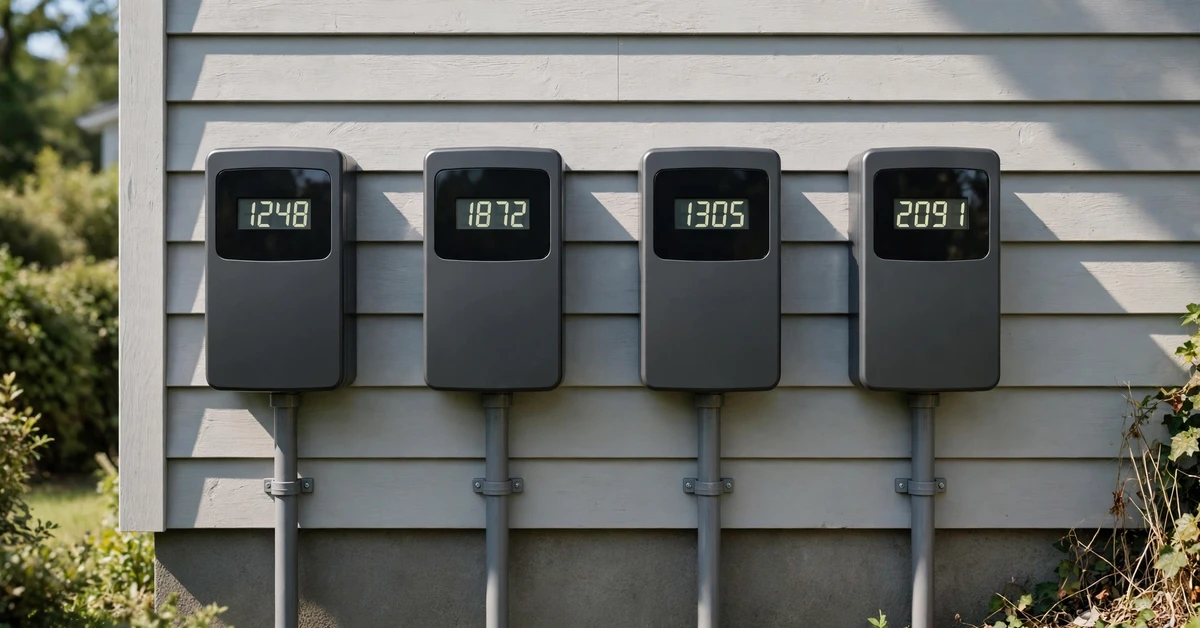
A green meter, technically a bi-directional meter, is the piece of hardware that turns a rooftop solar installation into a genuine money-saving asset. Without it, the extra electricity your panels generate at midday is effectively wasted. With it, every surplus unit is counted, credited, and knocked off your monthly bill. Getting that meter means going through your local distribution company, the DISCO: LESCO in Lahore, IESCO in Islamabad and Rawalpindi, both working under NEPRA regulations.
This guide covers the application process itself, stage by stage: the documents, the portal, the inspection, and where the common hold-ups are. For the wider picture, our complete guide to net metering in Pakistan 2026 explains how green meters and billing work, including the shift to the newer net-billing framework. Think of that article as the theory and this one as the procedure.
Step 1: Check You Are Eligible
Three conditions matter before you spend a rupee on paperwork. First, you need a three-phase connection; single-phase connections do not qualify. Second, your system must sit within your sanctioned load, so a quick load calculation settles this early. Third, there must be capacity on your local transformer: a DISCO will not accept a new application if solar already connected to it has reached 80% of its rated capacity. Your installer’s site survey should verify all three before anything is filed.
Step 2: Choose a Certified Installer
Choosing your installer is the first real decision, and it quietly decides how smooth the rest of the process is. A competent installer sizes the system to your sanctioned load, prepares the technical drawings the DISCO demands, and usually files the whole application on your behalf. Lock in one requirement now: grid-connected inverters must meet the UL 1741 safety standard, with anti-islanding protection. When you are comparing inverter options, compliance is mandatory, not a bonus. And only on-grid and export-capable hybrid systems can get a green meter; off-grid systems cannot.
Step 3: Prepare the Documents
An incomplete file is the single most common cause of delay, so treat the checklist as the heart of the job and assemble everything before submitting:
| Document | Details | Who provides it |
|---|---|---|
| CNIC copy | Of the person the electricity connection is registered to | You |
| Latest paid electricity bill | Recent bill showing sanctioned load | You |
| Proof of ownership | Registry, fard, or allotment letter; rented property needs owner’s NOC | You |
| NEPRA application forms | Prescribed schedules (II to V); free to download | You / installer |
| Single-line diagram (SLD) | Schematic of the complete system | Installer |
| Panel and inverter datasheets | Spec sheets for the exact models installed | Installer |
| Inverter test / compliance certificates | Proof of UL 1741 compliance; LESCO asks for serial number and registered manufacturer | Installer |
| Affidavit on stamp paper | Declaring NEPRA compliance (mainly for NEPRA-concurrence cases) | You |
| Installation completion / test report | Wiring and testing report after installation | Installer |
The bill and the CNIC must match the name on the connection. If your connection is registered to a parent or spouse, use their documents with their consent rather than substituting your own; a name mismatch bounces the file back immediately.
Step 4: Submit the Application
Applications for LESCO, IESCO, and most other DISCOs go through the shared online portal nmp.pitc.com.pk, with apply-by-consumer and apply-by-installer routes plus online tracking. The NEPRA schedules and the standard interconnection agreement are downloadable there. LESCO also accepts filings at sub-division offices, IESCO at customer service centres. Many people simply let the installer file.
Step 5: Acknowledgement and Technical Review
Regulated deadlines now apply. The DISCO must acknowledge receipt within five working days and flag anything missing. The technical review follows, targeted at fifteen working days, during which engineers check the design and assess whether the feeder and transformer can accept the proposed generation. This is where the transformer-capacity check bites, and where oversized or poorly designed proposals get returned with the reasons stated.
Step 6: Site Inspection and NOC
A DISCO inspection team then visits your premises, for LESCO typically led by an SDO or assistant manager (technical). They verify that the panels and inverter match the declared specifications, check the mandatory AC and DC surge protection devices (SPDs), and run earthing and anti-islanding tests. Common rejection reasons are missing SPDs, an oversized system, and non-compliant inverters. Pass, and the DISCO issues the technical NOC.
Step 7: Agreement, Payment, and Meter Installation
After approval you sign the interconnection agreement, targeted at seven working days. Systems of 25 kW or below are approved by the DISCO directly; larger systems go to NEPRA for concurrence (Rs 1,000 per kW fee), so residential files almost never leave the DISCO. Then comes the demand notice for interconnection and metering, targeted at seven working days and payable within seven. You pay all connection costs including the meter; if the DISCO has no meter in stock, you may supply one for it to test. After payment, the meter is installed within fifteen working days, the revenue office updates your billing, and net metering is live. Once the meter is installed, our guide to net metering costs, green meter fees and real payback in Pakistan shows how quickly the system can pay for itself.
How Long Does It Really Take?
On paper, the regulated deadlines add up to roughly six to ten weeks from submission to meter installation. In practice, most applicants report anything from a few weeks to a few months, driven mostly by the DISCO’s current workload, meter availability, and above all the completeness of the application. Every missing document restarts a clock; every failed inspection adds a round trip.
Common Delays and How to Avoid Them
- Incomplete documents. Name mismatches between CNIC and bill, a missing affidavit, or datasheets for the wrong inverter model. Check the list twice before filing.
- Transformer at capacity. If your area’s transformer has hit the 80% solar limit, no paperwork helps. Check grid availability before designing the system.
- Unregistered or non-compliant inverter. LESCO asks for the inverter serial number and a registered manufacturer. A cheap unlisted inverter can sink the whole application.
- Oversized system. A system bigger than your sanctioned load fails the technical review. Size to the load, or apply for a load extension first.
- Failed inspection. Missing surge protection, poor earthing, or sloppy wiring get the file bounced. Make sure your installer fits full AC/DC protection and tests earthing beforehand.
- Late demand-notice payment. The installation clock does not start until you pay, so settle the demand notice within its seven-day window.
Frequently Asked Questions
Can I apply myself, or does my installer have to do it?
Either. The portal accepts applications from consumers directly and from installers. Most people let the installer file because half the dossier is technical.
Do I need a three-phase connection for a green meter?
Yes. A three-phase connection is required, and the system must stay within your sanctioned load.
My house is rented. Can I still apply?
Only with the owner’s consent. The documents must be in the name of the person the connection is registered to, and the owner must provide a written NOC.
What happens if my application is rejected?
The DISCO returns it with the reasons stated, such as missing documents or the transformer capacity limit. Fix the stated problem and resubmit.
Who pays for the new meter?
You do. The prosumer pays all connection costs, including the meter, through the demand notice.
Does IESCO have its own separate portal?
No. The shared portal nmp.pitc.com.pk serves IESCO, LESCO, and the other DISCOs, with online application tracking. IESCO also accepts filings at its customer service centres.