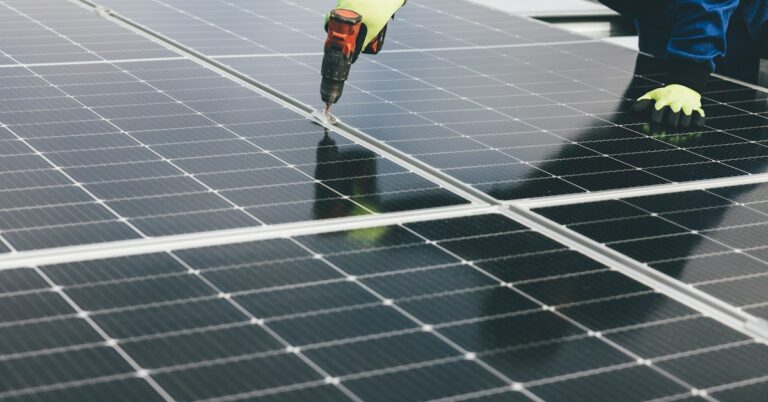

The LONGi Hi-MO 9 solar panel looks a lot like any other panel from the roof. Dark glass, silver frame, a grid of thin lines. So when LONGi calls it a big step forward, it’s fair to ask what actually changed.
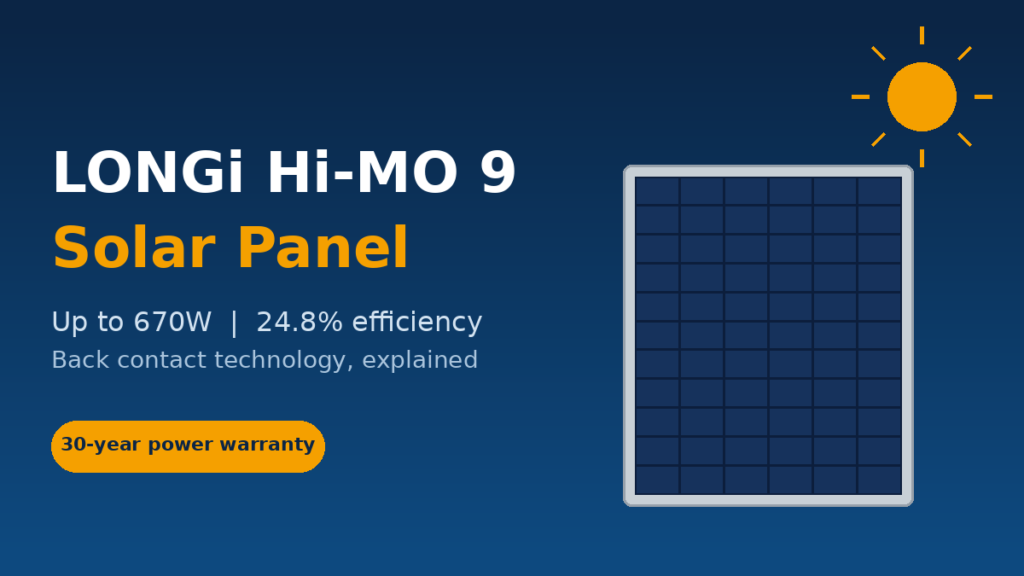
The answer is on the back of the cell, where you can’t see it. That one design choice is why this panel has people in the solar trade talking. The LONGI HI MO 9 solar panel is a high-power option for large commercial and utility-scale projects.Up to 670 watts from a single panel. Module efficiency of up to 24.8 percent. A 30-year power warranty. Those are strong numbers, so in this guide we’ll look at what’s behind them, where the panel does well, and what you should think about before buying one in Pakistan.
TOTAL SUMMARY
Table of Contents
What Is LONGi Hi-MO 9 Solar Panel?
The Hi-MO 9 is a utility-focused high-power solar module from LONGi built on its second-generation HPBC 2.0 back-contact technology. LONGi’s upgraded 2025 Hi-MO 9 reaches up to 670W and 24.8% module efficiency. The newer Hi-MO 9 Prime announced in 2026 is a separate evolution of the family, reaching up to 680W and 25.2%, so buyers should compare the exact model number and datasheet rather than mixing specifications between variants.
Who is it really made for?
Here’s something worth knowing early. LONGi has described this series as mainly aimed at ground-mounted utility projects. That doesn’t stop it from going on a large commercial roof, and some dealers do list it for commercial and home use. But if you’re covering a small home rooftop, LONGi’s smaller Hi-MO X series, which is built around the same back contact idea, is often the more practical choice.
Back Contact Technology, Without the Jargon
Every solar cell needs metal contacts to carry the electricity out. On a conventional cell, those contacts sit on the front, right where sunlight arrives. They’re small, but across a whole panel they add up to a lot of blocked light.
Back contact cells flip the arrangement. All the contacts sit on the rear side, so the front is a clean, dark surface with nothing in the way.

What HPBC 2.0 adds
The second-generation design reworks the rear side using zero-busbar technology. LONGi says this lifts bifaciality above 80 percent. In simple terms, the back of the panel can produce more than 80 percent of what the front does when it receives reflected light. That’s why bifacial panels do best over white roofs, light gravel or bare ground, and why your installation surface matters more than most people expect.
Hi-MO 9 Specs at a Glance
Here are the headline numbers for the top HPBC 2.0 version. Exact figures change from one version to the next, so always check the datasheet for the specific model your dealer is offering.
| Feature | Hi-MO 9 |
| Maximum power | Up to 670 W |
| Module efficiency | Up to 24.8% |
| Cell technology | HPBC 2.0 back contact |
| Number of cells | 66 |
| Size | 2,382 x 1,134 mm |
| Bifaciality | Variant-dependent; current LONGi product listing shows 75±5%, while LONGi’s 2025 upgraded-module launch reported over 80% |
| Degradation | 1% in year one, then 0.35% a year |
| Product warranty | 12 years |
| Power warranty | 30 years |

How the Longi Hi-MO 9 Performs in the Real World
Heat
Pakistani summers are hard on solar panels. On a rooftop in Multan or Jacobabad, a panel can run far hotter than the air around it, and every degree costs a little output. The launch datasheet lists a temperature coefficient of about -0.28 percent per degree Celsius, which is on the good side. In a CGC test on a coastal site in China, LONGi reports that Hi-MO 9 panels ran about 1.26°C cooler than TOPCon panels and produced 1.93 percent more power per kilowatt.
Shade and low light
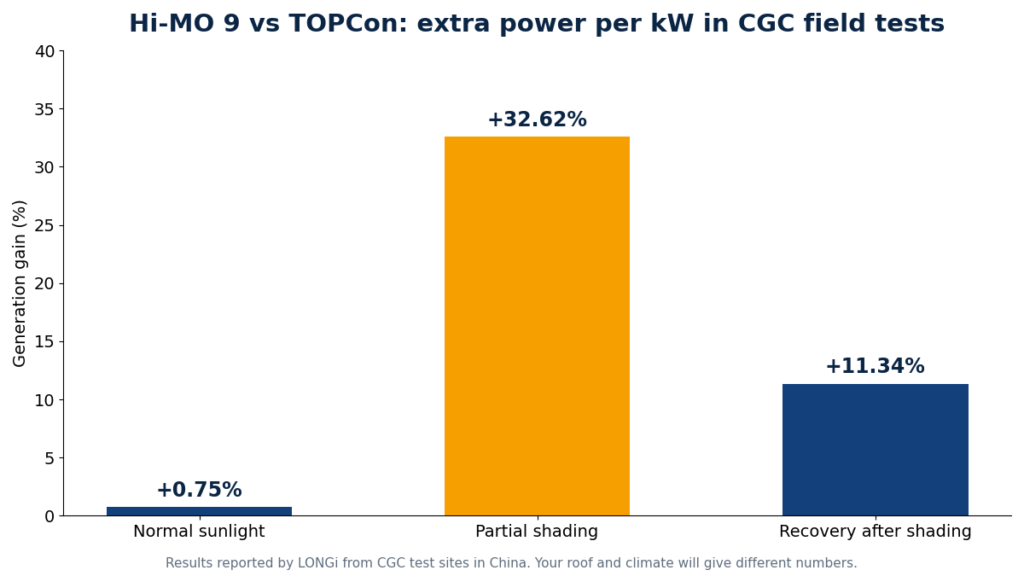
This is where back contact panels are said to stand out. Think of a water tank, a chimney, a neighbour’s tree or a patch of dust in one corner. CGC data shared by LONGi shows a 32.62 percent gain in partial shade and 11.34 percent during recovery after shading. Those come from specific test setups, so don’t expect the same numbers at home. The direction, though, is clear.
How Does It Compare With TOPCon Panels?
TOPCon is the technology most new panels in Pakistan use today, so it’s the natural yardstick. LONGi’s own comparison says the Hi-MO 9 delivers about 1.5 percentage points more efficiency than TOPCon equivalents. On the same amount of land, that works out to roughly 6.4 percent more installed capacity.
That sounds modest until you apply it to a big project. On a 1 MW plant, 6.4 percent is 64 kW you didn’t need extra land, mounting steel or cabling to get. It’s the kind of gain that quietly improves the payback period without anyone noticing on day one. Keep in mind these figures come from the manufacturer, so it’s smart to ask your installer for a simulation of your own site.
Illustrative Example: A 400 m² Factory Roof
Numbers make this easier to picture, so let’s try a simple example. Say a small textile workshop in Faisalabad has 400 square metres of usable roof once you leave room for walkways and water tanks. The owner wants as much solar as the space allows.
A typical 580W panel measures about 2.58 square metres, so roughly 154 of them fit. That’s around 89 kW. The Hi-MO 9 at 670W is a little larger at about 2.70 square metres, so roughly 148 panels fit, and together they add up to about 99 kW.
Same roof, about 10 kW more. As a rough guide, a kilowatt of solar in Pakistan makes around 1,300 units a year. So 10 extra kW means about 13,000 additional units annually. If the workshop pays around Rs. 40 per unit, that’s roughly Rs. 520,000 a year from space that would otherwise have been wasted.
These are back-of-the-envelope figures. Real layouts need proper spacing, tilt and shading checks, and your tariff will differ. But the lesson holds: when roof space is the limit, more power per square metre is what pays off.

Installation Tips for Pakistani Conditions
A good panel can still underperform if it’s installed badly. A few habits make a real difference here.
- Give bifacial panels some breathing room. Leaving space under the panels and using a light-coloured surface helps the rear side collect reflected light.
- Plan for dust. Rooftops in Punjab and Sindh get dusty fast. Wash panels early in the morning or in the evening, never when the glass is hot.
- Check the mounting structure. Large panels catch more wind, so the frame and fixings need to be designed for it.
- Use a qualified installer. Proper earthing, cable sizing and inverter matching matter as much as the panel itself.
Frequently Asked Questions
1. What is the LONGi Hi-MO 9 solar panel?
It’s a high-power solar module from LONGi built on HPBC 2.0 back contact technology. The top version delivers up to 670W with a module efficiency of up to 24.8 percent.
2. Is the Hi-MO 9 good for home use in Pakistan?
It can work on a large roof, but LONGi positions it mainly for ground-mounted utility projects. It’s a big panel, so for a typical home the smaller Hi-MO X series is usually a better fit. A site visit from a good installer will settle it.
3. How much does the Hi-MO 9 cost in Pakistan?
There’s no single official price. LONGi panels in recent Pakistani lists run from roughly Rs. 30 to Rs. 45 per watt, and the Hi-MO 9 would likely sit toward the top of that range. Ask an authorised distributor for a written quote.
4. What warranty does the Hi-MO 9 come with?
LONGi lists a 12-year product warranty and a 30-year linear power warranty. Ask your dealer exactly how claims are handled in Pakistan before you buy.
5. What is the difference between back contact and TOPCon panels?
TOPCon cells still have metal contacts on the front. Back contact cells move them all to the rear, which leaves more of the front surface open to sunlight. LONGi’s tests suggest this helps most in shade and heat.
Final thought of longi hi-mo 9 solar panel
If you have a large roof or a commercial project where space is tight, the LONGi Hi-MO 9 solar panel deserves a serious look. High power per square metre, strong shade performance and a long warranty are a good combination. If you’re powering an ordinary house, you’ll probably be just as happy with one of LONGi’s smaller models.
Either way, buy from an authorised source, get the datasheet and check your inverter. Prices change quickly, so confirm current rates with your dealer before you decide.