

Introduction
A 6kW solar system in the United States typically costs around $16,000 to $21,000 before incentives in 2026. The exact price depends on where you live, the type of panels and inverter you choose, your roof’s condition, installation complexity and whether you pay cash or use financing.
For a useful benchmark, EnergySage reported an average installed price of approximately $16,080 for a 6kW system based on 2026 marketplace data. A separate national benchmark of $3.36 per watt puts a 6kW installation at approximately $20,160. These figures come from different datasets and pricing methods, so homeowners should treat them as estimates rather than guaranteed quotes.
This guide explains typical 6kW solar system prices in 2026, what is included, how much electricity the system may generate, available incentives and how to compare installer quotes.
Average Cost of a 6kW Solar System in the US
A 6kW system has a rated capacity of 6,000 watts. At an installed price of $2.70 to $3.50 per watt, the estimated project cost is:
- Lower estimate: $16,200
- Mid-range estimate: $18,600
- Higher estimate: $21,000
The price generally includes solar panels, an inverter, mounting equipment, wiring, installation labour, permits and standard electrical work. However, every proposal is different. Some quotes may exclude roof repairs, electrical panel upgrades, trenching, battery storage or other additional work.
Example Cost Breakdown
| Component | Illustrative share |
|---|---|
| Solar panels | 25%–35% |
| Inverter and electrical equipment | 10%–15% |
| Mounting, wiring and balance of system | 10%–15% |
| Labour and installation | 20%–30% |
| Permits, design and overhead | Varies |
This is an illustrative breakdown, not a fixed industry price list. Ask each installer for an itemised proposal so you can compare the same scope of work.
How Much Does a 6kW System Cost by State?
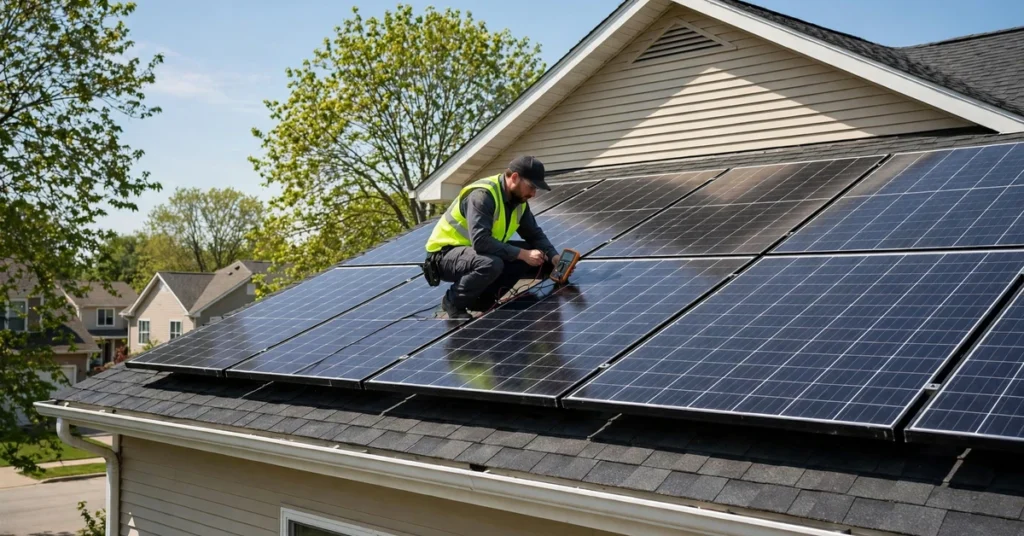
Solar installation prices vary across the country because of differences in labour, permitting, competition, roof types and local market conditions.
For example, EnergySage’s 2026 marketplace data lists the following average prices for a 6kW system:
| State | Indicative installed price |
|---|---|
| Texas | $12,234 |
| Florida | $12,713 |
| Arizona | $13,695 |
| California | $14,709 |
| New Jersey | $15,319 |
| Washington | $15,597 |
| New York | $16,586 |
| Maryland | $16,658 |
| Colorado | $16,099 |
| Massachusetts | $17,816 |
These are marketplace estimates, not official statewide tariffs. Actual quotes can be higher or lower depending on the property and installation requirements. Always compare recent local quotes rather than assuming a state average will apply to your home.
How Much Electricity Does a 6kW Solar System Produce?
A 6kW solar system may generate roughly 7,200 to 9,000 kilowatt-hours (kWh) per year in many US locations. Actual production depends on sunlight, roof direction, panel angle, shading, local weather and system losses.
A home in Arizona may produce more electricity than a similar system in a less sunny region. A south-facing roof with little shade may also outperform a roof with an unfavourable orientation or nearby obstructions.
Before installation, ask for a site-specific production estimate. The estimate should state the assumptions used, including shading, roof orientation and expected system losses.
What Affects the Price of a 6kW Solar Installation?
1. Solar Panel Quality and Efficiency
Premium panels can cost more, particularly models with higher efficiency, stronger performance warranties or specialised designs. However, the most expensive panel is not automatically the best value. Compare efficiency, product warranty, performance warranty and the installer’s support.
2. Inverter Selection
A 6kW system may use a string inverter, microinverters or power optimisers. Microinverters and optimisers can add cost but may be useful on roofs with multiple orientations or partial shading. The right design depends on the property.
3. Roof Condition and Complexity
A simple roof with good access is usually easier and less expensive to install on. Steep roofs, multiple roof sections, difficult access, old roofing materials or required repairs can increase the total project price.
4. Local Permits and Labour
Permit fees, inspection requirements and labour costs differ by city and state. Areas with more installer competition may have lower quotes, while complex local requirements can increase project costs.
5. Battery Storage
A standard grid-connected 6kW solar installation does not automatically include a battery. Adding storage increases the upfront investment, with the final cost depending on battery capacity, equipment and electrical work.
A battery can store excess daytime electricity for use later, but it does not increase the amount of energy the solar panels generate.
Is the 30% Federal Solar Tax Credit Available in 2026?
The former federal Residential Clean Energy Credit under Section 25D is not available for homeowner-purchased systems placed in service after December 31, 2025. This means a homeowner buying and installing a system in 2026 should not automatically subtract 30% from the quoted price.
State, utility and local incentives may still be available, depending on where the property is located. Some programs offer rebates, performance payments, property-tax treatment or other benefits. Rules and funding can change, so verify current eligibility directly with the relevant state agency, utility or program administrator.
Third-party-owned arrangements, such as leases and power purchase agreements, are different from a homeowner buying a system. The provider owns the equipment and may be subject to separate business tax rules. Ask how any claimed incentive affects your payment or contract price, and review the agreement carefully.
Is a 6kW Solar System Enough for Your Home?
A 6kW system may suit a small or medium-sized home, but the right size depends on annual electricity use rather than the home’s square footage alone.
Review twelve months of utility bills and identify your total annual consumption in kWh. Then compare that figure with the system’s estimated annual production. If your home uses 10,000kWh per year and the system is expected to generate 8,000kWh, it may offset a substantial portion of usage, but it will not cover all consumption.
Also consider future changes, such as buying an electric vehicle, adding air conditioning or installing electric appliances. These can increase electricity demand.
How to Save Money on a 6kW Solar System
- Get at least three quotes: Compare proposals with similar system sizes, equipment and warranties.
- Compare price per watt: Divide the installed price by 6,000 watts to create a useful comparison.
- Check the equipment details: Confirm panel and inverter models rather than relying on broad descriptions.
- Review financing costs: Loan dealer fees and interest can make the total cost significantly higher than a cash price.
- Check local incentives: Contact your state energy office and utility for current programs.
- Avoid oversizing: Choose a system based on realistic electricity needs and local export rules.
Do not choose an installer on price alone. Check licensing, insurance, workmanship warranty, references and who will handle service if the company stops operating.
Cash Purchase vs Solar Financing
Paying cash usually makes it easier to understand the full system cost because there is no loan interest or financing fee. A solar loan can reduce the initial payment, but compare the total amount repayable, interest rate, dealer fees and loan term.
Leases and power purchase agreements may require little or no upfront payment, but the provider owns the system and the contract can affect home sale arrangements. Read the agreement carefully and understand annual payment increases, maintenance responsibilities and buyout conditions.
Conclusion
A 6kW solar system in the US costs approximately $16,000 to $21,000 before incentives in 2026 as a broad planning estimate. Some locations and marketplace offers may be lower, while complex roofs, premium equipment and financing can raise the total.
The former 30% federal residential clean energy tax credit is no longer available for homeowner-owned systems placed in service after December 31, 2025. However, state and utility incentives may still reduce costs. Compare multiple itemised quotes, check local programs and use your actual electricity consumption to decide whether a 6kW system is the right size.
Frequently Asked Questions
1. How much does a 6kW solar system cost in the US in 2026?
A typical planning estimate is around $16,000 to $21,000 before incentives. Actual prices depend on location, roof conditions, equipment and installation requirements.
2. How many solar panels are needed for a 6kW system?
It depends on panel wattage. With 400-watt panels, a 6kW system would need approximately 15 panels. With 450-watt panels, it would need about 14 panels, with the final system size depending on the equipment selected.
3. How much electricity does a 6kW solar system generate?
A 6kW system may generate approximately 7,200 to 9,000kWh annually in many US locations. Local sunlight, shading, roof direction and system design affect the result.
4. Is the 30% federal solar tax credit available in 2026?
The homeowner Residential Clean Energy Credit under Section 25D is not available for systems placed in service after December 31, 2025. Check current state and utility incentives for other possible savings.
5. Does a 6kW solar system include a battery?
No. A standard solar quote usually covers panels, inverter and installation, but battery storage is generally an additional purchase. Confirm the included equipment in the written proposal.
6. How long does it take to install a 6kW solar system?
The physical installation may take one to several days, depending on roof and electrical complexity. Permitting, utility approval and inspection can extend the overall project timeline.
Sources and Further Reading
- EnergySage, 6kW Solar Panel Systems: https://www.energysage.com/solar/6kw-solar-system-compare-prices-installers/
- Solar.com, Solar Panel Cost in 2026: https://www.solar.com/learn/solar-panel-cost/
- ENERGY STAR, Solar Energy Systems Tax Credit: https://www.energystar.gov/about/federal-tax-credits/solar-energy-systems


5 Comments