Introduction
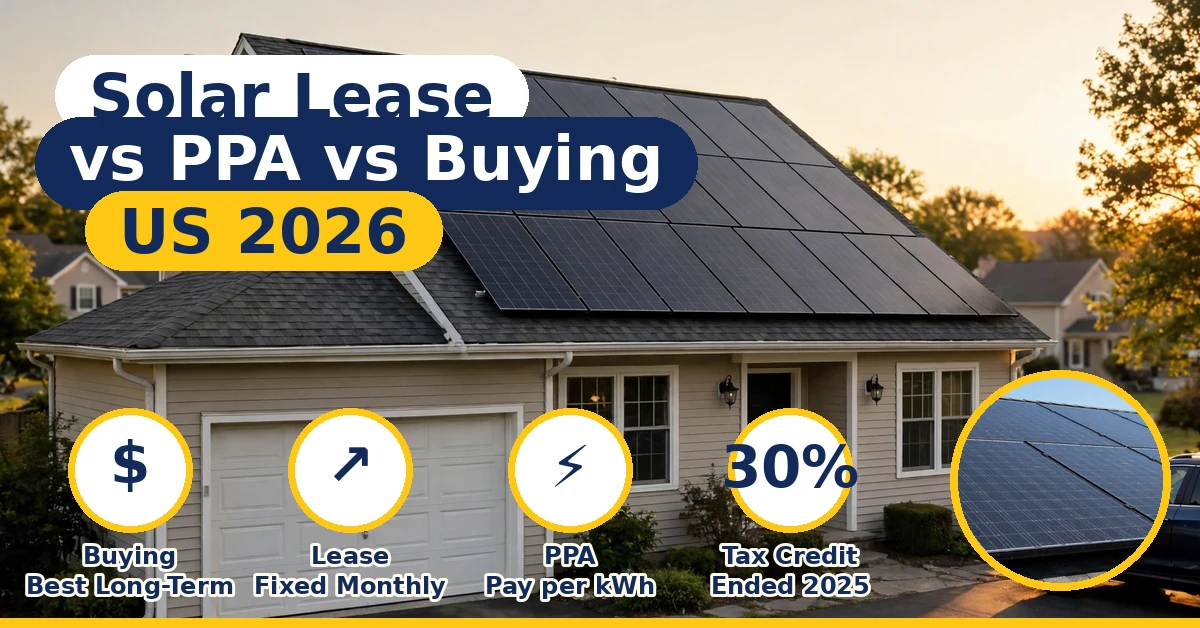
Going solar can reduce the amount of electricity you buy from your utility, but the way you pay for a system can make a major difference to your savings. In the United States, homeowners generally consider three options: buying solar panels with cash or a loan, leasing the equipment, or signing a power purchase agreement (PPA).
Each option has a different balance of upfront cost, ownership, maintenance and financial return. Buying can provide greater long-term value when the system is priced well and you can manage the upfront cost or loan payments. A lease or PPA can make solar easier to access without purchasing the equipment, but the contract may limit your flexibility.
There is also an important 2026 tax-credit change: the federal residential clean energy credit for homeowner-owned systems ended for expenditures after December 31, 2025. Some third-party-owned projects may have different business tax treatment, subject to current federal rules and deadlines. This guide explains the differences and how to compare offers.
What Is the Difference Between a Solar Lease, PPA and Buying?
Buying Solar Panels with Cash
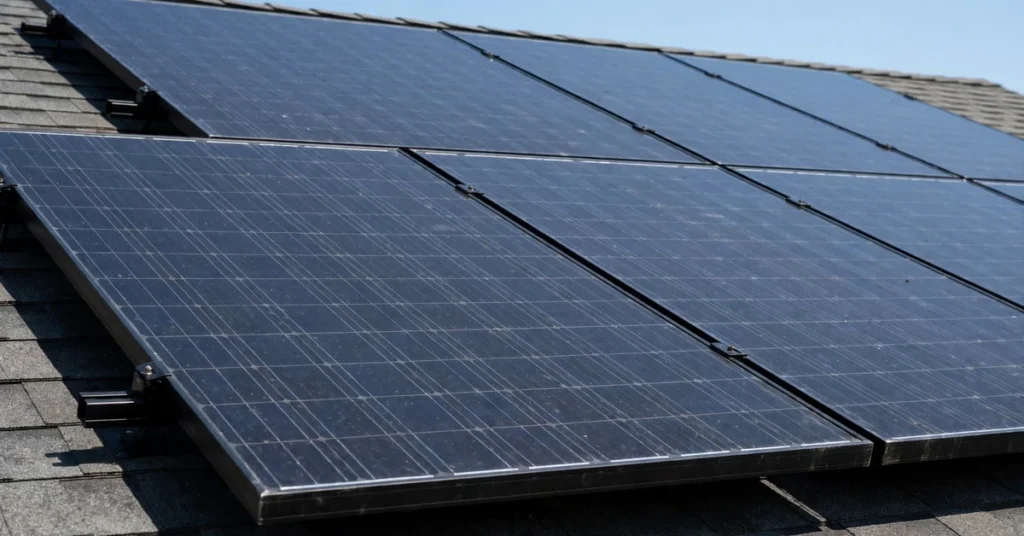
When you buy a solar system outright, you own the panels, inverter and other equipment. You pay the installation cost upfront and use the electricity the system generates. Depending on your utility’s net-metering or export-credit rules, surplus power may earn bill credits.
Cash purchases avoid loan interest and monthly financing payments. Once the system has paid for itself through reduced electricity bills and any export credits, the remaining savings can be substantial. However, you are responsible for maintenance, repairs outside warranty coverage and eventual inverter replacement.
Buying Solar Panels with a Loan
A solar loan allows you to own the system while spreading the purchase price over time. You may need little or no money upfront, depending on the lender and loan product. Your monthly loan payment is separate from your utility bill, so calculate both together when estimating savings.
Compare the interest rate, loan term, fees, prepayment rules and whether the quoted price includes dealer or origination charges. A low advertised monthly payment can hide a longer term or a higher total repayment.
Leasing Solar Panels
With a solar lease, a solar company installs and owns the equipment on your roof. You pay a fixed monthly amount to use the system, usually under a long-term agreement. The provider generally handles system monitoring and maintenance as described in the contract.
A lease can reduce the need for a large upfront payment. However, you do not own the equipment, and the contract may include annual payment increases called escalators. You should compare the lease payment plus your remaining utility bill against what you currently pay for electricity.
Signing a Solar Power Purchase Agreement (PPA)
A PPA is also a third-party ownership arrangement, but the payment method is different. Instead of paying a fixed amount to use the equipment, you pay for the electricity the system produces, usually at an agreed price per kilowatt-hour.
Your PPA bill can change from month to month because solar production changes with the season and weather. The agreement may include an annual price escalator. You continue to buy electricity from the utility when the solar system does not meet your household’s demand.
Solar Lease vs PPA vs Buying: Side-by-Side Comparison
| Feature | Cash purchase | Solar loan | Solar lease | PPA |
|---|---|---|---|---|
| System owner | Homeowner | Homeowner | Solar provider | Solar provider |
| Upfront payment | High | Often low or none | Often low or none | Often low or none |
| Monthly payment | No loan payment | Loan payment | Usually fixed lease payment | Payment for generated kWh |
| Maintenance | Homeowner | Homeowner | Usually provider | Usually provider |
| Direct ownership benefits | Yes | Yes | No | No |
| Payment changes | Utility bill varies | Loan terms set; utility varies | May have escalator | Depends on output and rate terms |
| Home sale | Usually simpler | Loan must be addressed | Contract transfer or buyout may be needed | Contract transfer or buyout may be needed |
| Potential long-term return | Often highest | Depends on financing cost | Depends on contract price | Depends on PPA rate and escalator |
Contract terms vary. Do not assume every lease or PPA includes the same maintenance, production guarantee, transfer option or annual price increase.
Which Solar Option Saves the Most Money in 2026?
Buying with Cash: Often Strongest Long-Term Savings
A cash purchase can deliver the greatest lifetime financial return because you avoid loan interest and third-party provider charges. You also own the equipment and may benefit directly from applicable state, local or utility incentives.
The drawback is the large upfront expense. Your savings depend on the installed price, the amount of electricity you use directly, utility rates, export compensation and system performance. With the federal homeowner credit no longer available for new 2026 expenditures, the financial calculation should not include the former 30% credit.
Buying with a Loan: Ownership Without Paying Everything Upfront
A solar loan can make ownership possible without using a large amount of savings. It may be financially attractive when the interest rate and fees are reasonable and the combined loan and utility payments are lower than your previous electricity costs.
However, interest increases the total amount paid. Some solar loans have dealer fees or payment structures that can change after an initial period. Ask for the full amortization schedule and total repayment amount.
Leasing: Lower Upfront Commitment and Less Maintenance
A lease can be attractive if you want solar electricity without owning or servicing the equipment. The provider typically manages maintenance under the contract, which can make budgeting easier.
The trade-off is that you do not own the system or receive ownership-related incentives directly. Lease payments may rise each year, and transferring the agreement when selling your home can require approval from the provider or additional paperwork.
PPA: Pay for the Electricity the System Produces
A PPA may suit households that prefer to pay for generated solar electricity rather than a fixed equipment-use payment. The agreed PPA rate should be lower than the relevant utility electricity rate for the arrangement to create savings.
Check how the rate changes over time and what happens if the system produces less than expected. You may still have a utility bill, and PPA payments can be higher in months when generation is greater.
How the 2026 Federal Solar Tax Credit Change Affects Your Decision
The federal Residential Clean Energy Credit under Section 25D is not available for residential solar expenditures after December 31, 2025. Homeowners considering a direct cash or loan purchase in 2026 should not assume they can claim the previous 30% federal credit.
Third-party-owned systems can have different tax treatment because the business that owns the equipment may be eligible for commercial clean-energy incentives if the project meets applicable statutory requirements. Those rules include eligibility conditions and deadlines, and they can change. A provider may reflect any available tax benefit in its lease price or PPA rate, but you should not assume the full value is passed to you.
Ask the company to explain in writing whether its price depends on a tax incentive, which entity claims it, what project deadlines apply and whether your payment changes if the incentive is unavailable. Consult a qualified tax professional for advice about your own circumstances.
Important Contract Details to Check Before Signing
Annual Escalator
An escalator increases your lease payment or PPA energy rate over time. Compare the total projected payments over the full contract, not just the first-year price. A low starting rate can become less attractive if annual increases are high.
Production Guarantee
Check whether the provider guarantees a minimum level of electricity production. Understand how shortfalls are measured, what compensation is available and whether the guarantee excludes certain events.
Roof Repairs and System Removal
Ask who pays to remove and reinstall panels if your roof needs replacement. Confirm whether roof leaks or damage caused by installation are covered and how claims are handled.
Selling Your Home
A buyer may need to assume a lease or PPA, subject to provider approval and credit requirements. Other agreements may allow a buyout or system purchase. Get the transfer and early-termination terms before signing, and discuss the agreement with your real-estate professional if you expect to move.
Maintenance and Equipment Failure
Confirm who monitors the system, responds to faults and pays for repairs. Check whether the agreement includes inverter replacement, workmanship coverage and a clear service response process.
How to Compare the Real Savings
Use the same assumptions for every proposal. Start with your recent electricity bills and estimate your annual consumption. Then ask each provider for expected solar generation, the amount you will use at home, the amount exported and the remaining utility charges.
For a purchase, include the complete installed price, loan interest if applicable, maintenance and likely equipment replacement. For a lease, include every monthly payment and escalator. For a PPA, calculate the cost of expected kilowatt-hour production at the contract rate, including future rate increases.
Compare the total expected cost over the same period—such as 20 or 25 years—and account for utility price changes cautiously. Ask for the assumptions behind every savings estimate. A sales presentation that compares only the first monthly payment with your current bill may leave out important costs.
Conclusion
The best choice between a solar lease, PPA and buying in the US in 2026 depends on your finances and how much responsibility you want to take on. Buying with cash often offers the strongest long-term savings when the installed price is competitive, while a solar loan provides ownership with payments spread over time. A lease can offer predictable payments and provider-managed maintenance, and a PPA charges for the electricity generated. Because the federal homeowner solar tax credit ended after 2025, compare current state and utility incentives and carefully review any tax-related claims made by third-party providers. Always compare full contract costs, escalators, production assumptions and home-sale terms before signing.
Frequently Asked Questions
1. Is it better to lease or buy solar panels in the US in 2026?
Buying can provide higher long-term savings because you own the equipment and avoid lease or PPA payments. Leasing may be better if you prefer little upfront cost and provider-managed maintenance. Compare full-term costs for your home before deciding.
2. What is the difference between a solar lease and a PPA?
A lease usually charges a fixed monthly payment for use of the solar equipment. A PPA charges for the electricity the system generates, usually at a set price per kilowatt-hour. Both are generally third-party-owned arrangements.
3. Can homeowners claim the 30% federal solar tax credit in 2026?
The federal Residential Clean Energy Credit under Section 25D is not available for residential solar expenditures after December 31, 2025. Check current state, local and utility incentives, and seek tax advice if needed.
4. Do solar leases and PPAs include maintenance?
Many agreements make the system owner responsible for monitoring and maintenance, but coverage varies. Read the contract to confirm responsibility for repairs, inverter replacement, roof work and service response times.
5. Can I sell my house if I have a solar lease or PPA?
Usually, but the agreement may need to be transferred to the buyer, bought out or otherwise resolved under its terms. Ask the provider about transfer requirements, fees and credit approval before signing.
Sources and Further Reading
- Federal Trade Commission — Solar Power for Your Home — Federal Trade Commission — Solar Power for Your Home.
- EnergySage — Is It Better to Buy or Lease Solar Panels? — EnergySage — Is It Better to Buy or Lease Solar Panels?
- EnergySage — Solar Leases vs. PPAs — EnergySage — Solar Leases vs. PPAs.
- EnergySage — Federal Solar Tax Credit in 2026 — EnergySage — Federal Solar Tax Credit in 2026.
- U.S. Treasury — Before You Sign a Solar Lease Agreement — U.S. Treasury — Before You Sign a Solar Lease Agreement.
- Consumer Reports — Should You Lease or Buy Solar Panels? — Consumer Reports — Should You Lease or Buy Solar Panels?
Prices, scheme details and eligibility rules can change. Always check the latest official guidance before applying or signing a contract.



One Comment