Introduction
Solar panels can lower electricity bills and make a property more appealing to buyers. But do they increase a home’s resale value in the United States? Research suggests they often can, especially when the homeowner owns the system. The amount is not guaranteed, however. Location, electricity prices, system condition, ownership, and local buyer demand all affect the result.
This article reviews the main research findings and explains what homeowners should know before selling a solar-equipped property.
Do Solar Panels Increase Home Value?
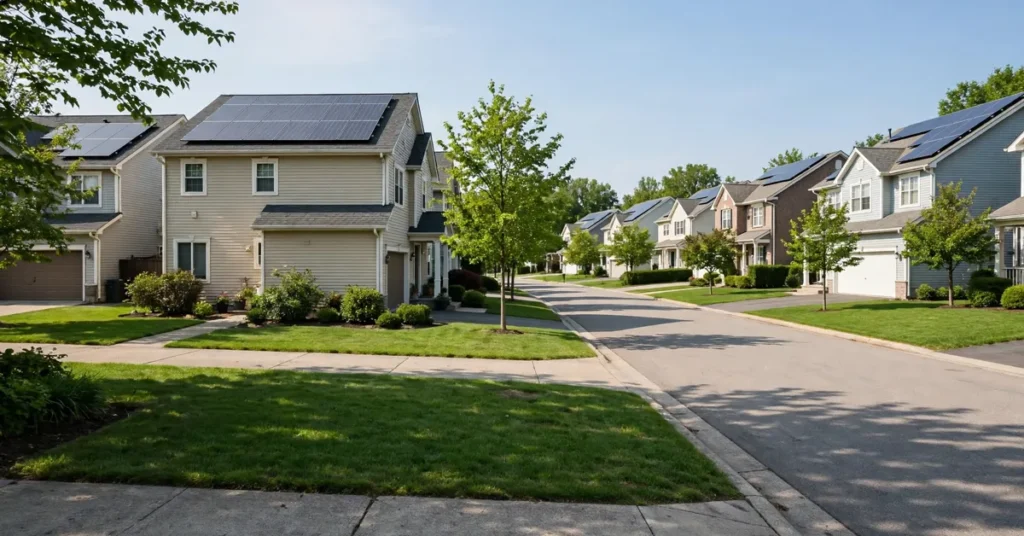
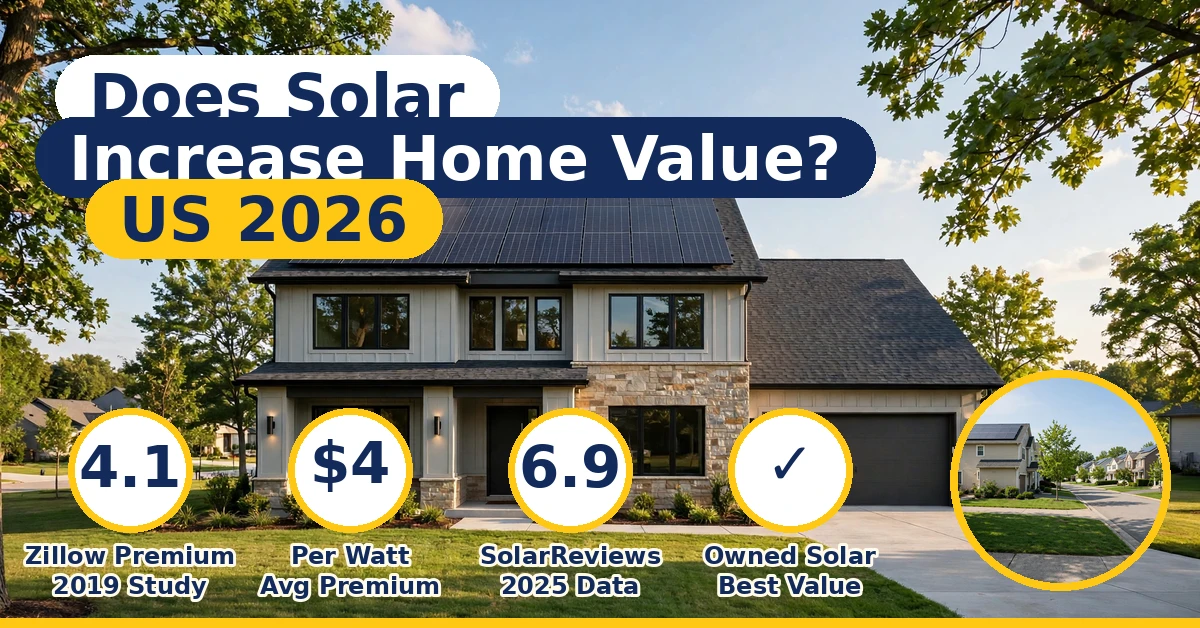
In many US markets, homes with owned solar systems sell for more than comparable homes without solar. A widely cited Zillow analysis from 2019 estimated that solar panels were associated with a 4.1% increase in home value. This figure helped establish solar as a potential home upgrade, but it is not a guaranteed increase or a universal appraisal rule.
Lawrence Berkeley National Laboratory (Berkeley Lab) studied 22,822 home sales across eight states, including 3,951 homes with solar. Researchers found that buyers consistently paid a premium for photovoltaic systems. The average premium was approximately $4 per watt, or about $15,000 for an average 3.6-kilowatt system in that historical dataset.
A 2025 SolarReviews analysis of more than 400 recently sold listings reported that solar homes in its sample sold for an average of 6.9% more. This is a useful market indicator, but it is a smaller company-produced comparison, not a definitive national estimate. Differences in location, property condition, ownership, and sample selection can affect the result.
The practical conclusion is that solar can add resale value, but the amount varies. Local comparable sales are more useful to an individual homeowner than relying on one national percentage.
What the Research and Data Show
The following findings offer a snapshot of the available evidence:
- Zillow’s 2019 analysis: Estimated a 4.1% premium for homes with solar panels.
- Berkeley Lab’s multi-state study: Found an average premium of roughly $4 per watt, or around $15,000 for the average system in its historical sample.
- Fannie Mae’s 2021 research: Found evidence that homeowner-owned solar systems were associated with higher selling prices in four states. Its estimates varied by model, with one broader calculation indicating a premium of almost 1%.
- SolarReviews’ 2025 comparison: Reported a 6.9% average difference in its sample of more than 400 recently sold homes.
These figures are not directly interchangeable. They cover different periods and markets and use different methods. Some examine completed sales; others analyze listing or appraisal information. A homeowner should not multiply a reported percentage by an estimated property price and assume that amount will automatically be added at resale.
Owned Solar vs. Leased Solar
Ownership is one of the most important factors affecting resale.
Homeowner-owned systems
An owned system is generally easier to explain and transfer. Sellers can provide installation documents, permits, warranties, equipment details, and electricity-production records. If the system is fully paid off, the buyer receives the equipment without taking over a separate solar service contract.
Berkeley Lab and Fannie Mae research found stronger evidence of a resale premium for homeowner-owned systems. Ownership also helps buyers and appraisers assess the system’s remaining useful life and likely savings.
Leased panels and power purchase agreements
With a solar lease, a third-party company owns the panels and the homeowner makes payments under a contract. Under a power purchase agreement (PPA), the provider generally owns the equipment and sells its electricity to the homeowner.
A buyer may need to qualify to take over the agreement. They may ask about monthly payments, annual increases, contract length, transfer fees, and system performance. These questions can complicate a sale.
Leased or PPA systems are not automatically a disadvantage, but they should not be valued like a fully owned system. Sellers should obtain the contract and confirm transfer requirements before listing.
Factors That Affect Solar’s Added Value
Solar’s contribution to home value depends on more than the number of panels.
- System age and condition: Buyers want to know how much useful life remains and whether the panels and inverter work properly.
- Electricity prices: Solar savings are more attractive where utility rates are high.
- Local market demand: Appraisers have better evidence when similar solar homes have sold nearby.
- Energy production: Production records help show how much electricity the system generates.
- Roof condition: A roof needing replacement may create extra costs if panels must be removed and reinstalled.
- Warranties and paperwork: Transferable warranties, permits, installation details, and maintenance records build confidence.
- System size: A larger system is not automatically worth proportionally more. Value depends on household usage, utility export rules, and realistic savings.
Battery storage may appeal to buyers seeking backup power or more control over electricity use. Its value depends on age, capacity, condition, and local needs.
How Solar Can Attract Buyers
The clearest selling point is the possibility of lower electricity bills. Sellers who show utility bills alongside solar production reports give buyers concrete information to assess.
Solar may also appeal to buyers interested in energy independence, protection from rising utility rates, or a smaller environmental footprint. In some markets, buyers actively look for homes with solar.
However, some buyers may worry about roof repairs, inverter replacement, maintenance, battery costs, or taking over a lease. Present solar as a practical home feature supported by records—not as a promise of a particular investment return.
How to Prepare a Solar Home for Sale
Before listing, organize the documents a buyer, agent, or appraiser may request:
- Installation agreement, permits, inspection records, and equipment specifications.
- Proof of whether the system is owned, financed, leased, or covered by a PPA.
- Current loan payoff information and lender instructions, if financing remains.
- Recent electricity bills and solar production reports.
- Warranty details and information about transferring coverage.
- Roof inspection information and repair records.
- Installer details and system-support contact information.
Ask a local real estate professional or qualified appraiser how similar solar homes have performed in your area. If you have a lease or PPA, clarify the transfer requirements early. Good documentation reduces uncertainty and helps buyers understand the system.
Does Solar Pay for Itself When You Sell?
Not always. Solar’s financial return may come from lower electricity bills, available incentives, and a possible resale premium. The resale increase alone may not recover the installation cost.
A system installed at a high price in an area with inexpensive electricity may be less attractive financially than a reasonably priced system where utility rates are high. Financing, maintenance, inverter replacement, roof work, and how long you keep the home also matter.
Compare installation quotes and estimate realistic energy savings. Treat a possible resale premium as one part of the calculation, not a guarantee.
Conclusion
Solar panels can increase home value in the United States, especially when the system is owned, well-maintained, and supported by clear records. Zillow, Berkeley Lab, and Fannie Mae research provides evidence that buyers may pay a premium for homes with solar. Yet reported amounts vary, and no single percentage applies to every market.
If you plan to sell, document ownership, contracts, warranties, energy production, and utility savings. Work with a local real estate professional or appraiser who understands solar-equipped properties. A properly documented system can be a meaningful selling point, but local conditions determine how much value it adds.
Frequently Asked Questions
1. How much value do solar panels add to a US home?
There is no universal amount. Studies have reported premiums from around 1% to more than 4%, while some smaller analyses report higher differences. Location, ownership, system condition, and research method all matter.
2. Do leased solar panels increase home value?
A leased system may reduce electricity costs, but it does not consistently produce the same resale premium as an owned system. Buyers may need to qualify to assume the lease, so payment and transfer terms matter.
3. Do solar panels make a house harder to sell?
Not necessarily. Buyers may value lower bills, but unclear contracts, aging equipment, roof problems, or complicated lease transfers can create concerns. Good documentation helps.
4. Do appraisers include solar panels in home value?
They can, depending on ownership, system details, local comparable sales, and valuation methods. Appraisers may struggle to assign a reliable premium when few similar solar homes have sold nearby.
5. Is owned solar better than leased solar when selling?
Owned solar is generally simpler to transfer and has stronger research support for a resale premium. With a lease or PPA, sellers should explain the agreement and confirm the transfer process early.