
Introduction
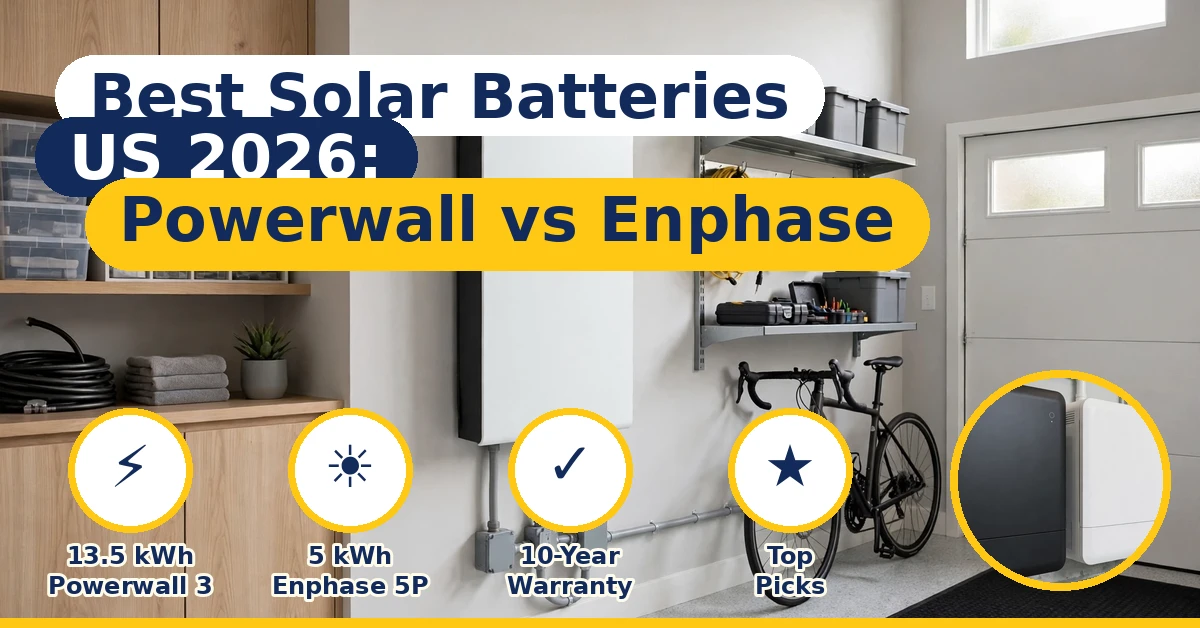
A home solar battery lets you store electricity generated during the day and use it later, such as after sunset or during a grid outage. For US homeowners comparing storage options in 2026, two of the most recognised choices are the Tesla Powerwall 3 and Enphase IQ Battery range.
Both can help households use more of their own solar electricity, but they are designed differently. Tesla Powerwall 3 combines a battery with an integrated solar inverter and offers 13.5kWh of usable storage. Enphase offers modular batteries, including the 5kWh IQ Battery 5P and the larger IQ Battery 10C.
There is no universal winner. Powerwall 3 is a strong all-round option for many new solar-plus-storage installations, while Enphase can be particularly attractive for homes already using compatible Enphase microinverters or homeowners who want a modular system. Your best choice depends on capacity, power output, backup needs, existing equipment, installation price and warranty.
Tesla Powerwall vs Enphase: Quick Comparison
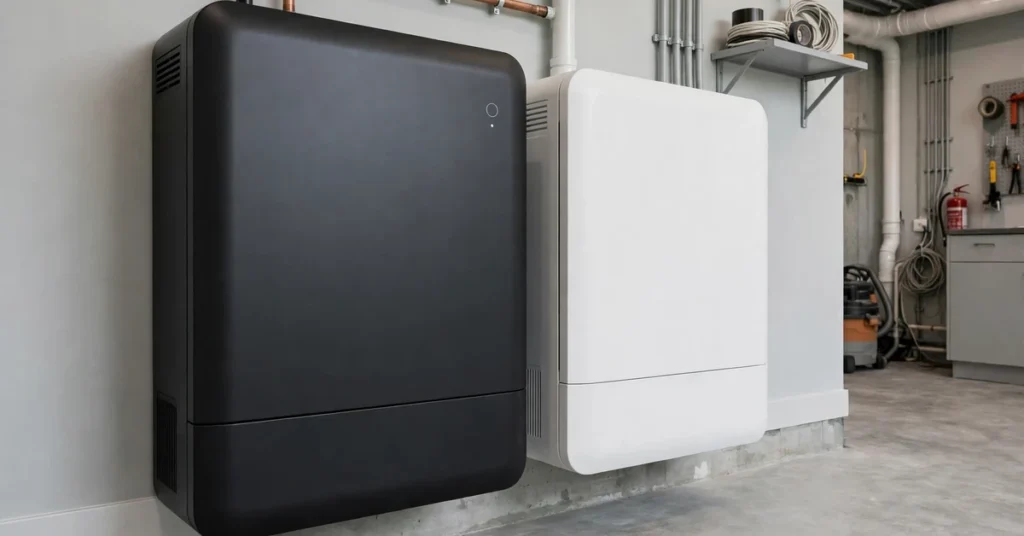
| Feature | Tesla Powerwall 3 | Enphase IQ Battery 5P | Enphase IQ Battery 10C |
|---|---|---|---|
| Usable capacity | 13.5kWh | 5kWh | About 10kWh |
| Continuous power | Up to 11.5kW | 3.84kW | About 7.08kW |
| System design | Integrated hybrid inverter | Modular AC-coupled battery | Integrated Enphase storage system |
| Warranty | 10 years | 15 years | 15 years |
| Typical role | Larger single-unit storage and backup | Smaller modular storage | Larger Enphase storage and backup |
Specifications depend on the exact model and configuration. Confirm the current US datasheet and warranty terms with the installer before signing a contract. Enphase’s 5P and 10C are different products, so do not compare them as if they had the same capacity or output.
1. Tesla Powerwall 3: Best All-Round Option for Many Homes
Tesla Powerwall 3 is a home battery with an integrated solar inverter. It is designed to store energy from solar panels or the grid and make that energy available when the home needs it.
Powerwall 3 Capacity and Performance
Powerwall 3 provides 13.5kWh of nominal energy capacity and up to 11.5kW of continuous power, depending on the configuration and applicable operating conditions. Its high power output can be useful when several household appliances need to run at once.
Tesla lists a 10-year limited warranty. The manufacturer’s technical documentation also specifies operating limits, efficiency and installation requirements, which should be reviewed as part of the proposal.
Advantages of Powerwall 3
- Large storage in one unit: 13.5kWh can cover a meaningful portion of evening electricity use for many households.
- High continuous output: Up to 11.5kW can support substantial household loads when the system is designed appropriately.
- Integrated solar inverter: This can simplify some new solar-plus-battery installations.
- Backup functionality: With the required gateway and electrical configuration, it can provide backup during a grid outage.
- Energy management: The Tesla app offers monitoring and operating modes for backup protection and electricity-bill management.
Potential Drawbacks
- The integrated inverter may not be the most straightforward fit for every existing solar system.
- Whole-home backup depends on the home’s electrical loads, panel configuration and local installation requirements.
- The 10-year warranty is shorter than Enphase’s 15-year warranty for the IQ Battery 5P and 10C.
- Actual installed prices vary by installer, location and whether the battery is installed with a new solar system.
2. Enphase IQ Battery: Best for Modular Storage and Enphase Systems
Enphase offers a range of home batteries designed to work with its energy-management ecosystem. Two models worth comparing are the IQ Battery 5P and IQ Battery 10C.
Enphase IQ Battery 5P
The IQ Battery 5P provides 5kWh of usable storage and approximately 3.84kW of continuous power. It is a smaller modular option. Multiple units can be combined when a household needs more storage, subject to system design and compatibility.
Its 15-year limited warranty is a notable advantage, although homeowners should review the full warranty conditions, including cycle or throughput limits and retained-capacity terms.
Enphase IQ Battery 10C
The IQ Battery 10C offers approximately 10kWh of usable storage and is a larger option in the Enphase range. It may be a better comparison with Powerwall 3 for households that want more storage from an Enphase-based system.
Check the exact model specifications, backup configuration and compatibility with your solar equipment. Product availability and supported configurations can vary.
Advantages of Enphase Batteries
- Modular options: The 5P lets homeowners build storage capacity in smaller increments.
- Longer stated warranty: The 5P and 10C are marketed with 15-year limited warranties; check the terms for the exact product.
- Enphase ecosystem: A natural option for many homes already using compatible Enphase microinverters.
- Monitoring: The Enphase App provides information about solar production, consumption and battery operation.
- Retrofit possibilities: AC-coupled configurations can suit some existing solar systems, subject to a compatibility assessment.
Potential Drawbacks
- A single 5P unit has much less storage and power output than one Powerwall 3.
- Several 5P units may be required for larger backup loads, increasing equipment and installation costs.
- The total system design and backup equipment affect performance; battery capacity alone does not tell you which appliances can run.
- Compatibility should be checked carefully when adding storage to an existing solar installation.
3. Powerwall vs Enphase: Which Battery Is Better?
The best battery depends on what you want it to do.
Choose Tesla Powerwall 3 If:
- You want around 13.5kWh of storage in one unit.
- You need high continuous power for several household loads.
- You are installing a new solar-plus-battery system and can benefit from an integrated inverter design.
- The local installer offers a competitive, fully itemised quote and reliable service support.
Choose Enphase IQ Battery If:
- Your home already uses compatible Enphase microinverters.
- You prefer to add storage in smaller increments.
- You value the longer stated warranty of the 5P or 10C.
- You want to compare a 5kWh or approximately 10kWh option rather than buying a larger battery immediately.
Overall: Powerwall 3 is a strong all-round choice for many new systems, while Enphase is especially compelling for compatible Enphase homes and modular storage needs. Neither is automatically the cheapest or best-performing option for every property.
4. How Much Do Powerwall and Enphase Batteries Cost in 2026?
Installed prices vary according to location, installer, electrical upgrades, backup equipment and whether the battery is added to a new solar installation.
One 2026 marketplace comparison reported a median installed price of approximately $15,000 for Tesla Powerwall 3 when installed with solar. The same marketplace reported approximately $10,650 for an Enphase IQ Battery 5P backup-capable unit installed with solar, and approximately $14,250 for the IQ Battery 10C. These are marketplace-specific reference prices, not guaranteed national quotes.
Do not compare these figures without considering capacity. A 5kWh battery costs less upfront partly because it stores much less energy than a 13.5kWh Powerwall 3.
Ask installers to break out the cost of:
- Battery equipment
- Inverter or controller equipment
- Backup gateway and transfer equipment
- Critical-load panel or main-panel work
- Electrical wiring and labour
- Permits and inspection
- Commissioning and monitoring setup
A complete quote should clearly state usable capacity, continuous power, backup circuits, included equipment and any exclusions.
5. Does the Federal Solar Battery Tax Credit Apply in 2026?
Homeowners should not assume that the former 30% federal Residential Clean Energy Credit is available for a battery installed in 2026. The homeowner credit under Section 25D does not apply to qualifying residential clean-energy property placed in service after December 31, 2025.
State, utility and local incentives may still be available for battery storage, demand response or backup power. Eligibility and funding vary, so check directly with the state energy office, utility or program administrator before including an incentive in your calculations.
Third-party-owned systems, such as leases and power purchase agreements, can have different tax treatment from a homeowner-owned system. If a provider advertises a tax benefit, ask how it affects your contract price and payments. Do not assume that a business tax provision is a personal homeowner credit.
6. What Size Solar Battery Does Your Home Need?
Battery capacity should be based on your electricity use and the appliances you want to run, not simply the size of your house.
Around 5kWh
A 5kWh battery may help shift some daytime solar generation into the evening. It may support a small group of essential loads for a limited period, but it is unlikely to provide extensive whole-home backup.
Around 10–15kWh
This range can offer more flexibility for evening consumption and selected backup circuits. It may suit households that want to keep refrigeration, lights, internet equipment and other essential loads operating during an outage.
20kWh or More
Larger storage may be appropriate for homes with high electricity consumption, electric vehicles, heat pumps or broader backup goals. The battery inverter and electrical system must also be able to deliver the required power.
Review at least a year of utility bills and, where possible, hourly consumption data. Identify which circuits are essential during an outage before choosing a capacity.
7. Battery Capacity vs Power Output: What Is the Difference?
Battery capacity is measured in kilowatt-hours (kWh). It describes how much energy the battery can store.
Power output is measured in kilowatts (kW). It describes how much electricity the battery can supply at one time.
A battery can have plenty of stored energy but still be unable to run several high-demand appliances simultaneously if its power output is limited. When comparing Powerwall and Enphase, check:
- Usable energy capacity
- Continuous power output
- Peak or surge power and duration
- 120V and 240V load support
- Backup gateway and transfer equipment
- Whether the system supports whole-home or selected-circuit backup
- Battery reserve settings and operating limits
This is especially important if you want to run air conditioning, well pumps, electric cooking equipment or other large loads during an outage.
8. Can a Solar Battery Power Your Home During a Blackout?
Yes, but the system must be designed for backup operation. A standard grid-connected solar installation does not necessarily keep running when the utility grid goes down.
A backup-ready installation may require a gateway, transfer equipment, compatible inverter controls and changes to the home’s electrical panel. Some systems back up selected circuits; others can be designed for whole-home backup within defined limits.
Solar panels may recharge a battery during daylight in an outage if the system supports this operating mode. Ask the installer to explain what happens during an outage, which appliances can run together and how long the battery is expected to last under your actual load profile.
9. What to Check Before Buying a Solar Battery
Existing Solar Equipment
Confirm the make and model of your inverter, microinverters and other equipment. Not every battery is compatible with every existing solar system.
Electricity Tariff
A time-of-use plan may improve the value of a battery if it can charge when electricity is cheaper and discharge when grid prices are higher. Check tariff rules and system-control compatibility.
Warranty
Compare warranty duration, throughput or cycle limits, retained-capacity guarantees, exclusions and the process for service claims.
Installer Quality
Choose a qualified, insured installer with relevant battery experience. Check references, licensing, workmanship coverage and who will provide support after installation.
Financial Value
Estimate savings using your actual electricity use, import rate, export compensation and battery operating strategy. Consider outage protection separately from bill savings because backup has value that may not appear on a simple payback calculation.
Conclusion
Tesla Powerwall 3 and Enphase IQ Batteries are two leading home-storage options for US homeowners in 2026. Powerwall 3 offers 13.5kWh of capacity and high continuous output in a single unit, making it attractive for many new solar-plus-storage projects. Enphase offers modular choices, including the 5kWh IQ Battery 5P and the approximately 10kWh IQ Battery 10C, with a longer stated warranty on these models and strong integration with compatible Enphase equipment.
The best choice comes down to your home’s electricity use, backup goals, existing solar equipment, local installer support and total installed price. Compare complete system proposals rather than headline battery prices, and verify current incentives before calculating your return on investment.
Frequently Asked Questions
1. Is Tesla Powerwall better than Enphase?
Powerwall 3 offers 13.5kWh of storage and up to 11.5kW of continuous output. Enphase offers modular batteries, including the 5kWh 5P and approximately 10kWh 10C. Powerwall may suit larger single-unit storage needs, while Enphase can be a strong fit for compatible Enphase systems.
2. How much storage does Tesla Powerwall 3 have?
Tesla Powerwall 3 has 13.5kWh of nominal energy capacity. Backup duration depends on household demand, system settings and the appliances connected.
3. How much storage does Enphase IQ Battery 5P have?
The Enphase IQ Battery 5P provides approximately 5kWh of usable storage and around 3.84kW of continuous power. Multiple compatible units can be combined to increase storage.
4. Is Enphase IQ Battery compatible with existing solar panels?
It may be compatible with some existing solar installations, but the inverter, electrical design and battery model all matter. Ask a qualified installer to assess compatibility before purchasing.
5. Can one solar battery power an entire house during an outage?
It depends on the battery’s power output, capacity, backup equipment and household loads. Some systems support selected essential circuits, while larger or multiple-battery configurations may support whole-home backup within specified limits.
6. Is there a 30% federal tax credit for home batteries in 2026?
The former homeowner Residential Clean Energy Credit under Section 25D is not available for qualifying residential clean-energy property placed in service after December 31, 2025. State and utility incentives may still exist, so check current local program rules.
Sources and Further Reading
- EnergySage, Best Solar Batteries for Your Home in 2026: https://www.energysage.com/energy-storage/best-home-batteries/
- Solar.com, Best Solar Batteries of 2026: https://www.solar.com/learn/best-solar-batteries/
- Tesla Powerwall specifications: https://www.tesla.com/powerwall
- Tesla Powerwall 3 technical specifications: https://energylibrary.tesla.com/docs/Public/EnergyStorage/Powerwall/3/InstallManual/Gateway/3/en-us/GUID-EC527BC7-4750-4425-BBC4-DB8C000339B3.html
- Enphase home battery information: https://enphase.com/homeowners/home-solar-batteries
- DSIRE, US incentives database: https://www.dsireusa.org/



One Comment