
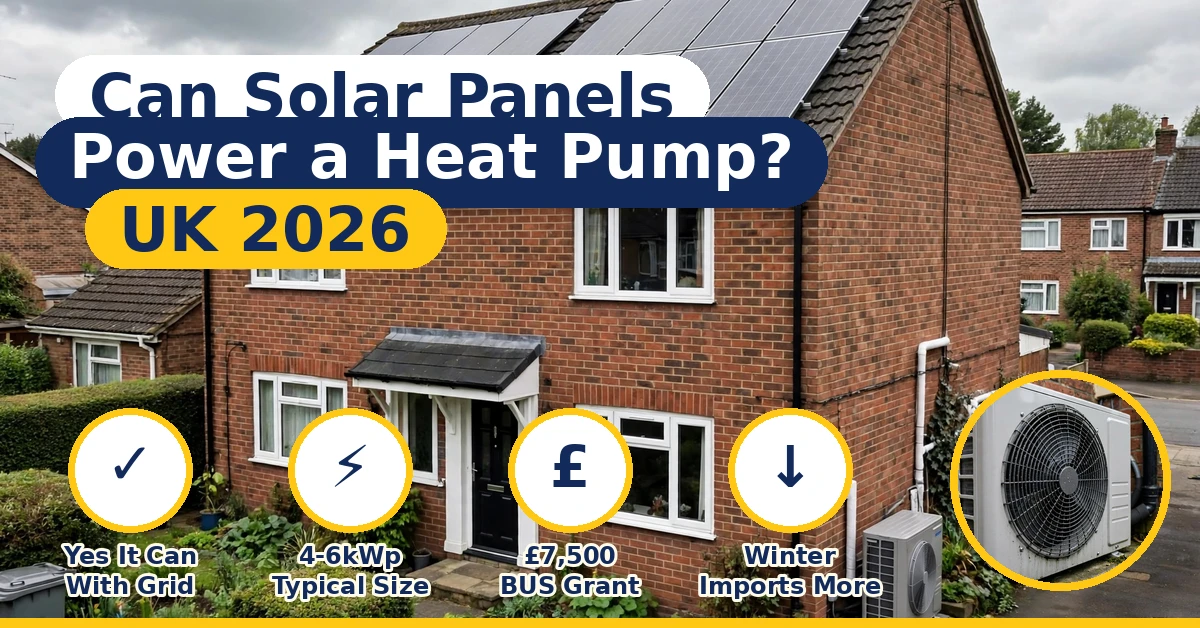
Can Solar Panels Run a Heat Pump?
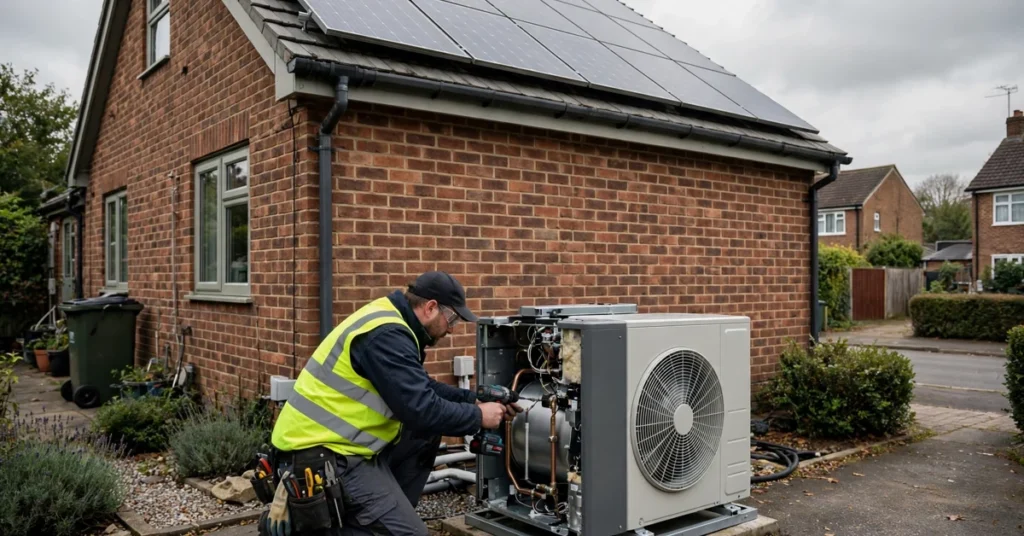
Yes. Solar photovoltaic (PV) panels can provide electricity for an air-source or ground-source heat pump, reducing the amount of power you need to buy from your supplier. The two technologies are compatible because a heat pump uses electricity to move heat rather than generate it by burning fuel. When the panels produce electricity, your home can use that energy for heating, hot water and everyday appliances. The practical question is not whether solar can operate a heat pump, but how much of the pump’s demand can be met at the time the panels are generating.
A solar-and-heat-pump setup can be particularly useful in spring and autumn, when sunlight is reasonably strong and a home may still need some heating. During summer, panels may help run the heat pump for hot water even when space heating is unnecessary. In winter, however, heating demand tends to rise just as solar generation falls. A well-designed system therefore normally remains connected to the electricity grid and treats solar as a way to reduce imports, not as a guarantee of heating independence.
How Solar Electricity Powers a Heat Pump
Solar panels produce direct-current electricity. An inverter converts this into alternating-current electricity that household appliances and a heat pump can use. When solar generation exceeds the home’s immediate demand, surplus electricity may be exported to the grid, stored in a compatible battery, or used to heat water if the system is configured to do so. When generation is insufficient, electricity is drawn from the grid automatically.
A heat pump can work with solar PV without needing a special solar-powered model. The important details are electrical compatibility, controls, system design and the way the heating schedule is managed. Some installations use energy-management controls to prioritise the heat pump or hot-water cylinder when solar output is high. That can improve self-consumption, particularly if the cylinder is able to store heat for later use.
Why Solar and Heating Demand Do Not Match
Solar generation varies by hour, weather and season. A roof may produce plenty of electricity on a bright June afternoon, but little during a dark December morning. The heat pump’s demand follows a different pattern: it generally works harder during colder periods, and heating may be needed before sunrise or after sunset. This seasonal mismatch is the main reason a typical domestic solar system cannot fully supply a heat pump throughout the year.
It is possible to compare annual solar generation with annual heat-pump consumption and find that the numbers are similar. That does not mean the house is self-sufficient. Electricity must be available at the moment it is needed, or it must be stored or purchased from the grid. Monthly and hourly patterns matter just as much as the annual totals.
How Much Electricity Does a Heat Pump Use?
Heat-pump electricity use varies with the home’s heat loss, the climate, the temperature of the heating system, hot-water demand and the efficiency of the unit. A reasonably insulated UK home may use around 2,500–4,000kWh of electricity a year for its heat pump, although older or larger properties can use more. These figures are illustrative rather than a promise for a particular property: a proper heat-loss calculation and installer estimate are more reliable.
Heat pumps are efficient because they move heat from the outdoor air or ground into the home. A seasonal performance factor (SPF) of 3 means that, across the season, the system supplies roughly three units of heat for each unit of electricity it consumes. The SPF can vary from home to home, so radiator temperatures, insulation, controls and installation quality make a real difference. Lower flow temperatures often help improve efficiency when the building’s emitters can deliver enough heat.
Typical Annual Heat Pump Electricity Consumption
The table below provides broad planning ranges. These are not sizing specifications and should not be used in place of an installer assessment.
| Property type | Illustrative heat-pump electricity use per year |
|---|---|
| Small, well-insulated flat or home | 1,500–2,500kWh |
| Typical 2–3 bedroom home | 2,500–3,500kWh |
| Larger 3–4 bedroom home | 3,000–4,500kWh |
| Large or less well-insulated property | 4,500kWh or more |
The pump’s electricity consumption is separate from the rest of the home’s electrical use. If you already use electricity for lighting, cooking, washing, entertainment and appliances, you will need to account for those loads too when planning solar. The system that best meets the total household demand may be larger than the array you’d choose to offset heating alone.
How Many Solar Panels Do You Need for a Heat Pump?
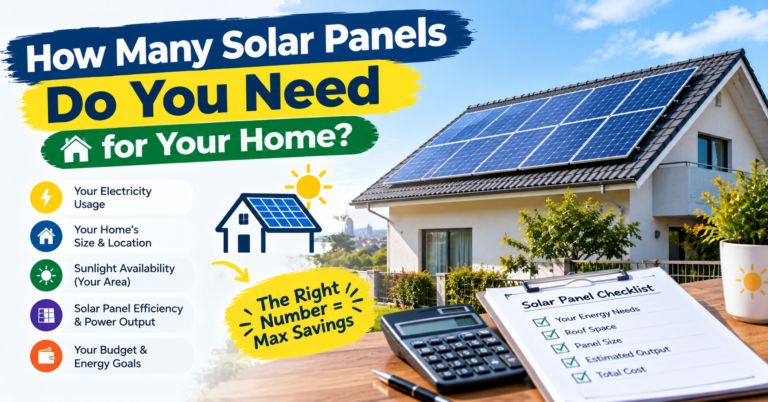
There is no single panel count that suits every home. The number depends on how much electricity the heat pump consumes, the roof’s orientation and pitch, shading, location, panel wattage, and how much generation you want to use yourself. A solar array that matches a heat pump’s annual consumption on paper may still leave the home importing substantial electricity in winter.
As a starting point, many homeowners consider solar arrays around 4–6kWp when combining PV with a heat pump, with larger systems considered where roof space and budget allow. The best size should be based on a generation estimate and household load profile, rather than simply adding panels until annual figures match.
Solar Panel Sizing by Property Size
| Home size | Possible PV size to explore | Approximate number of 400W panels |
|---|---|---|
| Small 1–2 bedroom home | 3–4kWp | 8–10 |
| 2–3 bedroom home | 4–6kWp | 10–15 |
| 3–4 bedroom home | 5–7kWp | 13–18 |
| Larger 4–5 bedroom home | 6–9kWp or more | 15–23+ |
These are broad examples, not recommendations. Roof restrictions, shading and local generation conditions can make a smaller system more sensible. Panel count is calculated using the rated panel wattage: for example, 12 panels rated at 400W give a nominal array capacity of 4.8kWp. Actual energy production depends on weather and installation conditions.
Example of a 5kWp Solar System
A 5kWp system using thirteen panels rated around 385W each would provide roughly 5kW of nominal capacity. In a favourable UK installation, annual generation could be in the region of 4,000–5,000kWh, but location, roof direction, shade and system losses can shift the result. The installer should provide a site-specific estimate, ideally broken down by month.
If the heat pump uses 3,000kWh annually, the array’s total annual generation could exceed the pump’s annual electricity use. Yet the pump might use very little of the array’s electricity during some winter days and more during sunny shoulder-season periods. The remaining generation can supply other household loads or be exported. A battery and sensible hot-water scheduling may increase the proportion of solar energy consumed in the home, but neither eliminates the seasonal imbalance.
Solar Panels and Heat Pump Costs in the UK
The combined investment depends on the equipment, roof and property, electrical upgrades, heat-pump installation complexity, scaffolding, controls and whether a battery is included. Quotes can vary substantially, so treat online figures as initial budgeting guidance and compare several itemised proposals.
Solar PV Installation Costs
For a domestic installation, a smaller solar array may cost several thousand pounds, while larger systems and installations with batteries cost more. UK government cost data and installer estimates vary by system size and date. A rough budgeting range for a conventional residential array without a battery might be £5,000–£10,000 for many typical installations, with larger or complex systems potentially costing more. This range is illustrative and should not be treated as a current guaranteed quotation.
| PV system size | Broad indicative budget, excluding battery |
|---|---|
| 3–4kWp | £5,000–£7,500 |
| 4–6kWp | £6,000–£9,000 |
| 6–8kWp | £8,000–£11,000+ |
Costs depend on the number and type of panels, inverter, scaffolding, roof work, wiring and installation requirements. Ask whether the quote includes monitoring, warranties, commissioning, export-meter arrangements and the relevant certification. Confirm VAT treatment at the time of installation, because tax rules can change.
Heat Pump Installation Costs and Grants
An air-source heat pump installation can cost around £10,000–£14,000 or more before applicable grants, depending on the property and installation. The work may include the outdoor unit, hot-water cylinder, pipework, controls and radiator or electrical improvements. Ground-source systems typically involve additional ground works and can cost considerably more.
In England and Wales, the Boiler Upgrade Scheme has offered a £7,500 grant for eligible air-source and ground-source heat-pump installations. Eligibility, scheme rules and availability should be checked before relying on the grant in a budget. Scotland and Northern Ireland have different support arrangements, so residents should check the relevant programmes.
| Component | Illustrative budget |
|---|---|
| Air-source heat pump | £10,000–£14,000+ before grant |
| Potential BUS support in England and Wales | £7,500, subject to eligibility and rules |
| Solar PV, typical domestic array | £5,000–£10,000, depending on size and complexity |
| Battery storage | Often several thousand pounds, depending on capacity and system |
Combining the projects may help coordinate design and installation, but it does not always mean the combined price will be lower. Ask for separate prices for the heat pump, solar, battery, electrical work and any upgrades so you can compare the options.
Do Solar Batteries Help Heat Pumps?
A battery can store excess solar electricity generated during the day and release it later, such as in the evening when a heat pump may still be heating the home. It can increase the amount of solar electricity used on site and reduce grid imports. Battery value depends on its capacity, efficiency, cost, household consumption, export tariff and electricity tariff. A battery is not automatically the best investment for every heat-pump household.
Batteries also cannot usually store enough electricity to cover several dark, cold winter days economically. They are designed to shift electricity over relatively short periods, not to store summer energy for winter. A larger battery may be useful for evening loads, but it should be sized against realistic daily consumption and the solar system’s output.
Before buying storage, ask the installer to compare the expected savings with and without a battery. Consider whether a time-of-use tariff offers low-cost periods that the battery can use, and whether the system can charge from the grid as well as solar. A battery should be evaluated as a financial and energy-management choice rather than an essential part of every solar heat-pump installation.
How Much Can Solar Panels Save on Heat Pump Bills?
Savings depend on the electricity the panels generate and the proportion used instead of imported electricity. A unit of solar electricity used in the home can avoid buying a unit from the supplier, while exported electricity may earn payment through a Smart Export Guarantee (SEG) tariff or another export arrangement. The value of self-consumption and exports varies with the tariff.
For example, if a household uses 1,000kWh of its solar generation to run the heat pump or other appliances, the savings depend on the import price it would otherwise have paid. If it exports the same electricity, it earns the export rate instead. The difference between import and export rates can make self-consumption attractive, but the household must be able to use that generation when it occurs.
Avoid treating a single annual saving figure as universal. A home with daytime occupants, a flexible hot-water schedule and a suitable cylinder may use more solar electricity than a household that is empty all day. A battery can change the pattern, as can tariff selection. The most useful quote or model will estimate solar generation, heat-pump consumption, self-consumption, exports and imports by month, and state its assumptions clearly.
Best Ways to Use Solar Electricity for Heating
A few practical adjustments can help a household use more of its own solar electricity without sacrificing comfort. The heat pump should still be controlled to maintain comfortable temperatures and operate efficiently; forcing it to run at inappropriate times can reduce efficiency or create unnecessary heat.
- Schedule hot water during sunny hours: If the controls and cylinder allow, heat water when solar generation is forecast to be strong.
- Use weather compensation: Properly configured heating controls can adjust flow temperature to outdoor conditions and help the system run efficiently.
- Avoid unnecessary high flow temperatures: Lower temperatures may improve heat-pump efficiency, provided the home’s radiators or underfloor heating can maintain comfort.
- Use energy-management controls: These can direct surplus solar energy toward useful loads where compatible.
- Review tariffs: A time-of-use tariff may offer cheaper periods for heating or battery charging, but check the rates, conditions and timing.
- Keep the home insulated: Insulation and draught reduction can lower heat demand, potentially allowing a smaller heat pump and reducing operating costs.
Do not rely on manually switching the heat pump on and off whenever the sun appears. Heating systems are generally designed to maintain stable comfort and work with their controls. Ask your installer which settings are appropriate for your equipment and home.
Is Solar Power Enough for a Heat Pump in Winter?
For most UK households, solar PV alone is unlikely to power the heat pump reliably throughout winter. The days are shorter, weather can be overcast, and the home needs more heat when outdoor temperatures fall. Panels still generate electricity in daylight on cloudy days, but output can be much lower than on bright summer days. The grid therefore remains an important source of electricity for most solar-and-heat-pump homes.
A battery can provide some evening power, but it cannot usually bridge the entire seasonal gap. The practical approach is to design the heat pump for the property’s heat loss, use solar to reduce imports when available, and choose a tariff that makes the remaining electricity affordable. Good insulation, suitable emitters and efficient controls may have a bigger impact on heating consumption than trying to oversize the solar system to cover every winter hour.
Should You Install Solar Panels and a Heat Pump Together?
Installing both technologies together can make sense if you are planning major energy upgrades, have suitable roof space and can afford the combined project. Coordinated design may allow the installer to plan electrical capacity, controls, hot-water storage and future battery options from the beginning. You can also compare a single project with separate installations and make a decision based on your budget and the condition of your current heating system.
It is not necessary to install both at once. If your boiler is nearing the end of its life, replacing it with a properly designed heat pump may be the priority. If your roof is suitable and you want to begin generating electricity, solar can be installed first and designed with future electrification in mind. The best order depends on the urgency, cost, building condition and available grants.
Request a heat-loss assessment for the heat pump and a roof-specific generation estimate for the solar system. Ask the installer to explain the expected electricity use, solar self-consumption, export income, tariff assumptions, maintenance requirements and warranties. Independent, itemised estimates make it easier to avoid paying for equipment that does not suit your household.
Conclusion
Solar panels can help power a heat pump in the UK and reduce the electricity a household imports, particularly in sunny periods and during spring and autumn. They cannot usually supply all heating electricity throughout winter, because solar generation and heating demand are poorly matched seasonally. A typical homeowner might explore a 4–6kWp solar system alongside a heat pump, but the ideal size depends on roof conditions, heat-pump consumption, other household loads and budget.
A battery may improve solar self-consumption, while efficient heat-pump design, good insulation, appropriate controls and tariff choices are equally important. Before investing, obtain a site-specific solar estimate and a heat-loss calculation, compare itemised quotes and verify grant rules. The goal is not necessarily to disconnect from the grid, but to create a comfortable home that uses less purchased energy and makes good use of the electricity it generates.
Frequently Asked Questions
1. Can solar panels run a heat pump in the UK?
Yes. Solar PV can supply electricity to a heat pump when it is generating. The home will generally still need grid electricity, especially during winter and at night.
2. How many solar panels do I need for a heat pump?
A 4–6kWp array is a common starting point to explore for a home with a heat pump, but the required size depends on annual electricity consumption, roof conditions, panel wattage and the proportion of demand you want to offset.
3. Will solar panels power my heat pump in winter?
They can contribute, but winter generation is usually much lower than summer generation. Most homes will import electricity during cold spells and at night.
4. Is a battery worth it with solar panels and a heat pump?
It may increase solar self-consumption and reduce imports, but the economics depend on battery price, capacity, tariffs, exports and household usage. Compare projected savings with and without storage.
5. Can I get a grant for a heat pump in the UK?
Eligible installations in England and Wales may qualify for support through the Boiler Upgrade Scheme, including a £7,500 grant under the scheme’s applicable rules. Check current eligibility and other regional schemes before proceeding.
Sources and Further Reading
- GOV.UK — Apply for the Boiler Upgrade Scheme — GOV.UK — Boiler Upgrade Scheme.
- Ofgem — Smart Export Guarantee (SEG) — Ofgem — Smart Export Guarantee.
- MCS — Certified renewable installers — MCS — certified renewable energy installers.
Prices, scheme details and eligibility rules can change. Always check the latest official guidance before applying or signing a contract.



One Comment