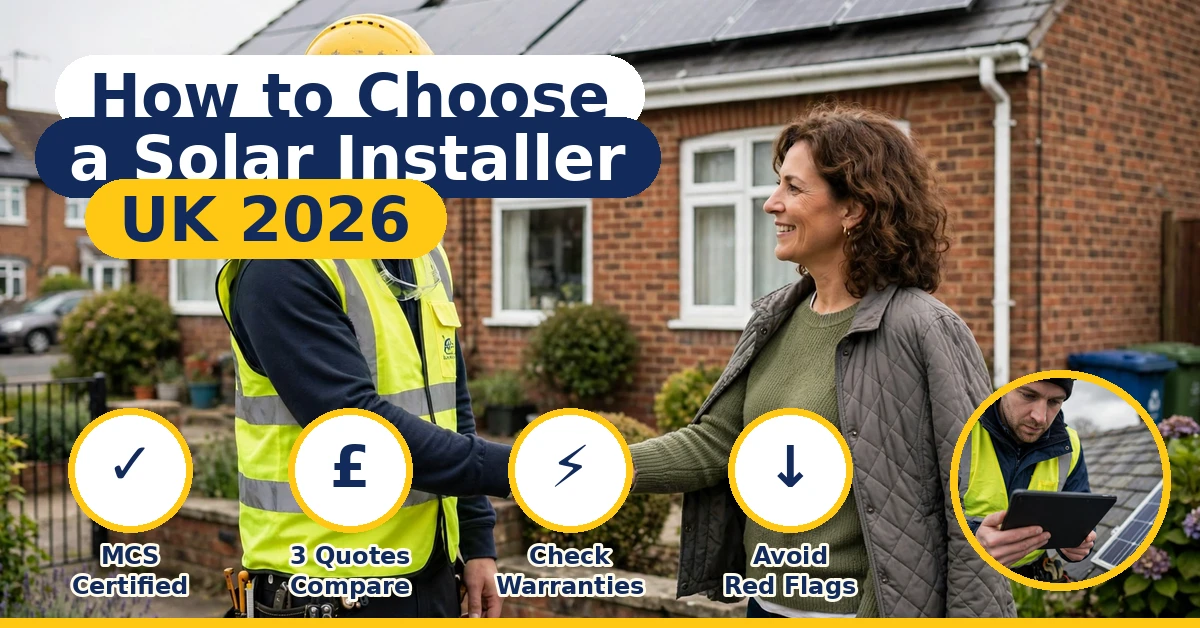
Why Choosing the Right Solar Installer Matters
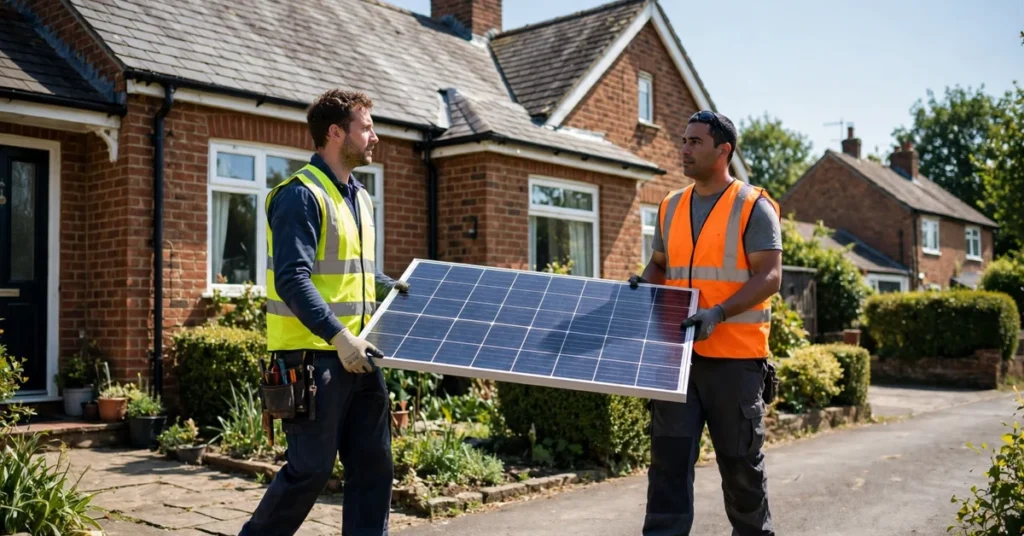
Solar panels can reduce the amount of electricity you buy from the grid, but the results depend on more than the equipment itself. The design, roof condition, electrical connections, inverter settings, installation quality and system commissioning all affect how well your solar installation performs.
Choosing a qualified installer also helps you avoid unnecessary costs and paperwork problems. A reputable company should explain the system in plain language, assess your home before finalising the quote, provide realistic generation estimates and make clear who is responsible for approvals and post-installation support.
The UK solar market includes national companies, regional specialists and small local installation teams. A large company is not automatically better than a small one, and a low price does not necessarily represent good value. Compare the work each installer proposes, their qualifications, customer protections, warranties and the quality of their communication.
What Is MCS Certification?
The Microgeneration Certification Scheme (MCS) is a recognised standards and certification scheme for small-scale renewable energy products and installations, including solar photovoltaic (PV) systems and batteries. It provides a way to check whether an installer and relevant products meet scheme standards.
MCS certification is important for homeowners because it may be required to access certain export arrangements, including the Smart Export Guarantee (SEG), depending on the supplier and the installation. Certification can also help establish that installation work has followed recognised technical standards.
However, certification is not a substitute for doing your own checks. Confirm the installer is currently certified for the technology you are buying, rather than relying on a logo displayed on a website, brochure or vehicle. Ask for the company’s exact legal name and check it independently in the MCS installer directory.
How to Verify an MCS-Certified Installer
Before accepting a quote, use the official MCS website to search for the installation company. Check that the listing matches the business you are dealing with, including its name and contact details, and that the certification covers solar PV. If you are also purchasing a battery, check whether its certification scope covers battery installation too.
Ask the installer to confirm its MCS details in writing. If the company uses subcontractors, ask who will carry out the work and who is accountable for the installation, commissioning, paperwork and any defects. A credible business should not be evasive about its certification or the people doing the job.
MCS requirements and consumer protection arrangements have evolved. Do not assume that every MCS-certified installer must currently belong to the same consumer code. Check the installer’s status and the protections available under its specific certification and membership arrangements.
RECC, HIES and Other Consumer Protections
The Renewable Energy Consumer Code (RECC) and the Home Insulation and Energy Systems (HIES) scheme are examples of consumer protection organisations associated with renewable energy and home energy improvements. Membership can offer access to standards, complaints processes and dispute resolution, subject to the relevant scheme’s terms.
Check membership on the organisation’s own website and make sure the membership applies to the company named in your quote. A badge or logo alone is not enough. Read what the membership actually provides, including cancellation rights, deposit protection, workmanship guarantees and how complaints are handled.
MCS certification and consumer-code membership are separate checks in some current arrangements. Ask the installer which consumer code it belongs to, whether membership is active, and what protection you receive if the installation is incomplete, defective or the company ceases trading. If an installer is not a member, ask what alternative protection it offers and consider whether you are comfortable with it.
TrustMark and Building Regulations
TrustMark is a government-endorsed quality scheme for work carried out in and around homes. Depending on the work and the installer, TrustMark registration can be another useful check when evaluating a solar company. Confirm the registration on the official TrustMark site and review what it covers.
Solar installations may also need to meet relevant building regulations and electrical safety requirements. Ask the installer who will handle any necessary notifications and provide the certificates or documentation after completion. Requirements can vary depending on the installation and the part of the UK where your property is located.
You should also check whether your roof has an existing warranty that could be affected by solar installation. If roof repairs or reinforcement are required, make sure the work is included in the quotation or clearly identified as a separate cost.
Get at Least Three Solar Quotes
Getting at least three quotes from different installers is a practical way to compare prices, equipment, system design and service. Citizens Advice and Energy Saving Trust both recommend obtaining multiple quotes rather than choosing the first company you contact.
Try to make the quotes comparable. Give each installer similar information about your electricity usage, roof, preferences, battery requirements and budget. If one quote includes a battery and another does not, or if the proposed panel capacity differs significantly, the prices cannot be compared directly.
A quote should ideally follow a site survey or a detailed assessment that the installer explains and confirms before the work is agreed. Avoid choosing solely on the basis of a quick phone price or a generic package that has not been tailored to your roof and household needs.
What a Detailed Solar Quote Should Include
A professional quote should be clear enough for you to understand exactly what you are paying for. It should identify the equipment, installation scope, expected performance, price, payment schedule and any assumptions or exclusions.
Look for these details:
| Quote item | What to check |
|---|---|
| Solar panel brand and model | Exact model, quantity and rated capacity |
| Inverter | Brand, model, type and warranty |
| Battery | Capacity, usable energy, compatibility and warranty, if included |
| System capacity | Total rated capacity in kWp |
| Estimated generation | Annual output estimate and assumptions |
| Roof work | Repairs, mounting and any extra structural work |
| Scaffolding | Whether it is included in the price |
| Electrical work | Consumer unit, wiring and safety requirements |
| Network paperwork | Who handles DNO notification or approval |
| Certification | MCS and electrical/building documentation |
| Monitoring | App, system monitoring and commissioning |
| Price | Full price, VAT and any exclusions |
| Payment terms | Deposit, milestones and final payment |
| Warranty | Product, workmanship and any insurance-backed protection |
Ask for any extra costs to be listed clearly. If the installer expects additional charges for scaffolding, roof repairs, cable routes, meter changes or electrical upgrades, you should understand those costs before signing.
Compare Solar Panels, Inverters and Batteries
The equipment in a solar quote matters, but brand names alone do not determine whether a system is suitable. Ask for exact product models and datasheets, then compare the equipment across quotes.
Solar panels differ in rated power, efficiency, dimensions, warranty terms and performance characteristics. Your roof space, shading and layout may be more important than a small difference in panel efficiency. An installer should explain why a particular panel is being proposed and how many panels can realistically fit on your roof.
The inverter converts the electricity produced by the panels into electricity your home can use. Depending on the design, a system may use a string inverter, microinverters or power optimisers. Ask what equipment is appropriate for your roof layout and shade conditions, and what happens if the inverter needs replacement.
A battery is optional. It may allow you to store surplus solar electricity for later, but it adds cost and has its own capacity, efficiency, warranty and operating considerations. Ask for a separate battery price and estimate so you can decide whether the added investment is worthwhile.
Check the Installer’s Survey and System Design
A proper survey should consider the condition and construction of your roof, its orientation, pitch, shading, available space and cable routes. The installer should also assess your electrical system and ask about your household’s electricity use, including whether you use electricity during the day or plan to charge an electric vehicle.
The design should be tailored to your home, not simply based on the maximum number of panels that can be placed on the roof. A larger system is not automatically the most economical choice if much of its generation is exported at a lower rate or if roof limitations make the installation complicated.
Ask for a layout drawing or clear explanation of where the panels will be placed. The installer should explain the assumptions behind its generation estimate, including shade, orientation and expected performance. Be wary of unusually high savings estimates that do not show how they were calculated.
Understand Warranties and After-Sales Support
Solar installations usually involve several different warranties or guarantees. These are not interchangeable, so check each one separately.
- Panel product warranty: Covers certain manufacturing defects under the manufacturer’s terms.
- Panel performance warranty: Describes a minimum expected output over a specified period, subject to the warranty conditions.
- Inverter warranty: Covers the inverter for the stated term and conditions.
- Battery warranty: May include a period, throughput or cycle limit and other operating conditions.
- Workmanship guarantee: Covers specified installation-related problems for a stated period.
- Insurance-backed guarantee: May provide protection in certain circumstances if the installer ceases trading, subject to the provider’s terms.
Ask who you contact if the system stops working and whether the installer offers monitoring, troubleshooting and repair services. Find out whether call-outs are included, what is excluded and how long the company expects to take to respond.
Do not assume that a long product warranty means labour, scaffolding, shipping or replacement costs will all be covered. Read the actual warranty terms and keep copies of the documents.
Questions to Ask a Solar Installer
Before signing, ask the installer direct questions and request written answers to anything important.
- Are you currently MCS certified for solar PV and battery installation, where applicable?
- What is your consumer-code membership, if any, and how can I verify it?
- Who will actually carry out the installation?
- Will you use subcontractors, and who is responsible for their work?
- Has the roof been properly assessed for condition and suitability?
- How did you calculate the estimated annual generation?
- What shading assumptions have you used?
- Which panels, inverter and battery models are included?
- Are scaffolding, electrical work and commissioning included?
- Who handles DNO notification or approval?
- What documents will I receive after installation?
- What are the workmanship and product warranties?
- How is my deposit protected?
- What is the payment schedule and final payment condition?
- What additional costs could arise?
- What support is available if the system develops a fault?
A reliable installer should be willing to answer these questions without rushing you or dismissing your concerns.
Solar Installer Red Flags to Avoid
Certain sales practices and omissions should make you cautious.
Pressure to sign immediately: A reputable installer should give you time to compare offers and review the contract. Large discounts that disappear if you do not sign on the spot can be a pressure tactic.
Unrealistic savings promises: Savings depend on household consumption, solar generation, export rates, import prices, system design and many other factors. Guaranteed or exaggerated savings claims deserve scrutiny.
No proper survey: A quote based on assumptions without a roof and electrical assessment may omit important costs or overlook installation issues.
Unclear certification: If the installer cannot provide details for independently verifying its MCS status or other claimed credentials, pause before paying.
Vague quote: Avoid quotes that do not specify equipment models, installation scope, exclusions, warranties and payment terms.
Large upfront payment: Be cautious about requests for a substantial deposit or payments before the work is completed. Ask how the money is protected and check applicable consumer protections.
No clear subcontractor information: You should know who is responsible for the work, even if the company uses subcontractors.
Poor communication: If the installer is difficult to contact before you sign, consider how it may respond when you need support after installation.
Unverified reviews: Look for patterns across several review sources. Pay attention to complaints about delays, unfinished work, warranty claims and customer service rather than relying only on star ratings.
Promises of guaranteed grants or free panels: Verify any scheme or offer independently. Do not provide financial details or sign contracts based on unsolicited claims without checking the source.
Deposits, Payment Terms and Financing
Read the payment schedule carefully. Citizens Advice advises homeowners to avoid agreeing to a deposit above 25% when arranging energy-efficiency home improvements. Consumer-code rules and contract protections may impose additional requirements, so verify what applies to your installer and agreement.
Avoid paying the entire installation cost before the work has been completed and checked. Agree on payment milestones in writing and make sure the final payment conditions are clear. Ask whether deposits or advance payments are protected by insurance or another arrangement, and obtain the details rather than relying on a verbal assurance.
If you are using finance, compare the total amount payable, interest rate, fees, monthly payments, term and any conditions attached to the solar installation. A low monthly payment may hide a longer repayment period or a higher total cost. Consider the finance agreement separately from the technical quality of the system and seek independent advice if you are unsure.
Permissions, DNO Notification and Installation Paperwork
Solar installations may require planning checks, building-regulation compliance and notification or approval from your Distribution Network Operator (DNO). The process depends on the system, property and location. Your installer should explain which steps are needed and who is responsible.
For grid-connected solar, G98 and G99 are common connection procedures referenced for different system sizes and circumstances. Do not assume that the installer can connect the system without the relevant notification or approval. Ask what procedure applies to your design and request confirmation that the required paperwork will be completed.
At the end of the installation, collect the MCS certificate where applicable, electrical certificates, building-regulation documentation, DNO paperwork, equipment manuals, warranties, monitoring details and final invoice. Keep these documents somewhere safe, as they may be needed for export payments, insurance, maintenance or a future property sale.
What Happens on Installation Day?
The installation team will usually arrive with the equipment and arrange access to the roof and electrical areas. Scaffolding may be erected beforehand. The team will install the mounting system, panels, wiring, inverter and any battery included in the design. The home’s electricity may need to be switched off temporarily while electrical connections are made.
The installer should protect the property, explain any changes to the agreed plan and tell you if unexpected work is required. Do not agree to significant additional work or costs without receiving an explanation and revised details.
After the physical installation, the system should be tested and commissioned. The installer should show you how to use the monitoring app or display, explain basic operation and safety information, and confirm the paperwork and network registration process.
What to Check Before Making the Final Payment
Before settling the final invoice, check that the work matches the written quote and that the panels, inverter and battery (if included) are installed as agreed. Ask the installer to demonstrate the system’s operation and monitoring.
Confirm that you have received the documentation, including applicable MCS and electrical certificates, DNO records, warranties and manuals. Check that any agreed outstanding work has been completed or is documented with a clear timetable.
Review the final invoice against the contract. If something is incomplete, faulty or materially different from what was agreed, raise it in writing and keep a record of the response. Your contract and payment terms will determine the appropriate next steps, so do not rely on verbal promises alone.
Conclusion
Choosing a solar installer in the UK in 2026 requires more than comparing prices. Verify MCS certification, check consumer-code membership and other protections, review TrustMark status where relevant, and obtain at least three detailed quotes. The best installer will assess your roof and electricity use, explain the system design, provide realistic performance estimates and put costs, warranties and responsibilities in writing.
Watch for pressure-selling, vague quotes, unrealistic savings promises, unclear deposits and missing paperwork. Ask questions before signing, compare equipment and guarantees, and confirm who will handle network approvals and installation certificates. Taking time to make these checks can help you avoid costly mistakes and make your solar investment more dependable.
Frequently Asked Questions
1. Should I choose an MCS-certified solar installer in the UK?
MCS certification is a recognised quality check for solar installations and may be needed to access certain export tariffs or other schemes. Verify the installer’s current certification and scope through the official MCS directory.
2. How many solar quotes should I get?
Aim to get at least three quotes from different installers. Compare equipment, system size, generation estimates, warranties, installation scope, payment terms and total cost—not just the headline price.
3. Is RECC membership mandatory for MCS installers?
Consumer-code membership requirements can depend on the installer’s certification arrangements. MCS and consumer-code membership are separate checks in current arrangements. Verify the company’s actual membership and protections directly with the relevant organisation.
4. How much deposit should I pay a solar installer?
Citizens Advice recommends not agreeing to a deposit above 25% for energy-efficiency home improvements. Check the contract, applicable consumer-code rules and deposit protection arrangements before paying.
5. What are the biggest red flags when choosing a solar installer?
Pressure to sign immediately, exaggerated savings, no proper survey, vague equipment specifications, unclear warranties, excessive upfront payment requests and unverifiable accreditation are all reasons to pause and investigate.
Sources and Further Reading
- MCS — Certified solar installers — MCS — certified renewable energy installers.
- RECC — Renewable Energy Consumer Code — RECC — Renewable Energy Consumer Code.
- TrustMark — Government-endorsed quality scheme — TrustMark — government-endorsed quality scheme.
- Citizens Advice — Energy advice — Citizens Advice — energy advice.
Prices, scheme details and eligibility rules can change. Always check the latest official guidance before applying or signing a contract.