
Article”](https://www.aiprm.com/prompts/seo/writing/1796452522999930880/)*
Introduction
Installing a 5kW solar system is becoming an attractive option for UK homeowners looking to reduce electricity bills and generate their own renewable energy. With electricity prices remaining a concern for many households, solar panels offer an opportunity to improve energy independence while reducing reliance on the national grid.
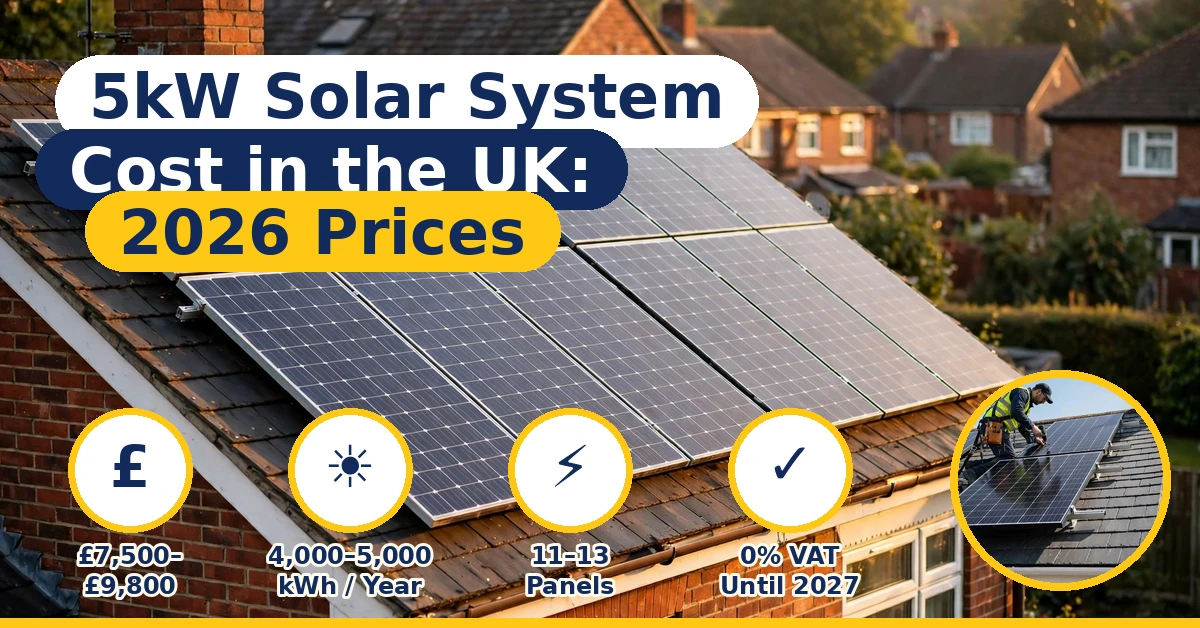
In 2026, a typical 5kW solar system without battery storage costs approximately £7,500 to £9,800, including standard installation. The final price depends on panel quality, inverter technology, roof condition, installation complexity and the company you choose.
Adding a solar battery increases the initial investment but allows households to store unused electricity and use it later, particularly during evenings and periods of low sunlight.
This guide explains 5kW solar installation costs, equipment requirements, potential savings, installation factors and ways to make solar energy more affordable in the UK.
1. Average Price of a 5kW Solar System in the UK
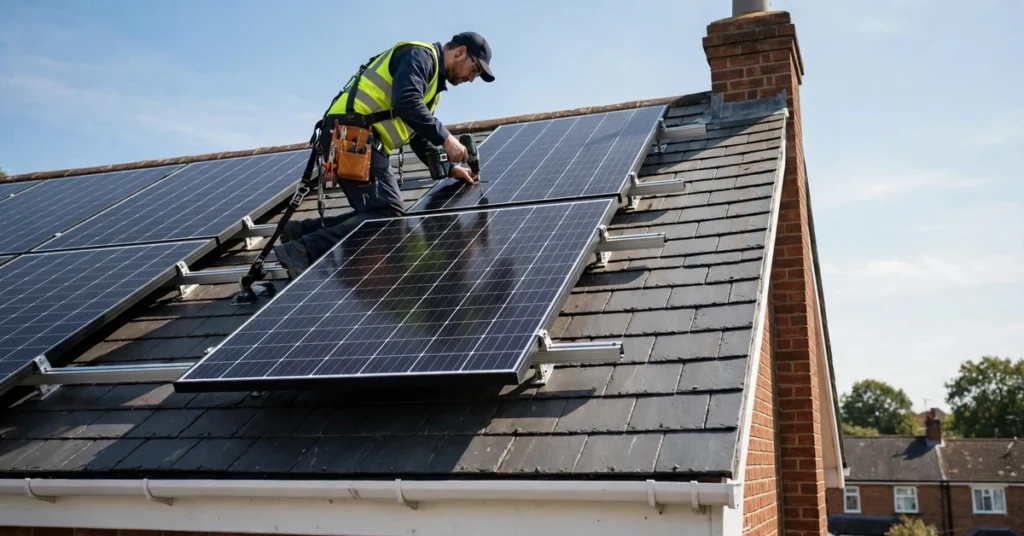
A 5kW solar panel system generally requires around 11 to 13 modern solar panels, depending on their individual wattage. It is suitable for households with moderate to high electricity consumption.
| Solar system option | Estimated installed cost |
|---|---|
| 5kW solar panels only | £7,500–£9,800 |
| 5kW solar with 5kWh battery | £9,500–£12,000 |
| 5kW solar with 10kWh battery | £10,000–£14,000 |
| 5kW solar with premium battery | £13,000–£17,000 |
These are indicative prices rather than guaranteed installer quotations. Actual costs depend on the equipment, property and installation requirements. Sources: Worthwatt, UK Solar Price Index, EE Renewables and Sunsave.
What Is Included in the Installation Price?
A standard solar installation package generally includes:
- Solar panels and mounting equipment.
- Solar inverter to convert electricity into usable power.
- Electrical wiring and safety components.
- Roof installation and mounting brackets.
- Scaffolding where required.
- Installation labour and system commissioning.
- Relevant certification and grid connection arrangements.
Always check the quotation carefully because some installers charge separately for additional electrical work, bird protection and extended warranties.
2. Factors That Affect 5kW Solar Installation Costs
Not every UK property has the same installation requirements. Several factors can increase or decrease the total cost of a 5kW solar system.
Solar Panel Quality and Efficiency
High-efficiency panels can generate more electricity from limited roof space. Premium manufacturers may charge higher prices, while standard panels can provide a more affordable option.
Compare product warranties, performance guarantees and efficiency ratings before choosing a particular brand.
Roof Type and Installation Complexity
The condition and design of your roof can influence installation expenses. Slate roofs, complex roof structures and difficult access may require additional labour and specialised mounting equipment.
A simple pitched roof with good access will generally be easier and cheaper to work on.
Inverter Technology
The inverter is an important part of any solar energy system. String inverters are commonly used in residential installations, while microinverters and optimisers can help manage certain shading or panel-performance challenges.
Your installer should recommend equipment based on your roof design and electricity requirements.
Battery Storage
Adding battery storage increases the upfront cost but allows homeowners to use more of their generated electricity after sunset.
Battery capacity, manufacturer, warranty and installation requirements all affect the final price.
3. How Much Electricity Can a 5kW Solar System Generate?
A properly installed 5kW solar system can generate approximately 4,000 to 5,000kWh of electricity annually in many UK locations.
However, actual production depends on geographical location, roof orientation, panel angle, shading and seasonal weather conditions. Homes in southern England may receive more annual sunlight than properties in northern Scotland.
Estimated Monthly Electricity Generation
The following figures provide an illustrative seasonal estimate for a reasonably positioned 5kW system.
| Month | Estimated generation |
|---|---|
| January | 100–150kWh |
| February | 150–220kWh |
| March | 300–400kWh |
| April | 450–550kWh |
| May | 550–650kWh |
| June | 600–700kWh |
| July | 600–700kWh |
| August | 500–600kWh |
| September | 350–450kWh |
| October | 200–300kWh |
| November | 100–180kWh |
| December | 80–120kWh |
These are illustrative figures, not guaranteed production levels. Actual monthly output can vary significantly with weather and installation conditions. Sources: Sunsave and EE Renewables.
4. How Much Money Can You Save With a 5kW Solar System?
One of the biggest advantages of solar panels is the opportunity to reduce electricity purchased from your energy supplier.
A 5kW system can potentially save several hundred pounds annually, depending on household consumption, electricity tariffs and how much generated power is used directly.
Households that use electricity during daylight hours may benefit from higher self-consumption.
Ways to Increase Your Savings
- Run washing machines and dishwashers during sunny periods.
- Charge electric vehicles when solar production is high.
- Use smart appliances to manage electricity consumption.
- Install battery storage to use surplus daytime electricity later.
- Compare energy tariffs that offer competitive export payments.
Homeowners can also receive payments for surplus electricity exported to the grid through the Smart Export Guarantee (SEG), provided they meet the relevant supplier and installation requirements.
5. Is Battery Storage Worth the Extra Cost?
Battery storage is an optional addition to a 5kW solar installation. It stores excess electricity generated during daylight hours for use when solar production decreases.
Without a battery, unused electricity can be exported to the grid. With storage, households can keep more of their generated power for evening and overnight consumption.
Benefits of Solar Batteries
- Greater energy independence: Use stored solar electricity when panels are not generating enough power.
- Improved self-consumption: Reduce the amount of surplus electricity exported to the grid.
- Potential bill savings: Purchase less electricity from your supplier.
- Flexible energy management: Some systems allow monitoring and optimisation through mobile applications.
However, batteries are not automatically worthwhile for every household. Compare their additional cost with your electricity usage patterns and expected savings before investing.
6. VAT and Financial Support for Solar Panels in 2026
Homeowners can benefit from the UK government’s temporary zero-rated VAT arrangement for qualifying residential energy-saving installations.
For qualifying solar panel and battery installations, the VAT rate is currently 0% until 31 March 2027. This can make a significant difference to the total installation price.
Other financial support may be available through eligible government or local authority programmes.
For example, the Warm Homes: Local Grant may support suitable solar improvements for qualifying households in England. Eligibility depends on household income, property requirements and local funding availability.
You can check official information through GOV.UK and the Energy Saving Trust.
7. How to Choose the Right Solar Installer
Selecting a reliable installer is just as important as choosing suitable solar panels.
Before signing a contract, consider these points:
- Check whether the installer is certified under the Microgeneration Certification Scheme (MCS), where applicable.
- Request quotations from at least three installation companies.
- Compare panel specifications, inverter models and battery warranties.
- Confirm whether scaffolding, electrical work and certification are included.
- Ask about workmanship guarantees and after-installation support.
- Check customer reviews and previous installation experience.
Avoid choosing an installer based only on the lowest advertised price. A detailed quotation helps you understand exactly what you are paying for.
8. Steps to Get a 5kW Solar System Installed
Getting solar panels installed involves several stages. Following the correct process can help you avoid unexpected costs and choose an appropriate system.
Step 1: Assess Your Electricity Consumption
Review your electricity bills to understand how much energy your household uses. This information helps determine whether a 5kW system is suitable.
Step 2: Check Your Roof
Make sure your roof has sufficient usable space and receives reasonable sunlight. An installer can assess roof direction, shading and structural condition.
Step 3: Request Multiple Quotes
Contact several certified solar installation companies. Ask for itemised quotations covering panels, inverter, installation, warranties and optional battery storage.
Step 4: Compare Equipment
Review panel efficiency, inverter performance, battery capacity and product warranties before making a decision.
Step 5: Arrange Installation
Once you select an installer, arrange a property survey and confirm the installation schedule. Your installer should also explain any required grid connection approval.
Step 6: Test and Monitor the System
After installation, check that the system is working correctly. Use its monitoring application to track electricity generation and household consumption.
Conclusion
A 5kW solar system in the UK costs approximately £7,500 to £9,800 in 2026 when supplied and installed without battery storage. Adding a battery increases the investment but can help households use more of their own electricity and reduce dependence on the national grid.
The final cost depends on panel quality, inverter selection, roof conditions, installation complexity and additional equipment. Homeowners should compare multiple quotations and calculate potential savings before choosing a system.
With suitable roof space, sensible energy management and a reliable installer, a 5kW solar system can be a worthwhile long-term investment for many UK households.
Frequently Asked Questions
1. How much does a 5kW solar system cost in the UK in 2026?
A typical 5kW solar system costs approximately £7,500 to £9,800, including standard installation but excluding battery storage.
2. How many solar panels are needed for a 5kW system?
A 5kW system generally requires around 11 to 13 panels, depending on whether each panel produces approximately 400W to 450W.
3. Can a 5kW solar system power an average UK home?
It can supply a substantial portion of an average household’s electricity requirements. However, actual coverage depends on consumption, weather, seasonal production and battery storage.
4. How much electricity does a 5kW solar system produce annually?
A 5kW installation can generate approximately 4,000 to 5,000kWh annually in many UK locations, depending on sunlight and installation conditions.
5. Is a battery necessary for a 5kW solar system?
No. A solar system can operate without battery storage. However, a battery allows households to store unused daytime electricity for later use.
Sources and Further Reading
- Sources: Worthwatt — Worthwatt — UK solar installation cost data.
- UK Solar Price Index — UK Solar Price Index — current system price benchmarks.
- EE Renewables — EE Renewables — 5kW solar system costs, pros and cons.
- Sunsave — Sunsave — 5kW solar system costs and generation estimates.
- GOV.UK — GOV.UK — official government guidance.
- Energy Saving Trust — Energy Saving Trust — independent energy saving advice.
Prices, scheme details and eligibility rules can change. Always check the latest official guidance before applying or signing a contract.




One Comment