Solar Battery vs Generator: The Short Answer
It depends on what you need backup power for. A solar battery is better for most homeowners who already have — or plan to add — solar panels: it is silent, needs no fuel or maintenance, switches over instantly, and earns its keep every day by storing solar energy for evening use. A generator is better if you face long, frequent outages and need to run heavy loads like central air conditioning for days at a time, because it runs as long as fuel lasts.
Cost-wise, the two are closer than many people expect in 2026. A single home battery typically costs about $13,000 to $16,500 installed, while a whole-home standby generator typically runs about $10,000 to $20,000 installed. A portable generator is far cheaper upfront — a few hundred to around $2,000 — but it must be set up and refueled by hand.
How Each Option Works
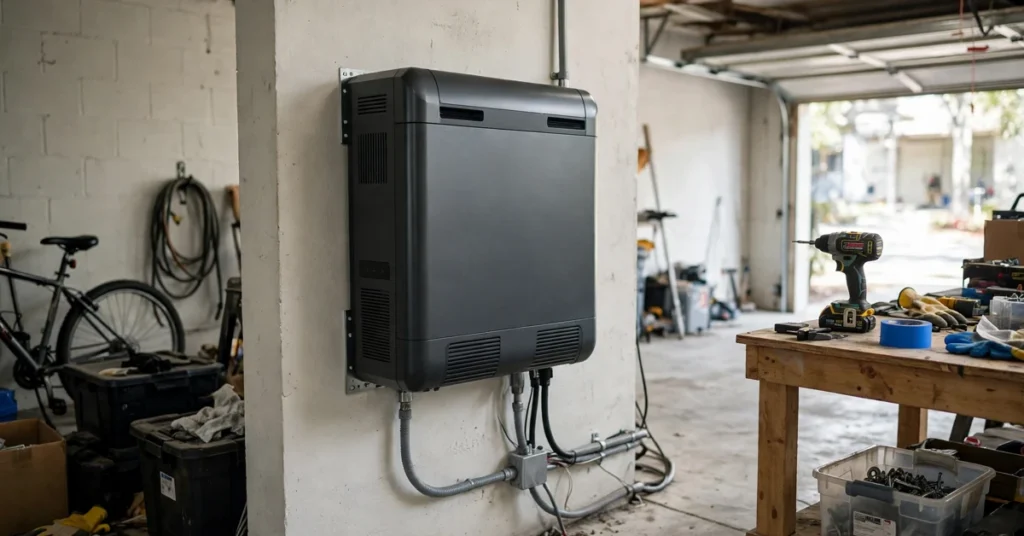
Solar battery: A battery stores electricity from your solar panels (or from the grid) and releases it when you need it. Paired with a backup-capable inverter and a transfer switch, it can disconnect your home from the grid during an outage and power your circuits — a setup we explain in our guide to solar panels during a power outage. A common home battery stores about 13.5 kWh and can deliver around 11.5 kW of continuous power, enough for essentials and, in many homes, much more.
Generator: A generator burns fuel to make electricity on demand. Standby generators are permanently installed outside the home, wired into your electrical panel, and start automatically within seconds of an outage. They usually run on natural gas from your existing gas line or on propane from a storage tank. Portable generators run on gasoline, sit in storage until needed, and must be wheeled out, started and connected manually.
Cost Comparison
| Option | Typical installed cost (2026) | Running costs |
|---|---|---|
| Solar battery (13.5 kWh) | About $13,000–$16,500 | No fuel; virtually no maintenance |
| Two batteries (27 kWh) | Roughly $20,000–$28,000 | No fuel; virtually no maintenance |
| Whole-home standby generator | About $10,000–$20,000 (simpler jobs from ~$6,000) | Fuel about $3.40–$4.80/hour on natural gas, $6.70–$10.10/hour on propane, plus $200–$500/year maintenance |
| Portable generator | About $500–$2,000 (unit only) | Gasoline, oil and upkeep; manual refueling |
Two 2026 details matter. First, the 30% federal tax credit that homeowners could previously claim on battery purchases ended for installations completed after December 31, 2025, so a battery bought in 2026 costs the full installed price. Generators never qualified for that credit. Second, a battery keeps working for you between outages — storing cheap solar energy for expensive evening hours — while a generator only costs money while it waits. Whether that daily value tips the balance depends on your electricity rates and whether solar is still worth it for your home overall.
Runtime: How Long Each One Lasts in an Outage
This is where generators have their clearest advantage. A standby generator on natural gas can run for days or weeks, limited only by the gas supply and basic servicing. A propane model runs until the tank is empty — a large tank can mean hundreds of hours. A portable gasoline generator typically needs refueling every 5 to 10 hours.
A single 13.5 kWh battery, by comparison, keeps essential loads — refrigerator, lights, Wi-Fi, a few outlets — running for roughly 10 to 24 hours without any sunshine. With solar panels recharging it during the day, backup for essentials can extend indefinitely in good weather. But heavy loads such as central air conditioning, electric heating or an EV charger drain a battery in a few hours, so whole-home battery backup needs multiple batteries and costs considerably more.
In short: for short outages (under a day), a battery covers most homes comfortably. For multi-day outages with heavy loads, a generator’s fuel-based runtime is hard to beat.
Noise, Emissions and Safety
A battery is silent and produces no emissions at your home. A generator is neither: standby units typically run at about 60 to 75 decibels — roughly as loud as a vacuum cleaner — and portable units can be louder.
Safety is the most important difference. Generators produce carbon monoxide, an odorless gas that can be fatal. They must always run outdoors, well away from windows and doors — never in a garage or enclosed space. Federal guidance from Ready.gov covers safe generator use during outages, and it is worth reading before you buy. Batteries carry no carbon monoxide risk and can be installed indoors or in a garage.
Batteries also switch over in milliseconds, so clocks, computers and medical equipment barely notice an outage. A standby generator takes about 10 to 30 seconds to start and stabilize, and a portable unit takes as long as you need to set it up.
Maintenance and Lifespan
Batteries have no moving parts: no oil, no filters, no fuel to stabilize. Most premium home batteries carry a 10-year warranty and an expected life of about 10 to 15 years.
Generators need regular care: oil changes, filter and spark plug replacements, periodic exercise runs and an annual professional service, typically costing $200 to $500 per year. In return, a well-maintained standby generator can last 15 to 20 years or more. Portable generators have shorter engine lives and need fuel management if stored for long periods.
Which Is Better for Your Home?
Choose a solar battery if:
- You have solar panels, or plan to install them, and want backup plus daily savings.
- Your outages are usually short (a few hours to a day).
- You want silent, automatic, maintenance-free backup for essentials.
- Your utility has time-of-use rates, so stored solar energy saves money every evening.
Choose a generator if:
- You face long or frequent outages and need whole-home power, including air conditioning.
- You do not have solar and do not plan to add it.
- You have a natural gas line, making standby runtime effectively unlimited.
- Your budget favors the lowest upfront cost (a portable unit) and you are comfortable setting it up by hand.
Some homeowners combine both: a battery for instant, silent coverage of everyday outages, and a generator for rare multi-day events. If you are comparing total project costs, remember to include the solar installation cost itself when budgeting a solar-plus-battery system.
Conclusion
In 2026, a solar battery and a standby generator cost roughly the same installed — about $13,000 to $16,500 for one battery versus about $10,000 to $20,000 for a whole-home generator — but they serve different needs. Batteries win on silence, safety, zero maintenance and daily value from your solar panels. Generators win on runtime and whole-home power during long outages. Match the choice to your outage pattern, your loads and whether you have solar, and either option will keep your home comfortable when the grid goes down.
Frequently Asked Questions
1. Is a solar battery or a generator cheaper?
Upfront, a portable generator ($500–$2,000) is cheapest, while a standby generator ($10,000–$20,000 installed) and a home battery ($13,000–$16,500 installed) are broadly similar. Over time, a battery has no fuel or maintenance costs, while a generator costs roughly $200–$500 per year to maintain plus fuel.
2. How long can a solar battery power my home in an outage?
One 13.5 kWh battery typically runs essentials — fridge, lights, Wi-Fi and outlets — for about 10 to 24 hours without sunshine. With solar panels recharging it daily, essentials can run indefinitely in good weather. Heavy loads like air conditioning shorten runtime significantly.
3. Can a generator run my whole house?
Yes. A standby generator sized at roughly 18–26 kW can power most mid-size homes, including central air conditioning, for as long as fuel lasts. Portable generators usually cover only selected circuits.
4. Do I still get a tax credit for a home battery in 2026?
No. The 30% federal Residential Clean Energy Credit ended for homeowner installations completed after December 31, 2025. Some state and utility battery incentives may still apply, so check local programs before buying.
5. Can I use a battery and a generator together?
Yes. Many hybrid systems combine both: the battery provides instant, silent backup and daily solar savings, while the generator covers long outages or heavy loads and can recharge the battery. An installer can design the transfer equipment so both work safely together.
Sources and Further Reading
- Ready.gov — Power Outages and Generator Safety — Ready.gov — power outage safety and generator use.
- Energy.gov — Homeowner’s Guide to Going Solar — U.S. Department of Energy — homeowner guide to going solar.
Prices, scheme details and eligibility rules can change. Always check the latest official guidance before applying or signing a contract.