
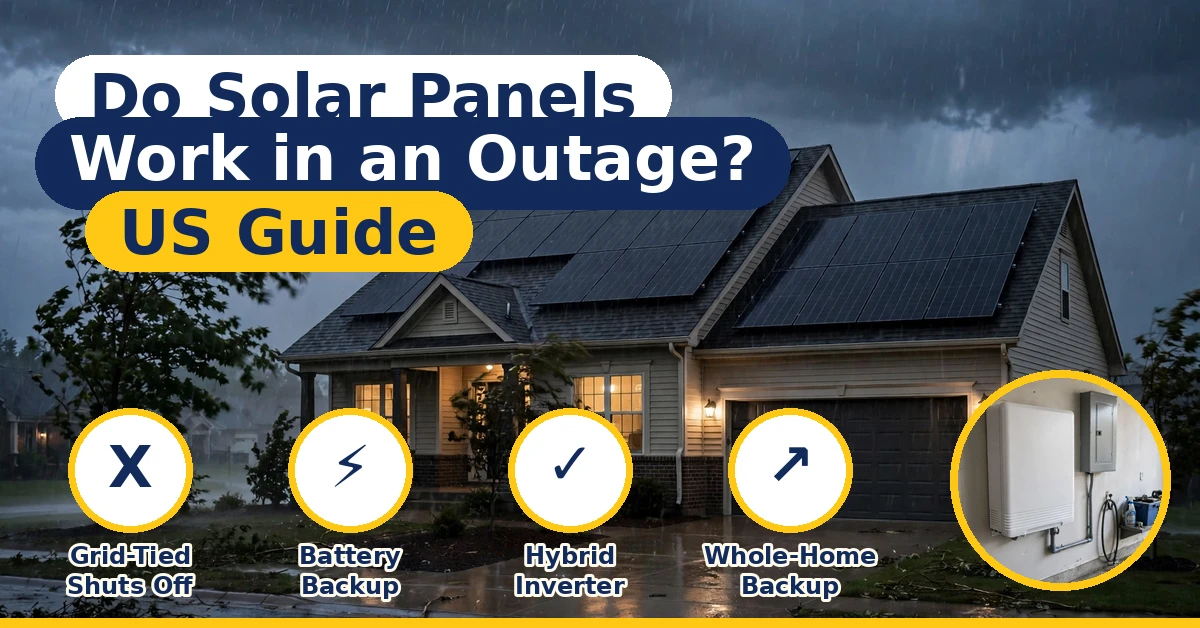
Do Solar Panels Work During a Power Outage?
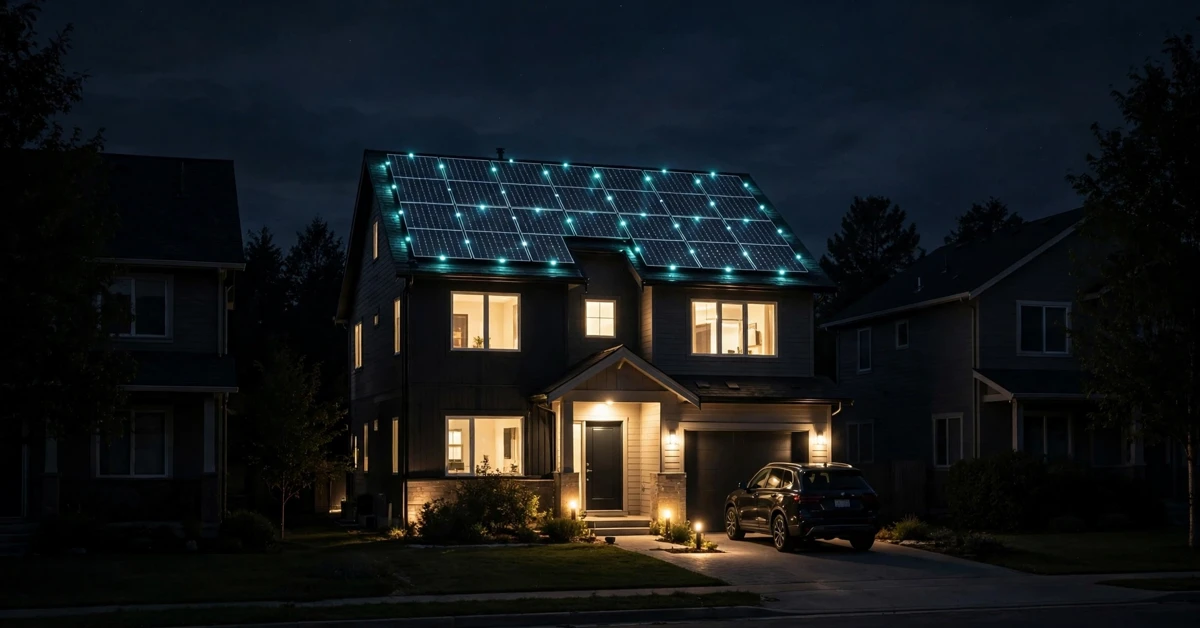
Not by default. If your solar panels are connected to the grid — as most US rooftop systems are — they shut down automatically when the power goes out, even on a bright sunny day. Your panels can still generate electricity, but the system will not let that power flow to your home.
The exception is a solar system paired with a home battery and backup-capable equipment. With the right setup, your home can disconnect from the grid safely and keep running on stored energy plus whatever your panels produce. This guide explains why standard solar switches off in an outage, what you need to keep the lights on, and what backup power costs in 2026.
Why Solar Panels Shut Off During an Outage
The shutoff is a safety feature called anti-islanding protection, and it is required by electrical code for grid-tied inverters. When your system is connected to the grid, any surplus electricity your panels generate flows out through your electrical panel and onto the local power lines. During an outage, utility crews are often working on those same lines to restore service. If your panels kept feeding power into them, the lines would be live when crews expect them to be dead — a serious electrocution risk.
To prevent this, your inverter constantly monitors the grid signal. When it detects that the grid has gone down, it stops producing power within about two seconds and stays off until grid power returns. This applies to virtually every grid-tied solar system in the US, whatever the brand.
The practical result surprises many homeowners: standard solar is a bill reducer, not a backup system. On its own, it gives you no electricity during a blackout.
How to Keep Solar Working in an Outage
Making solar work during an outage means giving your system a safe, legal way to disconnect from the grid and run your home as its own small island. Three pieces of equipment do this job:
- A home battery: Stores energy so your home has stable power day and night. Panels alone produce variable output that follows passing clouds, so a battery is what smooths that into usable household electricity.
- A backup-capable (hybrid) inverter: Handles both the panels and the battery, and can form its own local grid — often called islanding or backup mode — when utility power fails.
- A transfer switch / microgrid interconnect device: Physically separates your home from the grid before the system starts generating, so no power can backfeed onto utility lines.
Many systems also use a critical loads panel — a smaller electrical panel holding only the circuits you want backed up, such as the refrigerator, lights, Wi-Fi router, furnace blower and a well or sump pump. This lets a single battery cover the essentials instead of trying to run the whole house, including heavy loads like central air conditioning.
When an outage hits, the sequence is automatic: the transfer switch isolates your home, the battery takes over the backed-up circuits, and during daylight your panels recharge the battery. When grid power returns, the system reconnects and resumes normal operation.
Backup Options Compared
| Setup | Works in an outage? | What it can run |
|---|---|---|
| Grid-tied solar only | No — shuts off automatically | Nothing during an outage |
| Solar with sunlight backup (no battery) | Daytime only, while the sun shines | A few small loads, such as lights and phone charging |
| Solar + one battery (partial backup) | Yes — day and night | Essentials on a critical loads panel: fridge, lights, Wi-Fi, outlets |
| Solar + larger battery bank (whole-home backup) | Yes — day and night | Most or all of the home, depending on battery and inverter size |
Sunlight backup systems, offered by some microinverter brands, are a lower-cost middle option: they can power a few small loads during a sunny daytime outage without a battery. But they do nothing after sunset and will not run a refrigerator overnight, so a battery remains the dependable route for real outage protection.
How Long Will a Battery Keep Your Home Running?
It depends on your battery size and what you run. A popular home battery stores about 13.5 kWh of usable energy. One battery paired with solar can typically keep essential loads — refrigerator, Wi-Fi router and a few lights — running for a day or two even without sunshine to recharge it. With panels recharging during the day, a well-sized system can sustain essentials through a multi-day outage, as long as the sun cooperates.
Heavy loads drain a battery fast. Central air conditioning, electric heating, an oven or an EV charger can use several kilowatts each, so whole-home backup usually needs a larger battery bank and an inverter powerful enough to start those loads. Most homeowners get better value by backing up essentials only and leaving big appliances off during an outage.
What Does Solar Backup Cost in 2026?
Adding backup to a solar system is a significant investment. In 2026, a single mainstream home battery — for example, a 13.5 kWh unit — typically costs roughly $13,000 to $16,500 installed, with marketplace averages around $15,650 per battery system before incentives. Larger whole-home setups with multiple batteries cost considerably more.
One 2026 change matters here: the 30% federal tax credit that homeowners could previously claim on solar and battery purchases ended for installations completed after December 31, 2025. A battery installed in 2026 therefore costs the full installed price, with no federal credit to subtract. Some states and utilities still offer their own storage incentives, so check what applies locally. Our guide to whether solar is still worth it in 2026 explains the wider cost picture, including how the credit’s end affects overall installation cost and payback.
Solar Backup vs. Other Options
A battery is not the only way to ride out an outage. Standby generators powered by natural gas or propane can run a whole home for as long as fuel lasts, and portable generators are cheaper upfront — but they need fuel, maintenance and manual handling, and they cannot store your solar energy for everyday savings. The right choice depends on how often outages happen where you live and how long they last.
One option that does not help in an outage is community solar. A community solar subscription can lower your electricity bill, but the power still reaches you through the grid, so when the grid goes down, your home goes dark like everyone else’s. Backup power has to be generated and stored at your own home.
Conclusion
Solar panels on their own do not work during a power outage — grid-tied systems shut off within seconds for the safety of utility crews. To keep your home powered, you need a battery, a backup-capable inverter and a transfer switch that can island your home from the grid. In 2026 that typically costs $13,000 to $16,500 for a single battery installed, with no federal tax credit available. If outages are frequent or long where you live, solar plus storage can keep essentials running for days; if outages are rare and short, the same money may be better spent on a larger solar array or saved entirely.
Frequently Asked Questions
1. Why do my solar panels turn off when the power goes out?
Because of anti-islanding protection. Grid-tied inverters are required by code to stop producing power within about two seconds of losing the grid signal, so they cannot energize power lines that utility crews are working on.
2. Can solar panels power my home during an outage without a battery?
Only in a limited way. Some systems offer sunlight backup, which can run a few small loads while the sun is shining. Without a battery there is no power at night or on heavily overcast days, and no overnight refrigeration.
3. How long can one home battery run my house?
A typical 13.5 kWh battery can keep essentials such as a refrigerator, lights and Wi-Fi running for roughly a day or two, depending on usage. With solar panels recharging it during the day, backup can extend to multiple days.
4. How much does it cost to add battery backup to solar in 2026?
Roughly $13,000 to $16,500 installed for a single mainstream battery, based on 2026 marketplace pricing. The 30% federal tax credit no longer applies to homeowner battery purchases installed in 2026, though some state and utility incentives may still help.
5. Will my solar system restart automatically after an outage?
Yes. Once grid power returns, a standard grid-tied inverter reconnects and resumes normal operation automatically. Battery-backed systems also switch back to grid power on their own.
Sources and Further Reading
- EnergySage — Do Solar Panels Work During a Power Outage? — EnergySage — solar panels and power outages.
- Energy.gov — Homeowner’s Guide to Going Solar — U.S. Department of Energy — homeowner guide to going solar.
Prices, scheme details and eligibility rules can change. Always check the latest official guidance before applying or signing a contract.



One Comment