Introduction
Choosing solar panels is only one part of building a reliable home solar system. The inverter is equally important because it converts the direct-current (DC) electricity produced by solar panels into alternating-current (AC) electricity used by household appliances and the grid. It also helps manage system performance and provides information about energy production.
In 2026, US homeowners can choose from conventional string inverters, optimized string systems, microinverters and hybrid inverters designed to work with battery storage. Each option has advantages, and the right choice depends on roof design, shading, backup-power needs and budget.
This guide compares popular inverter brands and explains the difference between hybrid and string technology so you can discuss the right system with a qualified installer.
What Is a Solar Inverter and Why Does It Matter?
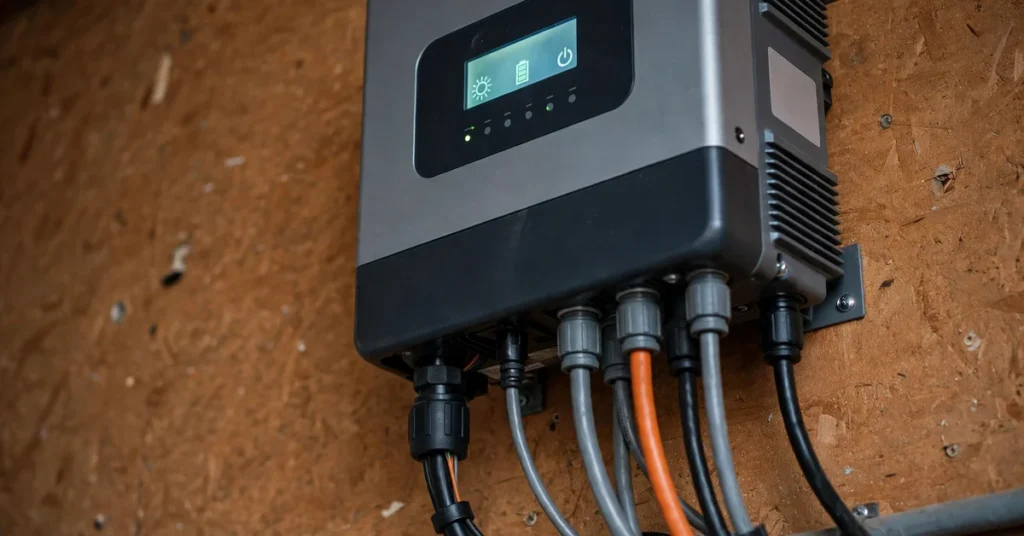
Solar panels generate DC electricity, while most household circuits use AC electricity. The inverter changes the electricity into a form that the home can use. Grid-connected inverters also coordinate with the utility connection and are designed to shut down or operate in a supported backup mode during a grid outage.
An inverter can affect system efficiency, monitoring, battery compatibility, expansion options and maintenance costs. Its warranty matters too: an inverter may need replacement before the solar panels reach the end of their expected service life.
Best Solar Inverter Brands and Models in the US for 2026
There is no single inverter that is best for every property. The following products and brands are notable options in current US residential market comparisons. Availability and compatibility should be confirmed with an installer.
1. SolarEdge – Best Optimized String Option
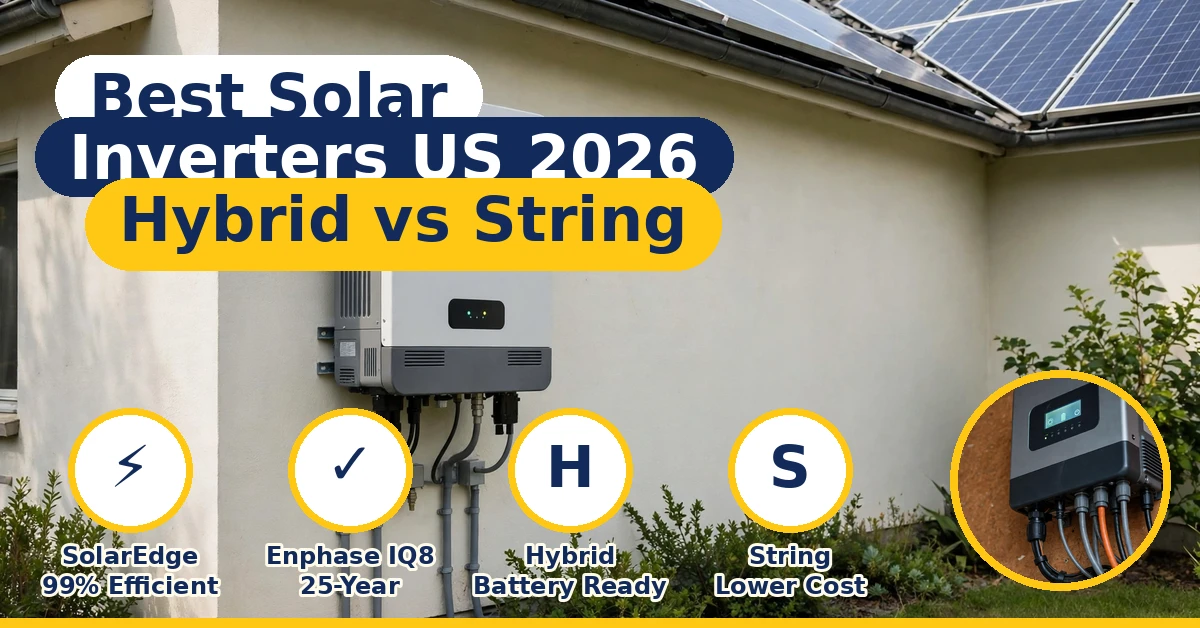
SolarEdge combines a central string inverter with power optimizers installed at panel level. This arrangement can help manage differences between panels, making it useful for roofs with multiple orientations or some shading. EnergySage’s 2026 ranking placed the SolarEdge HD Wave 7600H first overall, highlighting its reported 99% CEC efficiency and panel-level optimization.
The standard product warranty cited for the HD Wave model is 12 years, with extended coverage options available on some models. Confirm the exact inverter, optimizer and communications warranties in the written proposal.
2. Enphase – Best Microinverter Choice
Enphase IQ8 microinverters are installed at individual panels, converting DC to AC at the module level. This design allows each panel to operate more independently and provides detailed panel-level monitoring. It can be a strong choice for roofs with different directions, partial shading or plans to expand the array.
EnergySage lists a 25-year warranty for the IQ8M model and a CEC efficiency rating of 97% in its comparison. Microinverter systems can cost more than a basic string setup, and battery integration may require additional equipment depending on the chosen storage system.
3. EcoFlow – Hybrid Inverter for Battery Storage
The EcoFlow Ocean Pro Hybrid Inverter is designed to manage solar generation and battery storage within an integrated system. It may appeal to homeowners planning to add storage and backup capability rather than installing a solar-only array.
EnergySage’s 2026 comparison reports 97.5% CEC efficiency and a 15-year warranty for this model. Check the supported battery configuration, backup output, electrical requirements and local installer support before choosing it.
4. Tesla – Integrated Solar and Battery Option
Tesla’s Powerwall 3 includes an integrated solar inverter as part of a battery-based energy system. It is aimed at homeowners who want solar generation and storage managed together, with the Tesla app providing system monitoring.
This arrangement is not the same as purchasing a standalone string inverter: the inverter is integrated into the Powerwall 3. Review the system’s battery capacity, backup design, warranty terms and total installed cost to decide whether the integrated approach suits your home.
5. SMA – Established String Inverter Brand
SMA is a well-known manufacturer of string inverters, including the Sunny Boy family. A conventional string inverter can be a practical and cost-conscious solution for a roof with limited shading and a relatively simple panel layout.
The specific efficiency, warranty and battery options depend on the model. Ask the installer for the US-market datasheet and confirm whether the proposed unit is a standard grid-tied inverter or a hybrid model.
Hybrid vs String Solar Inverters: What Is the Difference?
How a String Inverter Works
A string inverter connects several solar panels in a series circuit, or string, and converts their combined DC output into AC electricity at a central location. This design is widely used because it can be relatively affordable, straightforward to install and easy to service.
Its main limitation is that panel performance can be affected by shading or mismatched conditions within a string. If one panel is significantly underperforming, it may reduce the output of other panels connected to the same string. The effect depends on system design, inverter features and the use of optimizers.
How a Hybrid Inverter Works
A hybrid inverter manages electricity from solar panels and a compatible battery. It can direct solar power to household loads, charge the battery with surplus generation and, when configured with the necessary equipment, supply backup power during an outage.
Hybrid does not automatically mean whole-home backup. Backup circuits, battery capacity, transfer equipment and inverter output limits all matter. Some hybrid inverters also use string architecture, so they may still need optimizers or careful array design where shading is present.
Hybrid vs String: Key Differences
| Feature | Standard string inverter | Hybrid inverter |
|---|---|---|
| Main function | Converts solar DC to household AC | Converts solar power and manages battery charging/discharging |
| Battery connection | Often requires separate AC-coupled equipment | Designed for compatible battery integration |
| Initial cost | Often lower for solar-only systems | Often higher due to added functionality |
| Backup capability | Not normally included on its own | Possible with compatible battery and backup equipment |
| Best suited for | Simple roofs and solar-only installations | Homes planning storage or backup power |
| System design | Central conversion for panel strings | Central conversion plus battery management |
The labels describe different capabilities, not a guarantee of performance. A hybrid inverter may be a string inverter internally, while a string-based system can sometimes be paired with an AC-coupled battery.
Which Inverter Type Is Best for Your Home?
Choose a String Inverter for a Simple Roof
A standard string inverter may be a good fit if most panels face the same direction, receive consistent sunlight and have little shading. It can offer a lower upfront price and a relatively simple system design.
Choose a Hybrid Inverter if You Want a Battery
If you plan to install a battery now or soon, a compatible hybrid inverter can simplify system integration. Confirm battery compatibility, backup functionality and whether the inverter can provide the power your essential appliances require.
Consider Microinverters or Optimizers for Shaded Roofs
If chimneys, trees or nearby buildings shade parts of the array, panel-level electronics may improve system management. Microinverters convert power at each panel, while optimizers work with a central inverter. Ask the installer to model the expected production difference and additional cost.
Solar Inverter Efficiency, Warranty and Cost
Efficiency indicates how much DC electricity is converted into usable AC electricity under specified test conditions. Many modern residential products advertise high efficiency, but ratings should be compared using the same measurement standard, such as CEC efficiency.
Warranty length is another important consideration. EnergySage’s 2026 comparison lists 12 years for the SolarEdge HD Wave 7600H, 25 years for the Enphase IQ8M, 15 years for the EcoFlow Ocean Pro and 10 years for the Tesla Powerwall 3 inverter. Exact coverage can vary by product, market and registration requirements.
Do not compare inverter prices in isolation. A quote may include optimizers, monitoring hardware, battery equipment, electrical upgrades, labor and commissioning. Compare the complete installed system and read the warranty exclusions, labor coverage and replacement process.
Important Factors Before Buying a Solar Inverter
- Roof layout: Check panel directions, roof sections and shading throughout the day.
- Battery plans: Decide whether storage is needed now or may be added later.
- Backup requirements: Identify essential circuits and the power they require during an outage.
- System compatibility: Match inverter capacity, voltage range and panel electrical characteristics.
- Monitoring: Check whether the app provides system-level or panel-level information.
- Warranty and service: Confirm who handles claims, labor and replacement equipment.
- Installer expertise: Choose a properly licensed and insured contractor familiar with the selected product.
Conclusion
The best solar inverter in the US in 2026 depends on the home’s roof, energy goals and budget. SolarEdge offers an optimized string approach, Enphase is a leading microinverter option, and hybrid systems from manufacturers such as EcoFlow and Tesla are worth considering when battery storage is part of the plan. A standard string inverter from a manufacturer such as SMA may suit a simple, unshaded roof where affordability is a priority. Compare complete system designs, warranties, battery compatibility and installer support—not just headline efficiency—before making a final decision.
Frequently Asked Questions
1. What is the best solar inverter in the US in 2026?
There is no universal winner. EnergySage’s 2026 comparison ranked the SolarEdge HD Wave 7600H highly overall, while Enphase IQ8 is a popular microinverter option. The best choice depends on roof conditions, storage plans and system design.
2. Is a hybrid inverter better than a string inverter?
A hybrid inverter is more suitable when you want direct battery integration and supported backup features. A standard string inverter can be less expensive for a solar-only system. The better option depends on your household’s needs.
3. Can I add a battery to a string inverter system?
Often, yes. Some systems can use an AC-coupled battery with its own battery inverter. Compatibility, controls, backup capability and installation cost should be checked before purchasing.
4. How long do solar inverters usually last?
Lifespan varies by technology, model, operating conditions and installation quality. Many conventional string inverters have shorter standard warranties than microinverters. Check the manufacturer’s warranty and budget for the possibility of replacement during the solar panels’ service life.
5. Do solar inverters work during a power outage?
Most standard grid-tied solar inverters shut down during an outage for safety. A system needs compatible battery storage and suitable backup equipment—or a specifically designed backup configuration—to provide power while the grid is down.
Sources and Further Reading
- EnergySage — Best Solar Inverters of 2026 — EnergySage — Best Solar Inverters of 2026.
- This Old House — Best Solar Inverter Brands — This Old House — Best Solar Inverter Brands.
- Solar.com — Types of Solar Inverters — Solar.com — Types of Solar Inverters.
- EnergySage — Solar Inverter Warranties — EnergySage — Solar Inverter Warranties.
- EnergySage — Solar Inverter Buyer’s Guide — EnergySage — Solar Inverter Buyer’s Guide.
Prices, scheme details and eligibility rules can change. Always check the latest official guidance before applying or signing a contract.