
Quick Answer: The Best Solar Panel Tilt Angle in Pakistan
For most Pakistani homes, the best setup for fixed rooftop solar panels is to face them toward true south and tilt them at roughly your local latitude. In practice, that means a fixed tilt of about 25° in Karachi, around 30° in Lahore and Quetta, and about 33° to 34° in Islamabad and Peshawar. Many installers round down by a few degrees to favour summer output, when air conditioning drives electricity use and days are longest.
If you can adjust your frames during the year, a steeper angle in winter and a flatter angle in summer can improve seasonal output. For most homeowners, however, a well-chosen fixed angle facing south gives excellent yearly results with no extra effort.
This guide explains why these numbers work, how to calculate your own angle, and what to do when your roof does not cooperate.
Which Direction Should Solar Panels Face in Pakistan?
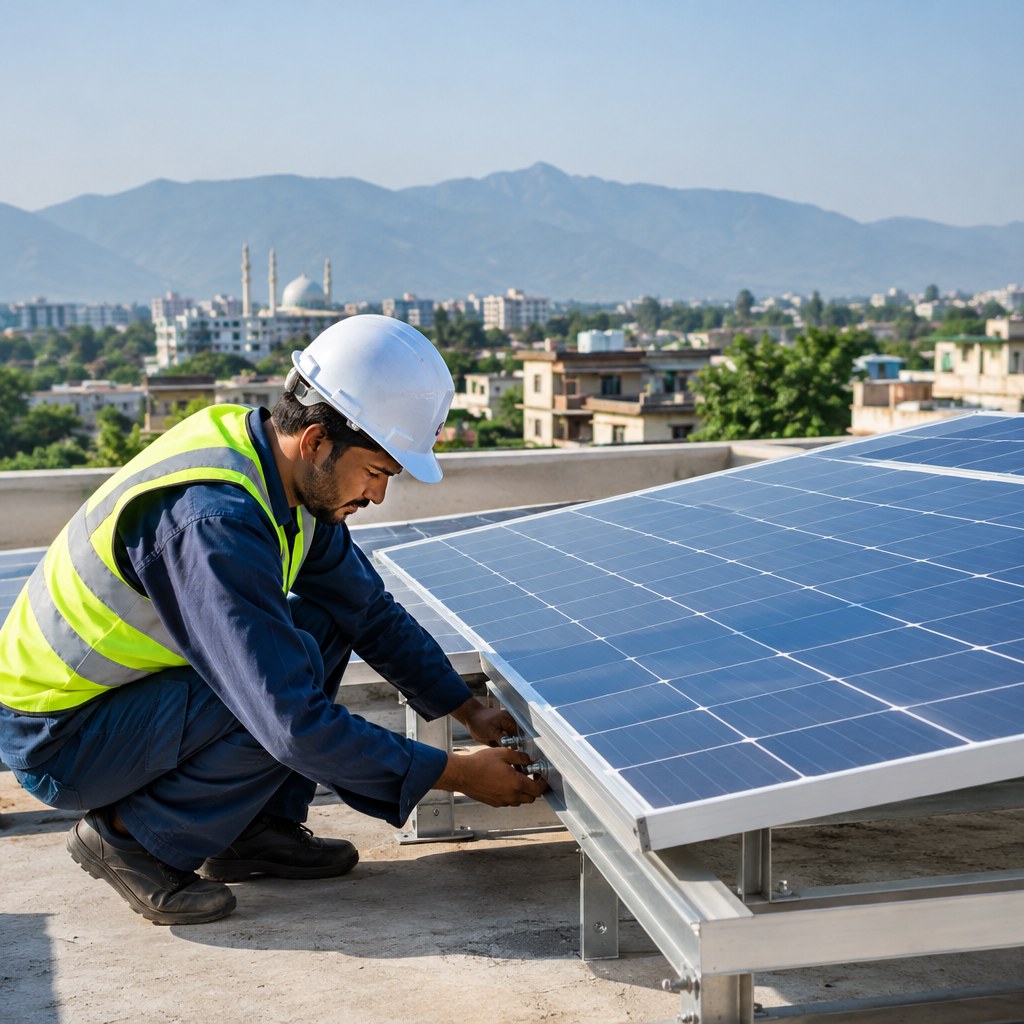
Pakistan lies entirely in the Northern Hemisphere, roughly between 24° and 37° north. Throughout the year, the sun travels across the southern part of the sky. That is why south-facing panels collect the most energy over a full year.
True South vs Magnetic South
A phone compass points to magnetic south, not true (geographic) south. In Pakistan the difference is small, usually only a few degrees, so it rarely matters much for a home system. Still, a good installer will check true south using a solar app, satellite maps, or the direction of shadows at local solar noon.
What If South Is Not Possible?
- South-east or south-west: A small deviation from south causes only a modest yearly loss. South-west can even suit homes that use more power in the afternoon.
- East or west: Output drops more noticeably, but these orientations still produce useful energy, especially with a low tilt.
- North-facing: Generally avoid this in Pakistan. If unavoidable, keep the tilt as flat as safely possible.
City Guide: Recommended Tilt Angles Across Pakistan
The table below uses approximate latitudes and the widely used rule of latitude for fixed tilt, latitude plus about 15° for winter, and latitude minus about 15° for summer. Treat these as starting points, not exact prescriptions.
Other cities follow the same logic. Multan and Faisalabad sit close to Quetta and Lahore in latitude, while Hyderabad is close to Karachi. Northern areas such as Gilgit sit much further north and suit steeper angles, which also helps snow slide off.
Seasonal Tradeoffs: Summer, Winter or Year-Round?
The sun climbs high in Pakistan’s summer sky and stays low in winter. A panel works best when sunlight hits it close to perpendicular, so the ideal angle shifts through the year.
Summer-Optimised (Flatter)
A flatter tilt captures more of the high summer sun. This suits households where peak bills come from fans and air conditioners between May and September. The downside is weaker winter output and more dust settling on the glass.
Winter-Optimised (Steeper)
A steeper tilt catches the low winter sun better and sheds dust and rain more easily. It makes sense if winter loads matter to you, for example heaters, geysers, or reducing reliance on grid power during shorter days.
Year-Round Fixed Tilt
Most homes choose a single fixed angle near latitude. It avoids the labour and safety risk of climbing onto the roof to change frames, and the annual difference between fixed and twice-yearly adjustment is generally modest. If your usage peaks in summer, tilting a few degrees below latitude is a sensible compromise.
Worked Example: Calculating Tilt and Row Spacing in Lahore
Let us walk through a typical flat-roof home in Lahore at about 31.5° N.
- Fixed tilt: Start at 31.5°. Rounding to 30° keeps frames simple and slightly favours summer.
- Seasonal option: Winter tilt is 31.5 + 15 = 46.5°, so about 45°. Summer tilt is 31.5 − 15 = 16.5°, so about 15°.
- Panel rise: A common large panel is roughly 2.27 m long. Mounted in portrait at 30°, its back edge rises about 2.27 × sin(30°) = 2.27 × 0.5 ≈ 1.14 m.
- Lowest winter sun: At noon on the winter solstice, sun elevation is about 90 − 31.5 − 23.45 ≈ 35°.
- Shadow length: 1.14 ÷ tan(35°) ≈ 1.14 ÷ 0.70 ≈ 1.6 m.
So each row needs at least about 1.6 m of clear gap behind it to avoid shading the next row at winter noon. Morning and afternoon shadows are longer, so installers usually add extra spacing. This is why steeper winter tilts take up more roof area.
Shading and Rooftop Constraints
Even the perfect angle cannot fix a shaded array. Shade on a single panel can drag down a whole string, depending on your wiring and inverter.
- Water tanks and stair rooms: Very common on Pakistani rooftops. Keep panels south of them, never directly north.
- Neighbouring buildings and trees: Check shadows in winter, when the sun is lowest.
- Parapet walls: Raise the lower edge of the frame so the bottom cells clear the wall’s shadow.
- Cables, dish antennas and poles: Small objects still cast hard shadows that move across panels.
If shade is unavoidable, ask your installer whether optimisers, microinverters, or a different string layout could help. Our guide to solar panels for home covers how panel choice fits into these decisions.
To understand how much output partial shade can cost you, read our guide to solar panel shading losses in Pakistan, which explains the causes and how to calculate them.
Flat Roof vs Pitched Roof
Flat Concrete Roofs
Most urban Pakistani homes have flat RCC roofs, which is good news. You get full control over both direction and tilt using steel or aluminium mounting structures. The tradeoff is the need for proper row spacing, anchoring, and waterproofing.
Pitched or Sloped Roofs
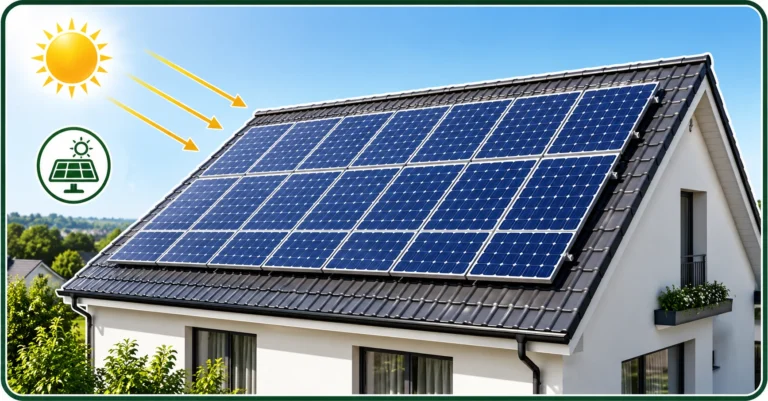
On pitched roofs, panels are usually mounted flush, so the roof’s own slope and direction become your tilt and azimuth. A south-facing slope near your latitude is ideal. If the pitch is far off, tilt-up brackets can help, but they increase wind exposure and should only be used where the structure allows.
Wind, Waterproofing and Installer Safety
Wind Load
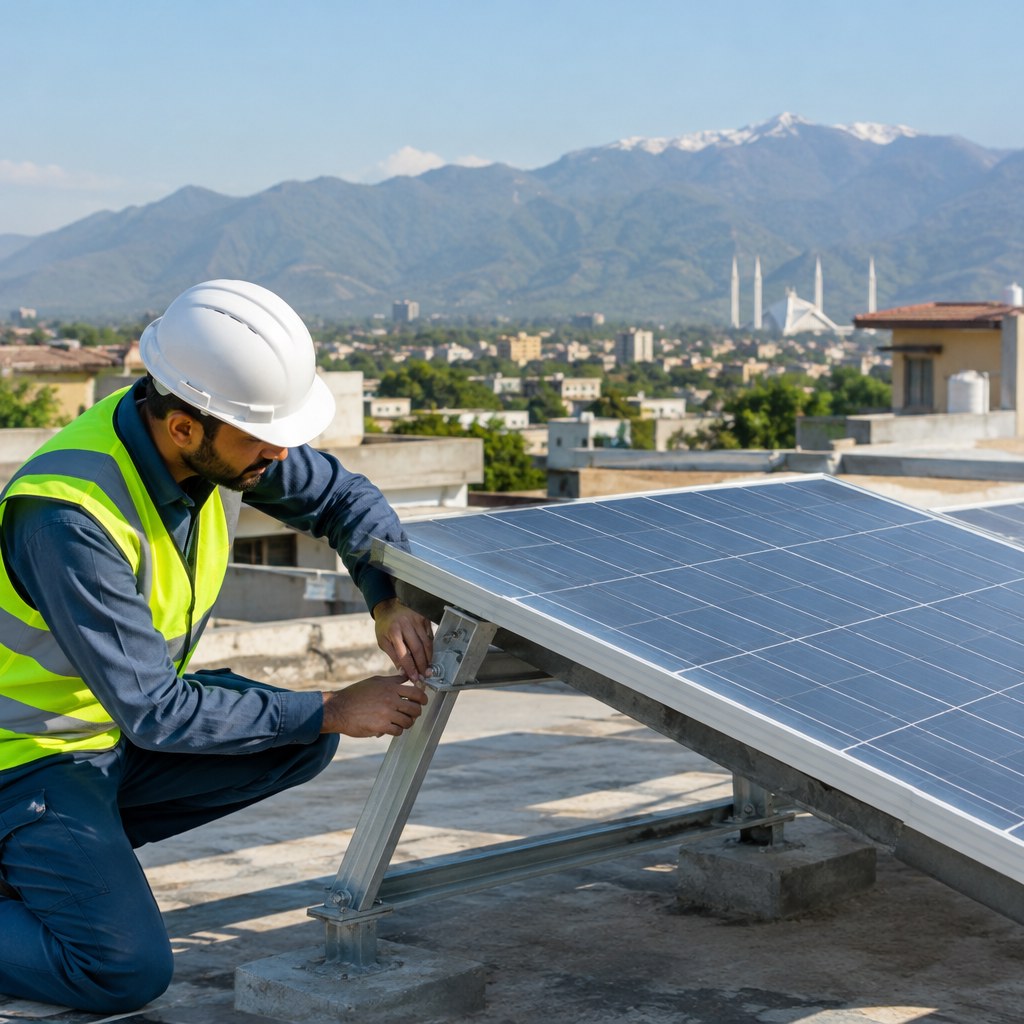
Steeper panels act like sails. Pre-monsoon storms and coastal winds in Karachi place real loads on frames. Strong anchoring, quality bolts, and proper bracing matter more as tilt increases. Ballasted systems need enough weight, while bolted systems must be fixed into sound concrete.
Waterproofing
Drilling into a flat roof can create leak points, especially during monsoon rains. Ask installers to seal every anchor, keep drainage paths clear, and avoid blocking roof slopes that carry water to the drain.
Professional Installation
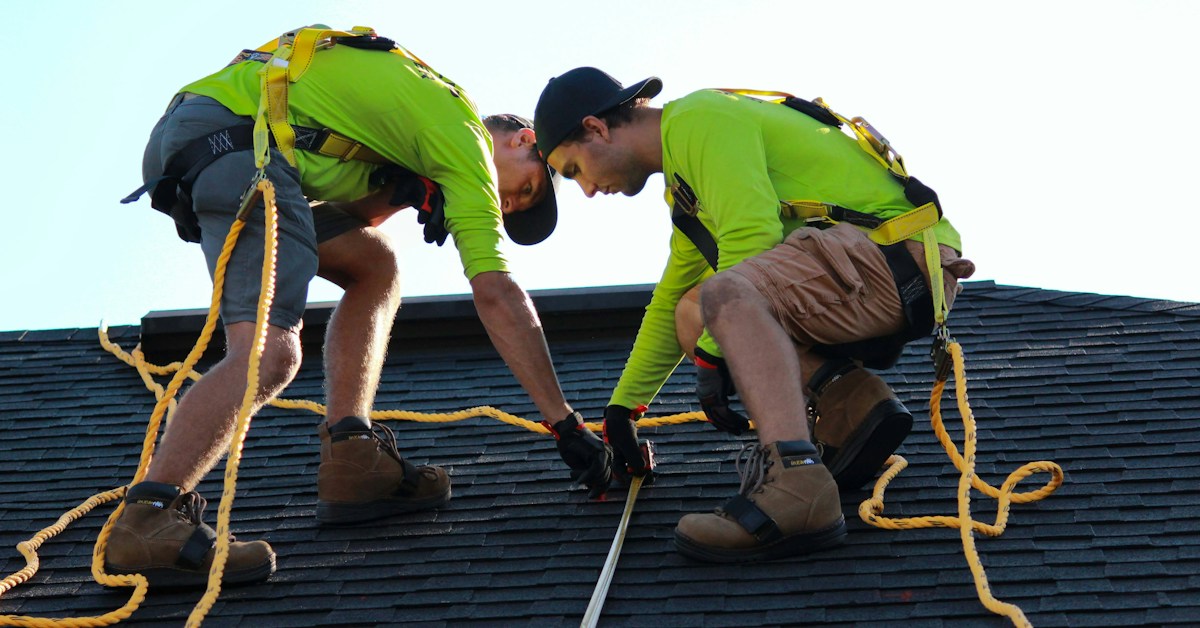
Rooftop work involves heights, heavy panels, and DC electricity that stays live whenever light hits the modules. Use a qualified, experienced installer who uses proper safety gear and checks your roof’s structural condition. For a step-by-step overview of what a proper job looks like, read how to install solar panels on a roof.
Frequently Asked Questions
Is 30° a good tilt for all of Pakistan?
It is a reasonable default for central Punjab and Quetta. In Karachi a slightly flatter angle suits better, while Islamabad and Peshawar benefit from a few degrees steeper.
Should I adjust my panels every season?
Only if your frames are designed for it and adjustment can be done safely. For most homes, the extra energy rarely justifies the effort and risk.
Does tilt affect panel cleaning?
Yes. Steeper panels shed dust and rain better, while very flat panels collect dirt faster and need more frequent cleaning.
Can I lay panels completely flat?
It is not recommended. Flat panels pool water and dust, and they lose output in winter.
Summary
In Pakistan, point panels toward true south and set a fixed tilt close to your latitude: about 25° in Karachi, 30° in Lahore and Quetta, and 33° to 34° in Islamabad and Peshawar. Go flatter for summer-heavy usage and steeper for winter. Then protect that design with good spacing, shade-free placement, secure anchoring, sealed roof penetrations, and a professional installer.
Plan Your Home Solar System With Confidence
Explore our practical guides to choose the right panels for your rooftop.


One Comment