Introduction
With household electricity costs remaining a major concern, solar panels are an increasingly attractive option for UK homeowners. A home solar system can generate electricity on the roof and reduce the amount that needs to be bought from an energy supplier. If the system produces more electricity than the household needs, eligible owners can also earn money by exporting the surplus to the grid.
But how much can you actually save in 2026? There is no single figure that applies to every property. Savings depend on the size and position of the system, local daylight levels, household electricity use, the amount of solar power used at home and the export tariff available. This guide explains the main ways solar panels can reduce household energy costs and what to consider before investing.
How Much Can You Save with Solar Panels in the UK?
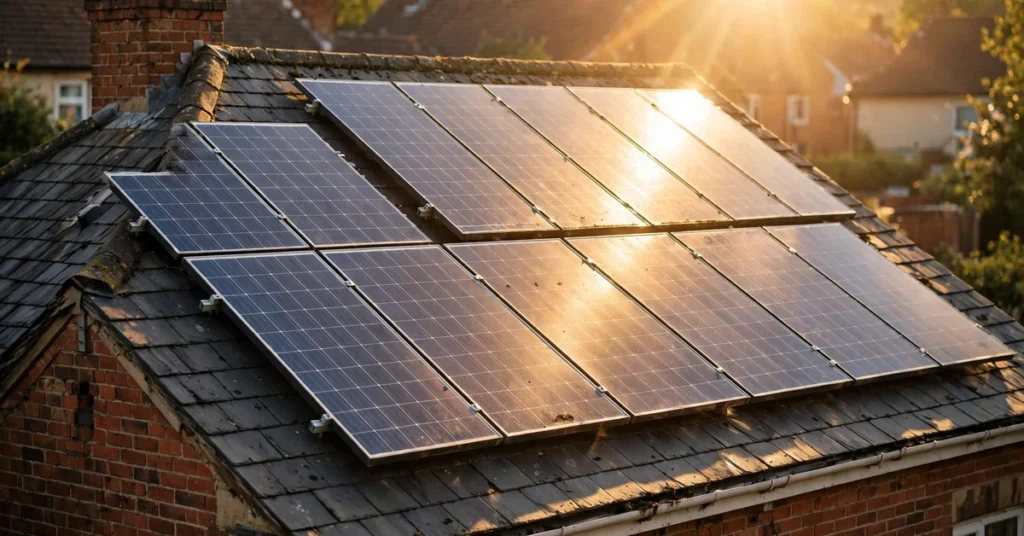
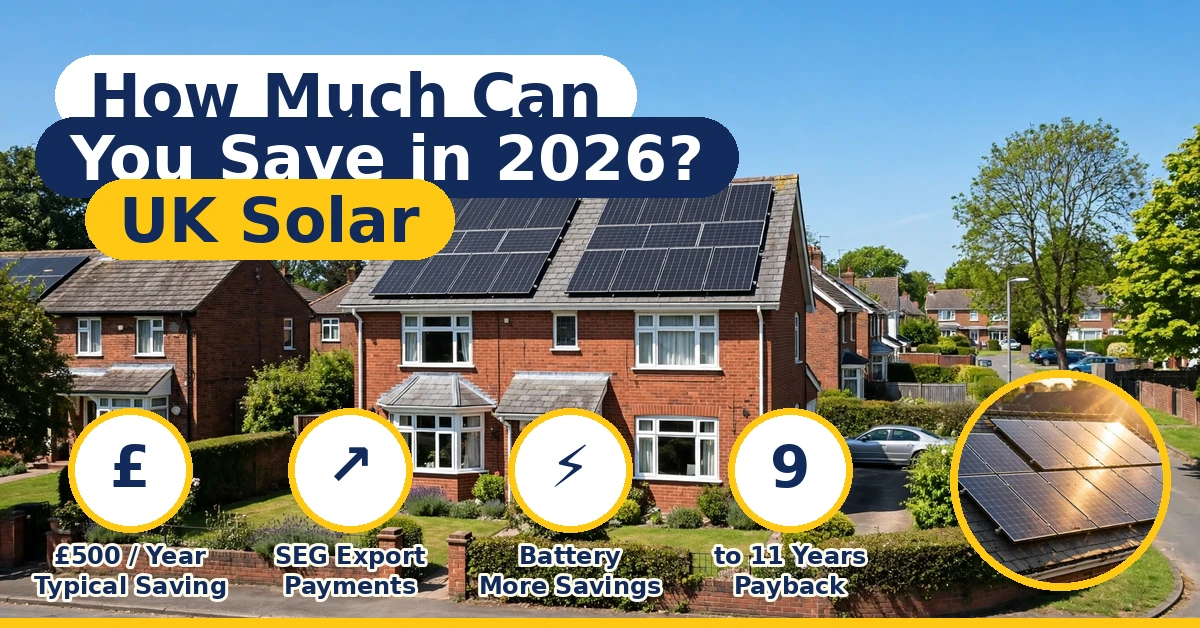
A typical solar installation can reduce electricity bills by hundreds of pounds a year. The UK Government’s Solar Roadmap estimates that a typical home could save around £500 annually from rooftop solar, based on the energy price cap used in its assessment. Actual results will differ between households.
Energy Saving Trust and MoneySavingExpert figures also show why it is important to distinguish bill savings from export income. MoneySavingExpert reports that a typical 4.5kWp system may reduce bills by around £190–£330 per year, before adding payments for exported electricity. The final benefit can be higher when a household qualifies for a competitive export tariff.
These estimates are not guaranteed returns. A shaded roof, low daytime consumption, an unsuitable roof direction or a different electricity tariff can change the result.
What Determines Your Solar Panel Savings?
1. Solar System Size
A larger solar array can usually generate more electricity, provided the roof has enough suitable space and the inverter is correctly matched. Many UK domestic installations are around 4–5kWp, although the right size depends on household demand, roof area and budget.
Installing more panels than you can use does not automatically produce proportionately greater savings. Extra generation may be exported at a rate lower than the price you would otherwise pay to buy electricity. Ask an installer to model expected generation, self-consumption and exports before choosing a system.
2. Your Location in the UK
Solar panels generate electricity throughout the UK, including on cloudy days. However, annual generation can vary with local daylight, weather, roof direction and shading. Homes in southern England may generally receive more solar energy than homes farther north, but a well-positioned roof in Scotland can still be worthwhile.
The Energy Saving Trust’s location examples show that estimated payback periods vary across the UK. Its current guidance gives indicative periods of around 9 years in London and around 11 years in Stirling, depending on the assumptions used.
3. How Much Electricity You Use During the Day
Using solar electricity as it is generated is usually the most valuable way to benefit. When a washing machine, dishwasher, heat pump or other appliance runs during sunny hours, it can use power from the panels instead of drawing as much electricity from the grid.
Households that are empty during the day may export a larger share of their generation. That can still earn export payments, but the value depends on the tariff. Timers and smart controls can help shift flexible electricity use into daylight hours.
4. Your Electricity Tariff
The price you pay for imported electricity affects the value of each unit you use from your panels. The higher your import rate, the more you may save by avoiding grid electricity. Standing charges generally remain payable, so solar panels do not usually eliminate an electricity bill completely.
Compare your current tariff and expected future rates when assessing a quote. Do not assume today’s electricity prices or export rates will remain unchanged for the full life of the system.
How the Smart Export Guarantee Increases Your Savings
The Smart Export Guarantee (SEG) allows eligible solar owners in Great Britain to receive payments for electricity they export to the grid. You are paid for exported units, not for electricity that you use yourself. The scheme is not automatic: you need to apply to an export tariff provider and meet its eligibility requirements.
SEG rates are set by individual suppliers, so they can vary considerably. Some tariffs are fixed, while others are variable. Ofgem advises generators to compare suppliers because each provider sets its own rate and contract terms.
To apply, you will generally need an eligible installation, suitable export metering (usually a smart meter) and evidence of certification such as an MCS certificate or an accepted equivalent. Check the provider’s exact requirements before signing up.
For homeowners in Northern Ireland, the SEG scheme does not apply in the same way. Energy Saving Trust advises checking with suppliers for available export arrangements.
Can a Solar Battery Help You Save More?
A home battery stores surplus solar electricity generated during the day so it can be used later, such as in the evening. This can increase the proportion of solar power a household uses itself and reduce purchases from the grid when panels are no longer generating much electricity.
However, a battery adds to the installation cost. Its financial value depends on the battery price, usable capacity, efficiency, electricity tariffs, household routine and export payment you give up by storing energy instead of exporting it. A battery is not automatically the best choice for every home.
Ask installers to provide separate estimates for panels alone and panels with storage. Compare the expected annual savings, export income, battery warranty and replacement assumptions rather than relying only on a headline saving.
Solar Panel Installation Costs and Payback Period in 2026
Energy Saving Trust says a typical domestic solar PV system is around 4.5kWp and costs approximately £7,600, although roof access, system design and other work can change the price. Battery storage will usually increase the upfront investment.
The payback period is the time required for bill savings and export income to recover the initial cost. Energy Saving Trust’s current examples indicate payback periods of approximately 9 years in London, 10 years in Manchester and 11 years in Stirling, based on its stated assumptions and export payments.
Treat these as illustrations, not promises. Your own payback calculation should account for the installed price, expected generation, how much electricity you use directly, export payments, maintenance and any financing costs.
Practical Ways to Maximise Solar Panel Savings
- Run appliances during daylight: Use timers or delayed-start settings for flexible tasks.
- Monitor your generation: Check your inverter app or energy dashboard to understand when your system produces most power.
- Compare export tariffs: Review available SEG rates and contract conditions rather than accepting the first offer.
- Manage shading: Where safe and appropriate, keep nearby trees and vegetation from casting avoidable shade over the panels.
- Size the system carefully: Match the design to your roof, energy use and budget.
- Review battery economics: Compare the extra cost with the additional electricity you could realistically use.
- Keep the system maintained: Follow the manufacturer’s guidance and arrange professional checks if output changes unexpectedly.
Are Solar Panels Worth It in the UK in 2026?
Solar panels can be a worthwhile long-term investment for households with a suitable roof and a reasonable level of electricity use. The strongest financial case often comes when homeowners use a good share of the electricity during the day, secure a competitive export tariff and receive a well-designed installation at a sensible price.
Before committing, obtain at least three itemised quotes. Ask each installer for an estimate of annual generation, self-consumption, exported electricity, bill savings and payback period. Check certification, warranties and whether the forecast uses realistic assumptions for your roof.
Conclusion
Solar panels can help UK households save hundreds of pounds each year, but the exact amount depends on the home and how the system is used. Government guidance estimates around £500 in annual savings for a typical home, while other published calculations separate direct bill reductions from export payments. A battery may increase self-consumption, but its additional cost needs careful assessment. In 2026, compare installation quotes, check SEG options and calculate your likely payback using your own electricity habits rather than relying on a headline figure.
Frequently Asked Questions
1. How much money can solar panels save per year in the UK in 2026?
A typical household may save hundreds of pounds annually. The UK Government’s Solar Roadmap estimates around £500 a year for a typical home, but actual savings depend on system size, location, electricity use and export arrangements.
2. Do solar panels reduce electricity bills in winter?
Yes, solar panels can still generate electricity during winter, but shorter days and lower sunlight generally mean less generation than in summer. Your winter bill reduction will depend on how much electricity the system produces and how much you use at home.
3. Can I earn money from unused solar electricity?
In Great Britain, eligible households can receive payments through a Smart Export Guarantee tariff for electricity exported to the grid. You must apply to a participating supplier and meet its requirements. Payments are not automatic.
4. Is a solar battery worth buying in 2026?
A battery may be worthwhile if you regularly have surplus daytime generation and use a lot of electricity in the evening. However, it increases the upfront cost. Compare the additional savings with the battery price, warranty and expected lifespan before deciding.
5. How long does it take for solar panels to pay for themselves in the UK?
Published estimates vary by location and assumptions. Energy Saving Trust examples indicate roughly 9–11 years in several UK locations. Your payback period may be shorter or longer depending on installation cost, electricity prices, self-consumption and export payments.
Sources and Further Reading
- Energy Saving Trust — Solar panels: costs, savings and benefits — Energy Saving Trust — solar panel costs, savings and benefits.
- MoneySavingExpert — Solar panels: are they worth it? — MoneySavingExpert — solar panels: are they worth it?
- GOV.UK — Smart Export Guarantee — GOV.UK — Smart Export Guarantee.
- Ofgem — Smart Export Guarantee — Ofgem — Smart Export Guarantee scheme.
- UK Government — Solar Roadmap — UK Government — Solar Roadmap.
Prices, scheme details and eligibility rules can change. Always check the latest official guidance before applying or signing a contract.