Solar panels are designed to work outdoors for decades, and they generally need less attention than many homeowners expect. However, a little care can help protect their performance, identify faults early and prevent avoidable repair bills. In the UK, rainfall often removes ordinary dust from tilted rooftop panels, so paying for frequent cleaning is not always necessary. The important part is knowing what to check, when professional help is worthwhile and how much common maintenance jobs may cost.
This 2026 guide explains how to look after a domestic solar PV system, what a professional service should cover and the likely prices for cleaning and repairs. Costs are estimates rather than fixed quotations; the final amount depends on system size, location, roof access and the parts required.
Why Solar Panel Maintenance Matters
A well-installed solar PV system has few moving parts, but it still includes electrical connections, mounting equipment, an inverter and, in some homes, a battery. Weather, debris, ageing components or accidental damage can affect these parts over time.
Basic checks can help you:
- Notice a sudden fall in electricity generation.
- Spot visible damage after storms or heavy snowfall.
- Keep nearby trees and vegetation from creating avoidable shade.
- Identify inverter warnings before a small issue becomes a bigger problem.
- Keep useful records for warranty claims and future repairs.
Solar modules can often operate for 25 years or longer, while the inverter may need attention or replacement sooner. Monitoring the whole system is therefore more useful than concentrating only on the glass panels.
Solar Panel Cleaning: When Is It Necessary?
Does UK Rain Keep Panels Clean?
For many pitched roofs, rain washes away loose dust and everyday dirt. If panels are installed at a reasonable angle and there is no unusual build-up, routine professional cleaning may offer little extra value.
Cleaning becomes more worthwhile when you can see persistent bird droppings, pollen, leaves, moss, lichen or grime. Homes near busy roads, farms, trees or coastal areas may collect dirt more quickly. Flat or shallow-angle panels can also retain debris more easily than steeply tilted arrays.
Safe Ways to Clean Solar Panels
If the panels can be reached safely from the ground, use a gentle flow of water and a soft, non-abrasive brush suitable for solar glass. Follow the panel manufacturer’s instructions and choose a cool morning or overcast day to reduce the risk of thermal shock and rapid drying.
Avoid detergents, abrasive pads, harsh chemicals and pressure washers. Never walk on the modules or climb onto a wet roof to clean them. If access requires roof work, leave the job to an insured professional with appropriate equipment.
Solar Panel Servicing: What Should Be Checked?
A professional inspection is useful when a system is older, has unexplained performance problems or has experienced storm damage. The technician should check the system in line with its design, manufacturer’s instructions and relevant electrical safety requirements.
Panel and Mounting Inspection
The technician can look for cracked glass, damaged frames, loose or displaced modules, signs of water ingress and problems with the mounting structure. Checks should also consider roof condition and any debris trapped around the array.
Inverter and Electrical Checks
The inverter converts the panels’ direct-current electricity into usable alternating-current electricity. A service may include reviewing fault indicators, checking accessible isolators and connections, examining ventilation and confirming that monitoring data is consistent with expected operation. Electrical testing should be carried out by a suitably qualified professional.
Generation and Shading Review
Comparing recent generation with earlier periods can reveal unusual changes. Seasonal variation and cloudy weather are normal, so a single low-output day does not necessarily indicate a fault. The technician should consider shading, system settings, weather and historical readings before recommending repairs.
Battery and Monitoring Checks
If your installation includes a battery, ask whether the service covers its status, connections, operating settings and any manufacturer alerts. Also confirm that the monitoring app or portal is reporting data correctly.
Solar Panel Maintenance Costs in the UK for 2026

The following figures are indicative UK estimates. Providers may quote per panel, per visit or by the complexity of the work.
| Maintenance job | Typical 2026 cost |
|---|---|
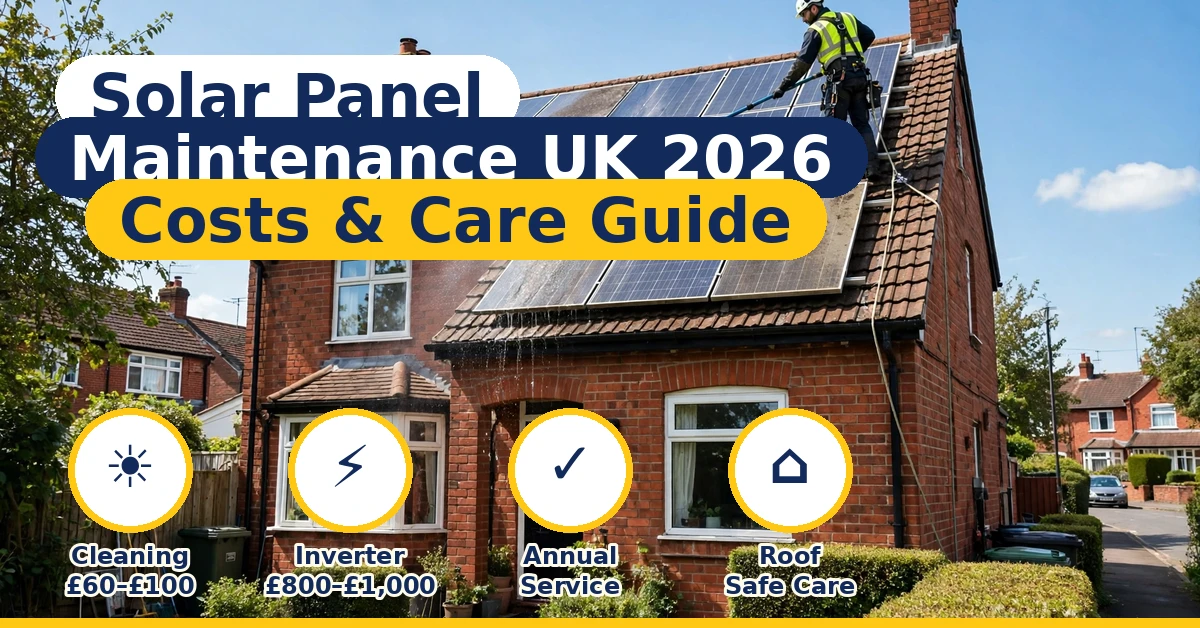
| Professional panel cleaning | Around £60–£100 for a standard system; more for difficult access |
| Cleaning charged per panel | Around £5–£15 per panel |
| Annual professional service | Around £110–£220 |
| Inverter replacement | Around £800–£1,000 in many standard cases |
| Minor component or wiring repair | Often £80–£250, depending on the fault |
| Emergency call-out | May add around £100–£200 |
A basic clean and a full electrical inspection are different services, so check exactly what a quote includes. Some firms advertise an annual maintenance package, while others recommend booking an inspection only when there is a reason. For many functioning domestic systems, occasional condition-based checks may be more appropriate than automatically paying for an annual visit.
The Energy Saving Trust reports that professional cleaning commonly starts at approximately £60–£100 and gives an inverter replacement figure of around £800. Checkatrade’s 2026 guide lists annual servicing at £110–£220 and cleaning at £5–£15 per panel. Actual quotes can vary. (Sources: Energy Saving Trust and Checkatrade.)
Common Solar System Repairs and Their Costs
Inverter Problems
The inverter is an important component and often has a shorter working life than the panels. Many domestic string inverters may need replacement after roughly 10–15 years, although lifespan varies by model, installation conditions and use. A replacement can cost around £800–£1,000, with larger or more complex systems potentially costing more. Check the warranty before paying for a new unit.
Wiring, Isolator and Connector Faults
Loose, damaged or weather-affected electrical components can interrupt generation and may create a safety risk. Minor repairs are sometimes quoted in the £80–£250 range, but the price depends on diagnosis, parts and labour. Do not open electrical enclosures or attempt to repair DC wiring yourself.
Panel or Roof-Mounting Damage
Cracked modules, damaged cables or displaced mounting hardware should be assessed promptly. The cost can vary significantly because the technician may need replacement parts, specialist access equipment or scaffolding. If damage follows a storm or another insured event, check your home insurance and system warranty.
Simple Solar Panel Maintenance Checklist
Use this practical routine to keep track of your system:
- Check the monitoring app monthly. Look for unexpected drops, warning messages or missing data.
- Inspect from ground level every few months. Look for visible dirt, bird activity, debris or panels that appear out of position.
- Review shading twice a year. Trim overhanging vegetation where it is safe and permitted to do so.
- Arrange cleaning only when needed. Visible, persistent deposits are a better reason than an arbitrary calendar date.
- Book a professional inspection when appropriate. Consider one after storm damage, roof work, a significant output drop or when buying a home with an existing system.
- Keep documents together. Save installation details, warranties, service reports, invoices and inverter information.
MCS guidance includes customer-level visual checks of modules, inverters, generation and structural condition, alongside more detailed checks for contractors. Follow the maintenance schedule supplied with your own system. (MCS solar PV installation standard.)
How to Choose a Solar Maintenance Company
Ask whether the company has experience with your system type and whether its technicians are appropriately qualified for the electrical work being proposed. Request a written quotation that separates inspection, cleaning, access equipment, parts and labour. Confirm public liability insurance, any workmanship guarantee and whether the provider will supply a report after the visit.
Contact your original installer first if the system may still be under warranty. A third-party repair or unauthorised modification could affect warranty cover, depending on its terms. Compare at least two quotes for significant work and ask the contractor to explain the fault before approving a replacement. Use a competent installer and ask about roof checks, electrical certification and workmanship cover.
Conclusion
Solar panel maintenance in the UK is usually straightforward because rain handles much of the everyday cleaning and the panels themselves have no moving parts. Homeowners should focus on monitoring generation, checking for visible problems from a safe position and arranging professional help when performance changes or damage appears. In 2026, a standard professional clean may cost around £60–£100, while an annual service is commonly quoted at £110–£220. Inverter replacement is a larger future expense, often around £800–£1,000. Use these figures as planning estimates, check warranties first and choose qualified professionals for roof and electrical work.
Frequently Asked Questions
How often should solar panels be cleaned in the UK?
There is no universal cleaning schedule. Rain often removes ordinary dirt from tilted rooftop panels. Inspect them periodically and arrange cleaning when bird droppings, pollen, leaves or other deposits remain on the surface.
How much does solar panel cleaning cost in 2026?
A professional clean for a standard domestic system may start at around £60–£100. Some providers charge approximately £5–£15 per panel. Roof height, access and system size can increase the price.
Do solar panels need an annual service?
Not every system needs a paid annual service. Follow the maintenance instructions supplied by your installer, monitor generation and consider a professional inspection if the system is ageing, showing faults or has been affected by severe weather.
How much does it cost to replace a solar inverter?
A typical domestic inverter replacement may cost around £800–£1,000, although the final price depends on inverter type, system size and labour. Check the manufacturer’s and installer’s warranties before arranging replacement.
Can I clean solar panels myself?
You may be able to clean panels from a safe ground-level position using gentle water and a soft brush, provided the manufacturer allows it. Never walk on panels, use a pressure washer or climb onto a roof without suitable training and safety equipment.
Sources
- Energy Saving Trust: Solar panel cleaning and maintenance
- Checkatrade: Solar panel maintenance cost guide 2026
- MCS: Solar PV installation standard (MIS 3002)
Disclaimer: Maintenance and repair costs are estimates, not fixed quotations. Always confirm current prices with local installers.