
Introduction
Solar panels allow UK households to generate electricity from sunlight and reduce how much power they need to buy from an energy supplier. However, the cost of a system includes more than the panels themselves. Homeowners may also pay for an inverter, mounting equipment, electrical work, labour, scaffolding, testing and certification.
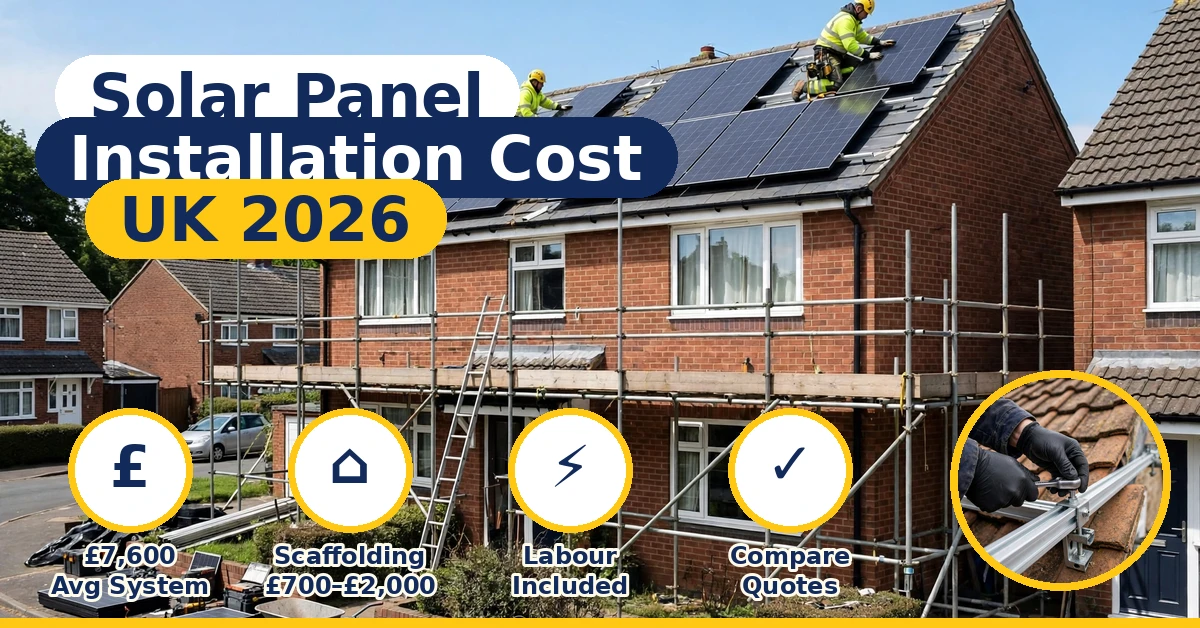
In 2026, the Energy Saving Trust estimates that an average domestic solar panel system of around 4.5kWp costs approximately £7,600 installed. This is a national guide rather than a guaranteed price. Your final quotation will depend on the size of the system, roof condition, access, equipment and any additional work required.
Average Solar Panel Installation Cost in the UK in 2026
A typical home installation can cost several thousand pounds. Larger systems usually have a higher total price, although the cost per kilowatt may fall because some expenses, such as the survey, scaffolding and electrical setup, are shared across the project.
| Installation item | Indicative cost or detail |
|---|---|
| Average 4.5kWp home system | Around £7,600 installed |
| Scaffolding | Around £700–£2,000 where charged separately |
| Labour and mounting | Commonly included in the complete quote |
| Battery storage | Usually an additional expense |
| Roof or electrical repairs | Depends on the work required |
These figures are estimates, not fixed prices. The average system cost is reported by the Energy Saving Trust, while the scaffolding range is a guide from Sunsave.
Main Factors That Affect Solar Panel Prices
1. System Size and Number of Panels
The size of the system is one of the biggest factors affecting the final price. A household with high electricity consumption may need more panels than a smaller home. More panels require additional equipment and installation time.
Ask each installer to state the system’s capacity in kilowatt-peak (kWp), the number of panels and its estimated annual electricity generation. Comparing these details helps you avoid choosing between systems that offer different levels of output.
2. Panel and Inverter Quality
Solar panels vary in efficiency, appearance, product warranty and performance. High-efficiency panels may be useful when roof space is limited, although they can cost more. The inverter is also essential because it converts the electricity generated by the panels into electricity your home can use.
A reliable quotation should name the panel and inverter manufacturers and models. Compare product warranties and the installer’s workmanship cover, not just the initial price.
3. Roof Condition and Accessibility
A simple roof with safe access is usually easier to work on than a steep, fragile or complicated roof. Multiple roof levels, awkward layouts, shading and limited access can increase the time and equipment needed.
If your roof needs repairs, arrange them before the panels are installed. Having to remove and reinstall panels for later roof work can add unnecessary expense.
4. Location and Installer Costs
Prices vary with local labour rates, travel, demand and access. Get several local quotations and compare the same equipment and work.
Solar Panel Installation Labour Costs
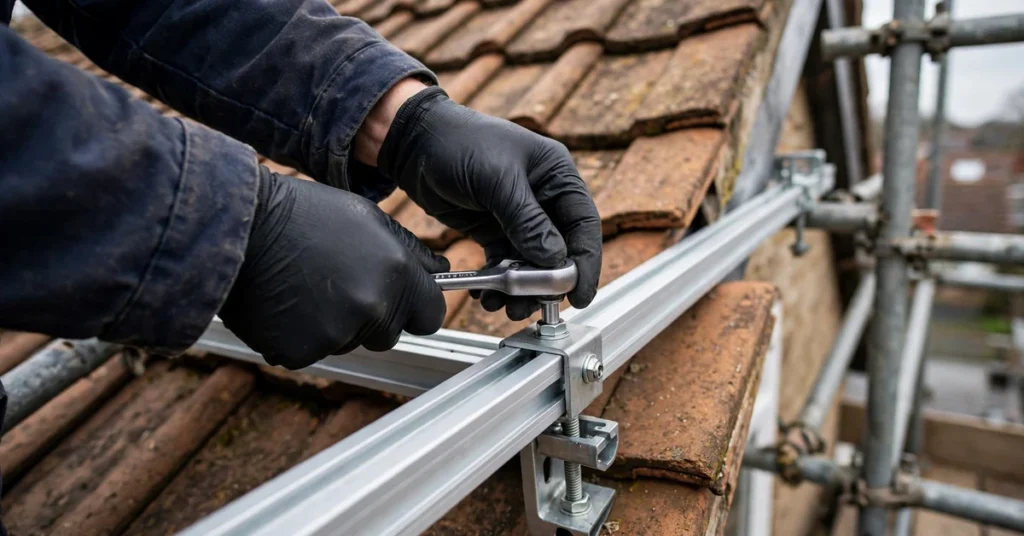
Labour is often included in the overall installation price instead of appearing as a separate charge. A standard project may involve a team fitting roof mounting rails and panels, followed by an electrician connecting the inverter, wiring and household electrical system.
The Federation of Master Builders says installation, labour, mounting and scaffolding together can account for roughly 10–20% of the overall system cost. This is a combined guide, not a standalone labour rate, and the actual share can vary between properties and installers.
Ask whether the labour price includes roof fitting, electrical work, delivery, commissioning, testing and handover documents. Request a written breakdown of any extra roof preparation charges.
Solar Panel Scaffolding Costs
Scaffolding is commonly used for roof-mounted solar installations because it gives workers safe access to the roof. Sunsave’s 2026 guide estimates that scaffolding for solar panels typically costs around £700 to £2,000.
The price depends on building height, roof shape, access and hire duration. Check whether erection, dismantling and hire are included, and whether delays create extra charges. If scaffolding is already in place for roof repairs, ask whether it can be reused. The Energy Saving Trust notes that existing scaffolding can reduce installation costs.
Additional Costs to Consider
Battery Storage
A battery stores surplus solar electricity for use later, such as during the evening. It can increase self-consumption, but it also raises the initial investment. Ask for separate prices for the solar panels and battery so you can decide whether storage suits your household.
Roof Repairs and Electrical Upgrades
Damaged tiles, wiring issues or an outdated consumer unit may need attention before the system is connected. These items are not always included in a standard quote, so ask for any recommended work and its price in writing.
Certification and Grid Notification
Confirm that the installer will provide relevant electrical documents, MCS certification where applicable, and any required notification to the local distribution network operator.
How to Get and Compare Solar Installation Quotes
Follow these steps before choosing an installer:
- Check your roof and bills: Note roof condition, available space, shading and recent electricity use.
- Request several quotes: Contact reputable installers and ask for written proposals.
- Compare specifications: Check kWp capacity, panel and inverter models, estimated generation and warranties.
- Check inclusions: Confirm labour, scaffolding, wiring, testing, certification and grid notification.
- Ask about extras: Get separate prices for batteries, roof repairs and electrical upgrades.
- Verify the installer: Check qualifications, certification and insurance before paying a deposit.
Do not compare headline prices alone. A higher quote may include better equipment or essential work omitted by another company.
Conclusion
The average UK solar panel installation cost in 2026 is approximately £7,600 for a typical 4.5kWp home system, according to the Energy Saving Trust. Scaffolding may cost around £700–£2,000 when charged separately, while labour is often bundled with mounting and other installation work.
Your final price depends on system size, roof access, equipment and any additional electrical or roof work. Request several itemised quotations, check what is included and verify the installer’s credentials. Comparing the complete package will help you choose a suitable system at a fair price.
Frequently Asked Questions
1. How much does it cost to install solar panels in the UK in 2026?
The Energy Saving Trust estimates that an average domestic system of around 4.5kWp costs approximately £7,600 installed. The final price varies with the property, equipment and installation requirements.
2. How much does scaffolding cost for solar panels?
Sunsave’s 2026 guide gives a typical range of around £700–£2,000. Roof height, access, layout and hire duration can affect the charge.
3. Is labour included in a solar panel installation quote?
Many installers include roof and electrical labour in the complete package. Ask for a breakdown and confirm whether testing, commissioning and handover are included.
4. Does a solar battery increase the total installation cost?
Yes. Battery storage is generally an additional expense unless it is clearly included in the package. Request separate prices for the panels and battery.
5. Can I reduce the cost of solar panel installation?
Compare several itemised quotations, choose a system suited to your electricity use and arrange roof repairs in advance. If scaffolding is already installed for other work, ask whether it can be reused.
Sources and Further Reading
- Energy Saving Trust – Solar panels: costs, savings and benefits — Energy Saving Trust — solar panel costs, savings and benefits.
- Sunsave – Scaffolding for solar panels: costs and tips — Sunsave — scaffolding costs and tips for solar panels.
- Federation of Master Builders – Cost of solar panels — Federation of Master Builders — cost of solar panels.
Prices, scheme details and eligibility rules can change. Always check the latest official guidance before applying or signing a contract.


3 Comments