The best solar panels in the US in 2026 are the ones that combine solid efficiency, a strong warranty, reliable build quality and a fair price for your roof. For most homeowners, the leading choices come from well-known manufacturers such as REC, Panasonic, Qcells, Maxeon, Canadian Solar, JinkoSolar and Trina. There is no single best panel for every home: the right choice depends on your roof space, your budget and how much you value long-term warranty cover.
This guide compares the main brands and panel types, explains what efficiency and warranties really mean, and shows how to pick the right panel without overpaying for features you do not need.
What Makes a Solar Panel “Best”?
A good panel is judged on four things. First, efficiency: how much electricity it produces from a given area. Most modern residential panels are around 20 to 22 percent efficient, with premium models slightly higher. Second, the product warranty: how long the manufacturer guarantees the panel against defects, usually around 25 years for leading brands. Third, the performance warranty: the output the manufacturer guarantees after 25 years, usually around 85 to 90 percent of the original rating. Fourth, value: what you pay per watt for that level of performance and warranty.
Best Solar Panels in the US in 2026: Leading Brands
REC. REC is widely regarded as a premium choice, known for high efficiency, strong build quality and a long product warranty. Its panels suit homes with limited roof space, where every square foot needs to produce as much as possible.
Panasonic. Panasonic panels are known for reliability, good performance in hot conditions and a long warranty. They are a popular choice for homeowners who want a well-established brand with a strong service record.
Qcells. Qcells offers a good balance of efficiency, warranty and price, and is one of the most commonly installed brands in the US. It suits homeowners who want solid performance without paying the highest premium price.
Maxeon (SunPower). Maxeon panels, sold under the SunPower name, are among the most efficient residential panels available, with a long warranty. They are usually among the most expensive options, so they make most sense where roof space is tight and maximum output matters.
Canadian Solar, JinkoSolar and Trina. These large manufacturers offer good value panels with respectable efficiency and warranties. They are often the most affordable options in a quote, and they suit larger roofs where a slightly lower efficiency does not matter as much.
Monocrystalline vs Other Panel Types
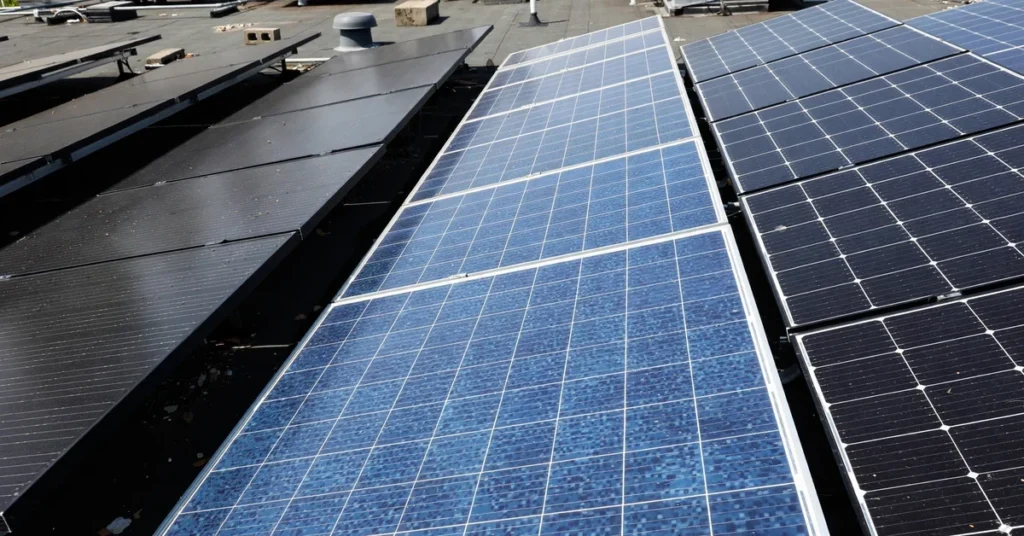
Almost all residential panels sold in the US today are monocrystalline. They are made from single-crystal silicon, which gives them higher efficiency and a uniform dark appearance. Polycrystalline panels, made from multiple silicon crystals, are cheaper but less efficient and are now rarely used for homes. Thin-film panels are lighter and flexible but much less efficient per square foot, so they are uncommon on residential roofs.
Efficiency: How Much Does It Matter?
Efficiency measures how much sunlight a panel turns into electricity. A 400-watt panel and a 450-watt panel of the same physical size differ only in efficiency: the 450-watt panel converts more of the sunlight hitting it. Premium panels reach around 22 percent efficiency or slightly above, while standard panels sit around 20 to 21 percent.
Efficiency matters most when roof space is limited. If your roof can only fit 15 panels, higher-efficiency panels give you a bigger system. If your roof has plenty of space, standard panels may deliver the same total output at a lower price per watt. Our guide to how many solar panels you need explains how roof space and panel wattage work together.
Warranties: What to Check
There are three warranties to compare. The product warranty covers defects and materials, usually around 25 years for leading brands and around 10 to 12 years for budget panels. The performance warranty guarantees a minimum output after 25 years, usually around 85 to 90 percent of the original rating. The workmanship warranty comes from your installer and covers the installation itself, often around 10 years.
Read the warranty terms, not just the headline years. Some warranties are longer on paper but harder to claim, and some require installation by a certified installer. Ask who handles a claim if the manufacturer or installer stops trading, and keep your purchase documents and serial numbers safe.
How Much Do the Best Panels Cost?
Premium panels cost more per watt than standard panels, but the difference in total system price is often smaller than people expect, because panels are only part of the installed cost. As a rough guide, a system using premium panels may cost around 10 to 20 percent more than the same size system using standard panels. Whether that premium is worth it depends on your roof space and how long you plan to stay in the home.
To compare fairly, ask for quotes with the same system size and the same scope of work, and compare the price per watt for each panel option. See our solar system guide for typical system sizes, and our 6kW system cost guide shows typical total prices for a common system size.
How to Pick the Right Panel for Your Roof
- Small roof: Choose higher-efficiency premium panels to get the most output from limited space.
- Large roof: Standard panels from a reputable brand usually give better value.
- Hot climate: Check the temperature coefficient on the datasheet. Panels with a lower coefficient lose less output in heat.
- Shaded roof: Consider half-cut cell panels and microinverters, and check the roof installation guide for what installers check before designing a system.
- Long-term home: A longer product warranty and a stable manufacturer matter more if you plan to stay for decades.
- Tight budget: A good-value panel from a large manufacturer often delivers the best return, even if its efficiency is slightly lower.
Conclusion
The best solar panels in the US in 2026 come from established brands such as REC, Panasonic, Qcells, Maxeon, Canadian Solar, JinkoSolar and Trina. Premium panels suit small roofs and long-term owners, while good-value panels suit larger roofs and tighter budgets. Compare efficiency, product and performance warranties, price per watt and installer reputation, and choose the panel that fits your roof, your budget and your plans for the home.
Frequently Asked Questions
1. What is the best solar panel brand in the US in 2026?
There is no single best brand. REC, Panasonic, Qcells and Maxeon lead on efficiency and warranties, while Qcells, Canadian Solar, JinkoSolar and Trina often offer better value. The best choice depends on your roof and budget.
2. What efficiency should I look for in a solar panel?
Most good residential panels are around 20 to 22 percent efficient. Premium models reach slightly higher. Efficiency matters most when roof space is limited.
3. How long do solar panel warranties last?
Leading brands usually offer around 25 years for both the product warranty and the performance warranty. Budget panels may offer shorter product warranties, so check the datasheet.
4. Are more expensive solar panels worth it?
Sometimes. They are worth it on small roofs where efficiency matters, or for long-term owners who value a longer warranty. On large roofs, standard panels often give better value.
5. Should I choose monocrystalline or polycrystalline panels?
Monocrystalline panels are the standard choice for US homes in 2026. They are more efficient and more widely available than polycrystalline panels.