Introduction
If your home has solar panels, you may be able to earn money by exporting surplus electricity to the National Grid. The Smart Export Guarantee (SEG) is a UK scheme that requires certain electricity suppliers to pay eligible small-scale generators for the renewable electricity they export.
The amount you receive depends on the tariff you choose, how much electricity you export and whether you meet the supplier’s conditions. Some tariffs are open to customers who use another energy supplier, while higher rates may require you to buy electricity from the same company or have your solar and battery system installed through a particular provider.
In 2026, advertised export rates range from around 1p to 25p per kilowatt-hour (kWh), depending on the supplier and eligibility conditions. These rates can change, so compare the latest tariff terms before applying.
This guide explains how SEG works, who can qualify, what rates are available, how to apply and how to estimate your potential payments.
What Is the Smart Export Guarantee?
The Smart Export Guarantee is a government-backed scheme introduced on 1 January 2020. It enables eligible owners of small-scale renewable electricity systems to receive payments from participating electricity suppliers for electricity exported to the grid.
Solar photovoltaic (PV) panels are the most familiar technology used by households under the scheme. Other eligible technologies include wind, hydro, micro combined heat and power (micro-CHP) and anaerobic digestion, subject to the scheme’s requirements.
SEG payments are based on electricity exported, measured in kWh. It is not a grant for buying solar panels and it does not pay you simply for generating electricity that you use inside your home.
The scheme applies to eligible installations in Great Britain. Northern Ireland has a different regulatory and market arrangement, so households there should contact their electricity supplier about available export payments.
How Does the Smart Export Guarantee Work?
Solar panels generate electricity during daylight hours. Your home normally uses some of that electricity as it is produced. If generation is higher than your household demand and any battery charging, the surplus may be exported to the grid.
Under a SEG tariff, your chosen supplier pays you for eligible electricity recorded as exported.
The basic process is:
- Your solar panels generate electricity.
- Your home uses the electricity it needs at that moment.
- A battery, if installed, may store some surplus electricity.
- Remaining surplus electricity is exported to the grid.
- An eligible export meter records the amount exported.
- Your SEG supplier calculates payment using the tariff rate and export readings.
You must apply to a supplier offering a SEG tariff. Payments do not start automatically just because your solar panels have been installed.
Does SEG Pay for All the Electricity Your Solar Panels Generate?
No. SEG normally pays for eligible electricity exported to the grid, not all the electricity generated by your panels.
For example, if your system generates 3,500kWh in a year and your household uses 2,000kWh directly, the amount available for export depends on when the electricity is generated, your household demand and whether you have a battery. You are paid for the metered eligible export, not simply the difference between annual generation and annual household use.
Smart Export Guarantee Rates in the UK 2026
There is no single national SEG rate. Suppliers set their own tariff prices, contract terms and eligibility conditions. Ofgem requires SEG payments to be above zero, but it does not set one fixed payment rate for every household.
Recent 2026 tariff comparisons show a wide range of offers. Rates in the examples below are drawn from published tariff comparisons and should be treated as a snapshot, not a guaranteed live offer. Always confirm the current rate and terms directly with the supplier before switching or applying.
Examples of SEG and Solar Export Tariffs
| Supplier or tariff example | Indicative export rate | Important conditions to check |
|---|---|---|
| Good Energy Solar Savings Exclusive | Up to 25p/kWh | High rate has specific installation and customer eligibility conditions |
| Octopus Intelligent Octopus Flux | Around 23p/kWh in cited comparison | Requires an eligible battery and Octopus tariff; time-based import/export structure |
| OVO SEG Install Exclusive | Up to 20p/kWh | Higher rate linked to qualifying OVO-installed systems and customer conditions |
| So Energy So Bright | Around 20p/kWh | Linked installation or customer conditions apply |
| EDF Export Exclusive | Around 18p/kWh | Eligibility may require an EDF supply relationship and qualifying installation |
| E.ON Next Export Premium | Around 17.5p/kWh | Specific installer, supply and system conditions apply |
| British Gas Export Premium | Around 12p/kWh | Generally linked to being a British Gas electricity customer |
| Octopus Outgoing | Around 12p/kWh | Octopus customer tariff; check current terms |
| ScottishPower SmartGen | Around 6p/kWh | Standalone option in published comparisons |
| E.ON Next Flex Export | Around 6p/kWh | Check current customer and installation conditions |
| Octopus SEG | Around 4.1p/kWh | Standalone tariff example in published comparisons |
| OVO SEG | Around 4p/kWh | Standalone tariff example in published comparisons |
| British Gas SEG | Around 3p/kWh | Standalone tariff example in published comparisons |
Important: These are examples from 2026 comparison pages, not a complete list and not a promise that every tariff is currently open to new applicants. Some rates are variable, some are fixed for a limited period, and some require you to buy electricity from the same supplier. Premium rates may require the supplier or its partner to have installed your panels and battery.
Why Do SEG Rates Differ Between Suppliers?
Suppliers use different pricing structures and eligibility rules. A high export rate may be available only to households that meet several conditions, such as:
- Buying electricity from the same supplier.
- Having solar panels installed by the supplier or its approved partner.
- Having a compatible battery.
- Using a particular smart tariff.
- Meeting system capacity or metering requirements.
A lower standalone rate may be available to more households, including customers who want to keep their existing electricity supplier.
Compare the whole energy deal, not only the export payment. A higher export rate may not be worthwhile if the supplier’s import tariff or standing charge costs you more.
Who Is Eligible for the Smart Export Guarantee?
You may be eligible if you own or operate a qualifying small-scale renewable electricity installation in Great Britain and meet the supplier’s requirements.
The scheme includes solar PV, wind, hydro, micro-CHP and anaerobic digestion installations. The general SEG capacity limit is up to 5MW, with a separate 50kW limit for micro-CHP.
For a typical home solar installation, the main points to check are:
- The installation is in Great Britain.
- The technology is an eligible renewable generation type.
- The system meets the relevant capacity limit.
- The installation and installer meet the required certification standard, normally MCS or an accepted equivalent.
- You have suitable metering that records exported electricity.
- You can provide the documentation requested by your chosen SEG supplier.
Suppliers may have additional tariff-specific requirements. A premium tariff could require a battery, a particular inverter, a compatible smart meter or a specific installation route.
Is MCS Certification Required?
For most domestic applicants, suppliers commonly ask for a Microgeneration Certification Scheme (MCS) certificate or acceptable equivalent evidence. MCS certification helps demonstrate that the installation meets relevant industry standards.
Check the requirements of the supplier and tariff you want to join. If your system was installed without MCS certification, ask the supplier whether it accepts an equivalent certification route before assuming you cannot apply.
Do You Need a Smart Meter?
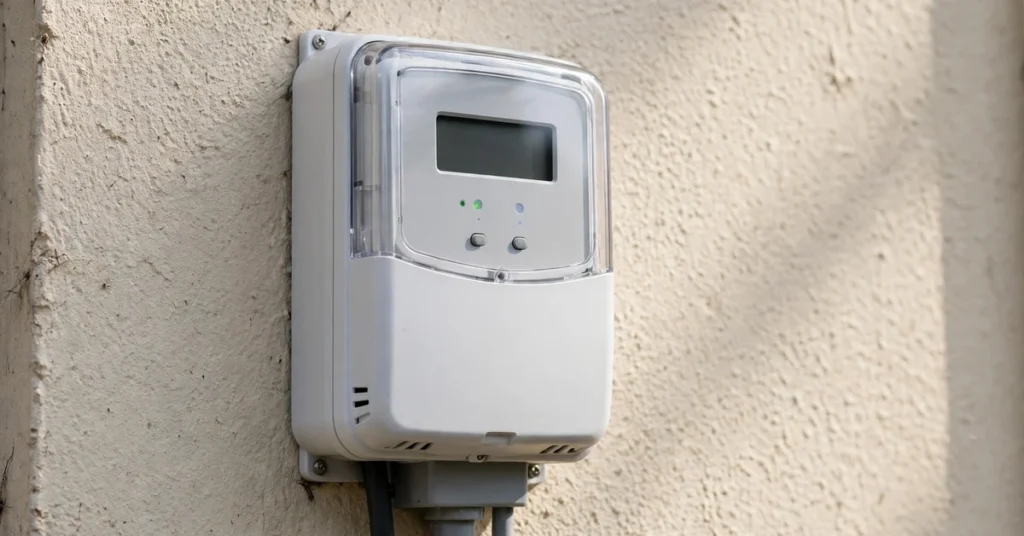
You need metering that can measure the electricity you export. Many suppliers require a smart meter capable of recording half-hourly export readings, although exact requirements can vary by supplier and tariff.
Ask your energy supplier or SEG provider whether your existing meter is suitable. If it is not, find out whether it can be upgraded and whether any meter appointment or configuration is needed.
Can You Apply if You Use a Different Electricity Supplier?
Yes. Your SEG provider does not have to be the company that supplies your household electricity. Ofgem says eligible generators can apply to any SEG licensee offering a tariff.
However, some of the higher-paying export tariffs are linked to taking your electricity supply from the same company. Check whether a tariff is standalone or requires a dual relationship.
How to Apply for the Smart Export Guarantee
Applying for SEG is usually a direct process with the supplier whose export tariff you want.
Step 1: Check Your Solar Installation Documents
Gather the documents supplied when your system was installed. These may include:
- MCS certificate or accepted equivalent.
- Installation or commissioning certificate.
- Electrical installation documentation.
- Solar panel and inverter details.
- System capacity in kW.
- Confirmation of the installation address and commissioning date.
The supplier will tell you exactly which documents it needs.
Step 2: Check Your Export Meter
Make sure your meter can measure exported electricity. If you have a smart meter, ask your supplier whether it is configured to record export readings and whether the data is available for settlement.
If you have a separate export meter, check that it is suitable and that the supplier accepts its readings.
Step 3: Compare SEG Suppliers
Use Ofgem’s current SEG licensee list to identify participating suppliers. Then compare their published export tariffs.
Check more than the headline rate:
- Is the tariff fixed or variable?
- How long does the rate last?
- Is it open to non-customers?
- Must you switch your electricity supply?
- Does it require a battery?
- Must the supplier have installed your system?
- How often are payments made?
- Is there a minimum or maximum system capacity?
- What happens when the tariff ends?
Step 4: Submit an Application
Apply through the supplier’s website or customer service team. You may be asked for your name, address, installation details, MCS certificate number, system capacity, meter details and bank information for payments.
Only provide personal and banking details through the supplier’s official website or verified contact channels.
Step 5: Wait for Approval and Meter Setup
The supplier may check your documents, confirm the meter arrangement and validate the installation. It may contact your electricity supplier or metering provider if further information is needed.
Do not assume payments begin on the date you submit the application. Ask the supplier when the tariff becomes active and from which date exported electricity will be eligible for payment.
Step 6: Check Your Export Readings and Payments
Once your tariff is active, check that export readings are being received correctly. Review payment statements and contact the supplier if readings are missing or appear incorrect.
Keep copies of your application confirmation, tariff terms, meter readings and payment statements.
What Documents Do You Need to Apply?
Requirements differ between suppliers, but a household applying for a solar SEG tariff may be asked for:
| Document or detail | Why it may be required |
|---|---|
| MCS certificate or equivalent | Evidence of installation certification |
| Installation address | Confirms the location of the generating system |
| System capacity | Confirms the installation is within tariff limits |
| Commissioning date | Helps establish when the system became operational |
| Panel and inverter details | Identifies the installed equipment |
| Meter serial number | Identifies the export meter |
| Export meter readings or smart meter details | Supports payment calculations |
| Bank details | Allows the supplier to pay you |
The supplier may request other information depending on the installation and tariff.
How Much Money Can You Earn From SEG?
Your SEG income depends on three main factors:
- The amount of electricity you export.
- The export tariff rate in pence per kWh.
- The length of time you remain on that tariff.
The basic calculation is:
Annual SEG payment = exported electricity (kWh) × export rate (£ per kWh)
For example, if you export 1,500kWh in a year and receive 12p per kWh:
1,500 × £0.12 = £180 per year
Example SEG Payments at Different Rates
The following table shows what 1,500kWh of annual exports would earn at different rates.
| Export rate | Annual export | Illustrative annual payment |
|---|---|---|
| 3p/kWh | 1,500kWh | £45 |
| 4p/kWh | 1,500kWh | £60 |
| 6p/kWh | 1,500kWh | £90 |
| 10p/kWh | 1,500kWh | £150 |
| 12p/kWh | 1,500kWh | £180 |
| 15p/kWh | 1,500kWh | £225 |
| 20p/kWh | 1,500kWh | £300 |
| 25p/kWh | 1,500kWh | £375 |
These figures are simple illustrations. Your actual export volume and rate may be different, and a premium rate may come with conditions or a limited contract period.
Example: A Home With 2,000kWh of Annual Exports
If a household exports 2,000kWh and receives 15p per kWh, the annual payment would be:
2,000 × £0.15 = £300
At 6p per kWh, the same export volume would earn £120. This demonstrates why comparing tariffs can make a meaningful difference.
How to Get More Value From Your Solar Export Tariff
A good export tariff can improve the financial return from solar panels, but you should also consider how much electricity you use directly.
Electricity you use in your home can avoid buying that unit from your supplier. The value of avoiding an import may be higher than the payment received for exporting the same unit. This depends on your import tariff and export tariff.
Practical ways to manage your system include:
- Run flexible appliances during periods of solar generation.
- Charge an electric vehicle during the day where practical.
- Use a compatible battery to store surplus electricity for later.
- Compare export rates before changing supplier.
- Check whether a time-of-use tariff rewards exporting at particular times.
- Review your tariff when a fixed introductory rate is due to end.
Do not assume that exporting as much electricity as possible is always the best financial choice. Compare the value of self-consumption with the export payment and the cost of any battery or tariff change.
SEG vs Feed-in Tariff: What Is the Difference?
The Feed-in Tariff (FIT) scheme closed to new applicants in March 2019. It paid eligible earlier installations through generation payments and, depending on the arrangement, export payments.
The Smart Export Guarantee is different. It pays eligible generators for electricity exported to the grid. It does not provide a general payment for every unit generated and used at home.
If you are already receiving FIT payments, do not cancel or change your arrangement without checking the consequences. Some FIT participants may be able to switch the export payment element to a SEG tariff while retaining their generation payment, but the details depend on the existing arrangement. Get confirmation from your FIT provider before making a change.
Can You Get SEG Payments With a Solar Battery?
Yes, eligible solar and battery systems can receive SEG payments for electricity exported to the grid. A battery may store some surplus generation for use later, which can reduce the amount exported.
Some suppliers offer special export tariffs for households with batteries. These may use time-of-use rates or require a compatible battery and energy management system.
Before choosing a battery-linked tariff, check:
- Whether your battery model is compatible.
- Whether the tariff requires the supplier to control charging or discharging.
- Whether you must use the same company for electricity supply.
- The export rates at different times of day.
- Any import-rate changes or contract conditions.
- Whether the extra battery cost is justified by your usage.
Does the SEG Rate Change?
Yes. Suppliers can change tariff prices and terms. A fixed tariff may guarantee a rate for a stated period, while a variable tariff can change according to the supplier’s terms.
Ofgem requires SEG tariffs to pay more than zero for eligible exported electricity, but it does not guarantee a particular rate. Check the supplier’s current tariff page and contract before applying.
It is sensible to review your export deal periodically, especially when a fixed rate expires or your household energy needs change.
Which Energy Suppliers Offer SEG Tariffs?
Ofgem publishes an annual list of suppliers that have declared themselves SEG licensees. For the SEG year from 1 April 2026 to 31 March 2027, its published list includes mandatory licensees such as:
- British Gas
- E.ON Next
- EDF Energy
- Octopus Energy
- OVO Energy
- ScottishPower
- So Energy
- Utilita
- Utility Warehouse
- E (Gas and Electricity)
- Fuse Energy
- Foxglove Energy Supply
Ofgem also lists voluntary SEG licensees. This list is not a comparison of the best rates. A supplier appearing on it does not mean that every tariff is open to every household.
Use the official Ofgem list to confirm current participation, then visit each supplier’s website for tariff details.
Common Smart Export Guarantee Mistakes to Avoid
Assuming SEG Payments Start Automatically
You must apply to a supplier and have your tariff approved. Installing solar panels does not automatically enrol you.
Comparing Only the Highest Advertised Rate
The top rate may require a supplier-installed system, a battery or a particular electricity supply contract. Check whether you qualify before using that rate in your calculations.
Forgetting About Import Tariffs
A higher export rate can be offset by a more expensive electricity import tariff. Compare the combined cost and payment, not just the export figure.
Not Checking the Meter
If export readings are not recorded correctly, payments may be delayed or disputed. Confirm the meter is suitable and configured before expecting payments.
Confusing SEG With the Feed-in Tariff
SEG is not the same as FIT. If you are already on FIT, check the impact of any change before switching export arrangements.
Ignoring Contract End Dates
A high fixed rate may last only a limited period. Make a note of the end date and compare available alternatives before it expires.
Frequently Asked Questions
1. What is the Smart Export Guarantee in the UK?
The Smart Export Guarantee is a scheme that requires certain electricity suppliers to pay eligible small-scale renewable generators for electricity they export to the grid. Solar PV is the most common household technology covered.
2. How much does SEG pay per kWh in 2026?
There is no single national rate. Published 2026 comparisons show offers ranging from around 1p to 25p per kWh, depending on supplier, tariff and eligibility. Confirm the live rate directly with the supplier before applying.
3. Do I need to be an electricity customer of the same company?
Not always. Ofgem allows eligible generators to apply to any SEG licensee offering a tariff. However, some higher-paying tariffs require you to take your electricity supply from the same supplier.
4. Do I need an MCS certificate for SEG?
Suppliers commonly request an MCS certificate or acceptable equivalent evidence for domestic solar installations. Check the specific requirements of your chosen supplier and tariff.
5. Do I need a smart meter to receive SEG payments?
You need a suitable meter that records exported electricity. Many suppliers require a smart meter capable of providing half-hourly export readings. Confirm the exact meter requirements with the supplier.
6. Can I receive SEG payments if I have a battery?
Yes. Eligible systems with batteries can receive payments for electricity exported to the grid. The battery may reduce the amount exported because it stores some surplus electricity for later use.
7. Can I switch SEG supplier?
You can generally compare and apply to another SEG licensee, subject to the terms of your current contract and the new supplier’s eligibility checks. Check notice periods, contract end dates and any conditions before switching.
8. Is SEG available in Northern Ireland?
The Ofgem SEG scheme applies to Great Britain, not Northern Ireland. If you live in Northern Ireland, contact your electricity supplier about its export payment arrangements.
9. Can I receive SEG and Feed-in Tariff payments?
Some existing FIT customers may be able to retain their FIT generation payment while changing the export payment arrangement to SEG. Check with your FIT provider before making any change, because the rules and consequences depend on your existing agreement.
10. How often are SEG payments made?
Payment frequency depends on the supplier and tariff. Some pay monthly or quarterly, while others may use a different schedule. Check the contract before applying.
Conclusion
The Smart Export Guarantee gives eligible solar panel owners in Great Britain a way to earn money from surplus electricity exported to the grid. In 2026, rates vary widely, with published examples ranging from low single-digit pence to premium offers of 20–25p per kWh for customers who meet specific conditions.
To apply, check your installation documents, confirm your export meter is suitable, compare suppliers and submit an application directly to your chosen SEG provider. Look beyond the headline rate: import prices, battery requirements, installation conditions and contract length can all affect the value of a tariff.
The best SEG deal is the one you can actually qualify for and that gives your household the strongest overall value.
–-
Sources and Further Reading
- Ofgem – Smart Export Guarantee — official scheme overview and rules.
- Ofgem – SEG for Generators — eligibility and how to apply.
- Ofgem – Smart Export Guarantee Supplier List — suppliers that have declared SEG status for 2026–27.
- Energy Saving Trust – Smart Export Guarantee — consumer guidance on eligibility, meters and tariffs.
- Which? – Smart Export Guarantee Rates — published tariff comparison and eligibility notes.
- MoneySavingExpert – Best Solar Export Rates — tariff comparison and switching guidance.
Tariff rates and eligibility conditions can change. The example rates in this article are indicative snapshots from 2026 comparison sources, not guaranteed current offers. Confirm the latest terms with the supplier before applying.


2 Comments