Pakistan’s electricity market may be heading for its biggest structural change in decades. The Privatisation Commission has proposed separating electricity distribution networks from electricity supply and opening retail supply to licensed competitive suppliers, ahead of the planned privatisation of the state-owned distribution companies (DISCOs) in early 2027. The proposal, reported by Business Recorder on 22 October 2026, would reshape who sells you power, who owns the wires, and — crucially for solar households — who buys your surplus electricity.
Today, your DISCO does almost everything: it owns the local network, sells you the electricity, sends the bill and collects the payment. Under the proposed model, those jobs split. The wires stay with a regulated monopoly. The selling becomes a competitive business. For consumers, that is a profound change — and for the hundreds of thousands of households that have installed rooftop solar, it raises questions that need answers before the new market opens.
What Exactly Is Proposed?
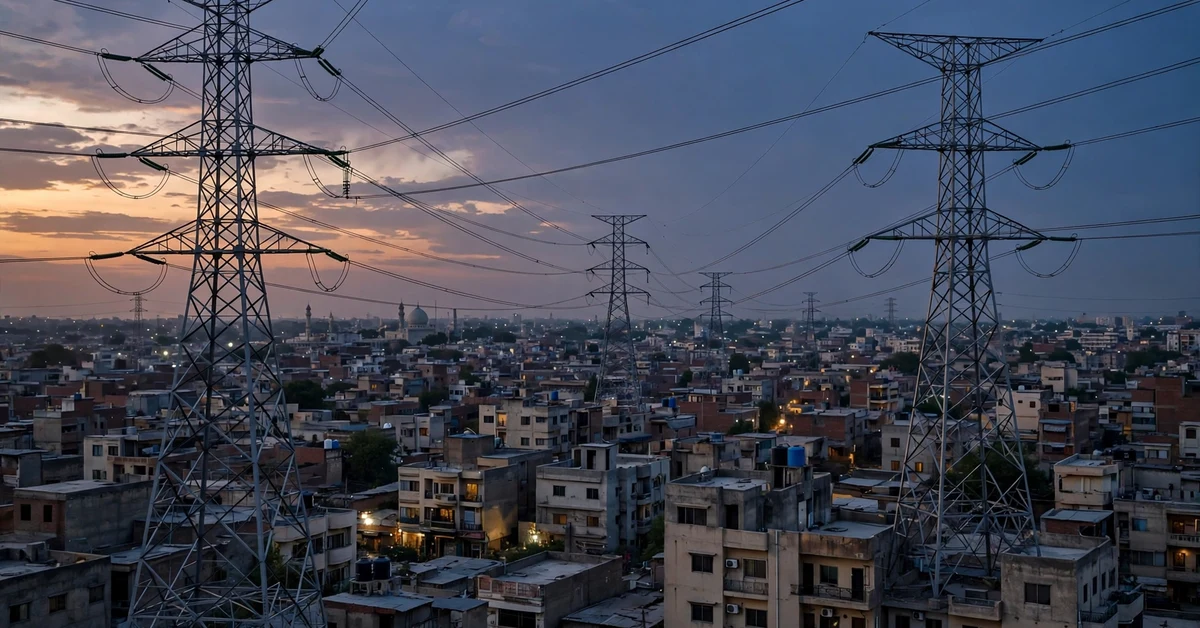
Under the plan, each distribution region would have a Distribution Network Operator (DNO) that owns, runs and develops the physical network — poles, wires, transformers and substations — as a regulated natural monopoly under the National Electric Power Regulatory Authority (NEPRA). You cannot have two companies building competing sets of wires down the same street, so the network stays a monopoly, but a regulated one.
Supply, by contrast, would open up. Licensed Competitive Suppliers would buy electricity, sell it to customers, handle billing and collections, and manage customer relationships. They would take over the legacy contracts currently held by the Central Power Purchasing Agency (Guarantee), or CPPA-G — the state-owned single buyer — along with the matching customer portfolios. In each region, a Supplier of Last Resort would guarantee continuity if a supplier fails or exits the market, so no household is left without power because its supplier went bust. Ring-fenced ancillary businesses could also pursue commercial and energy-transition activities.
The sequencing matters: the proposal comes ahead of DISCO privatisation planned for early 2027, which is itself a requirement of the country’s IMF programme. The idea is that investors should be buying a clean, separable business — either a network or a supplier — rather than the tangled combined utilities of today.
Why Is This Happening Now?
The Privatisation Commission itself stresses that privatising the DISCOs alone will not fix the sector’s structural problems. Those problems are familiar to anyone who follows Pakistan’s power sector: persistent circular debt, high tariffs, and huge capacity-payment obligations to power plants that must be paid whether or not their electricity is used.
Added to that is a newer problem that directly involves solar households: demand erosion. As consumers move to distributed solar and self-generation, they buy fewer units from the grid, which shrinks the revenue base over which the system’s fixed costs are spread. Our earlier coverage of the sector’s finances, including the fuel charge adjustments on electricity bills and the CPPA-G power purchase price proceedings, shows how tightly household bills are now linked to these system-wide costs.
Competitive retail supply is meant to attack the customer-facing side of that problem: better service, sharper procurement, and suppliers competing on price and product rather than a monopoly DISCO billing everyone at the same tariff. Whether it also helps with the deeper cost problem — capacity payments and circular debt — is much less certain, and the Commission’s own caution suggests it knows that.
What Does It Mean for Solar Households?
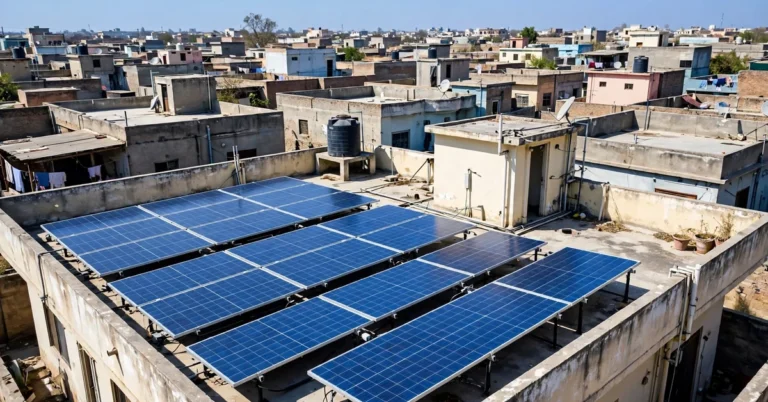
This is where the proposal gets most interesting, and most uncertain. Today, a solar household’s relationship with the grid is governed by its prosumer agreement with its DISCO. Since February 2026, new connections have been on net billing rather than net metering: exports are bought at the national average energy purchase price, imports are billed at the full retail tariff, and agreements run for five years. Our complete guide to net metering and net billing in Pakistan explains how that works in practice.
Under a competitive supply model, several things could change. First, who is your counterparty? If suppliers take over customer portfolios, your export arrangement may move with you to a supplier — but the terms of that transfer, and whether your existing agreement survives intact, have not been spelled out. Second, could suppliers offer solar-friendly tariffs — for example, better export rates, time-of-use pricing that rewards evening exports, or bundled solar-plus-storage deals? In competitive retail markets elsewhere, that is exactly the kind of product innovation that appears, and it could be good news for households that export a lot. Third, what happens to the Supplier of Last Resort’s obligations to prosumers if a solar-friendly supplier fails?
None of these questions has been answered yet, because this is a proposal, not a law. The proposal stage is precisely when solar households and their associations should be asking them — loudly. Once market rules are written, they are much harder to change.
What Stays the Same — At Least for Now
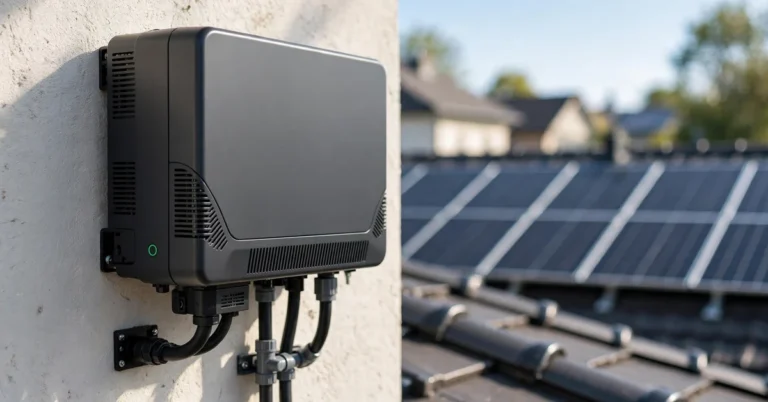
It is important not to overstate what has happened. No supplier has been licensed under this model, no customer has been transferred, and no existing prosumer agreement has been altered by this announcement. NEPRA remains the regulator, the network remains a monopoly, and the physical reality of your connection — the meter on your wall, the wires to your street — does not change. If you are planning a solar installation today, the current rules still apply: size your system for daytime self-consumption first, treat export earnings as a bonus, and confirm the current export rate with your DISCO before signing. The economics in our 5kW system price guide and our solar panel price tracker are built on that same logic.
There are also risks to watch. Competitive markets can produce confusing tariffs, aggressive selling and, in the worst cases, supplier failures that leave customers scrambling — which is why the Supplier of Last Resort mechanism matters. Strong consumer protection rules, clear comparison of tariffs, and honest treatment of existing solar agreements will decide whether competition helps households or merely adds complexity to their bills.
What to Watch Next
Three milestones will show whether this proposal becomes reality. First, whether the government formally adopts the separation model and publishes draft market rules. Second, how the DISCO privatisation timetable for early 2027 interacts with the new structure — will networks and supply be sold separately, and to whom? Third, and most important for solar owners, how prosumer agreements are treated in the transfer: are they honoured in full, transferred to the new supplier, or reopened?
The Commission’s warning is the most honest line in the whole proposal: selling the DISCOs will not, on its own, resolve circular debt, high tariffs or capacity payments. Competition in retail supply is a tool, not a cure. But it is a tool that could, if designed well, give solar households something they have never had in Pakistan: a choice of who buys their power, and a supplier with a commercial reason to want their business.
Frequently Asked Questions
Will I be able to choose my electricity supplier?
That is the aim of the proposal, but it is not yet law. Licensed competitive suppliers would sell electricity to customers in each distribution region, while the network stays with a regulated operator.
What happens to my existing solar agreement?
Nothing has changed yet. This is a proposal from the Privatisation Commission, and how existing prosumer agreements transfer has not been announced. Your current agreement with your DISCO remains in force.
Who keeps the lights on if my supplier fails?
A Supplier of Last Resort in each region would ensure continuity of supply if a supplier defaults or exits the market.
When will this happen?
The proposal precedes DISCO privatisation planned for early 2027. No date has been set for competitive retail supply to begin.
Does this change net billing rates?
Not by itself. Export rates remain governed by NEPRA’s prosumer framework unless the new market rules change them — which is exactly what solar owners should watch for in the draft rules.
For solar households, the message is simple: stay informed, keep your agreement documents safe, and pay attention to the draft market rules when they appear. The structure of Pakistan’s electricity market is about to be debated in earnest, and the households that already generate their own power have more at stake in that debate than almost anyone.