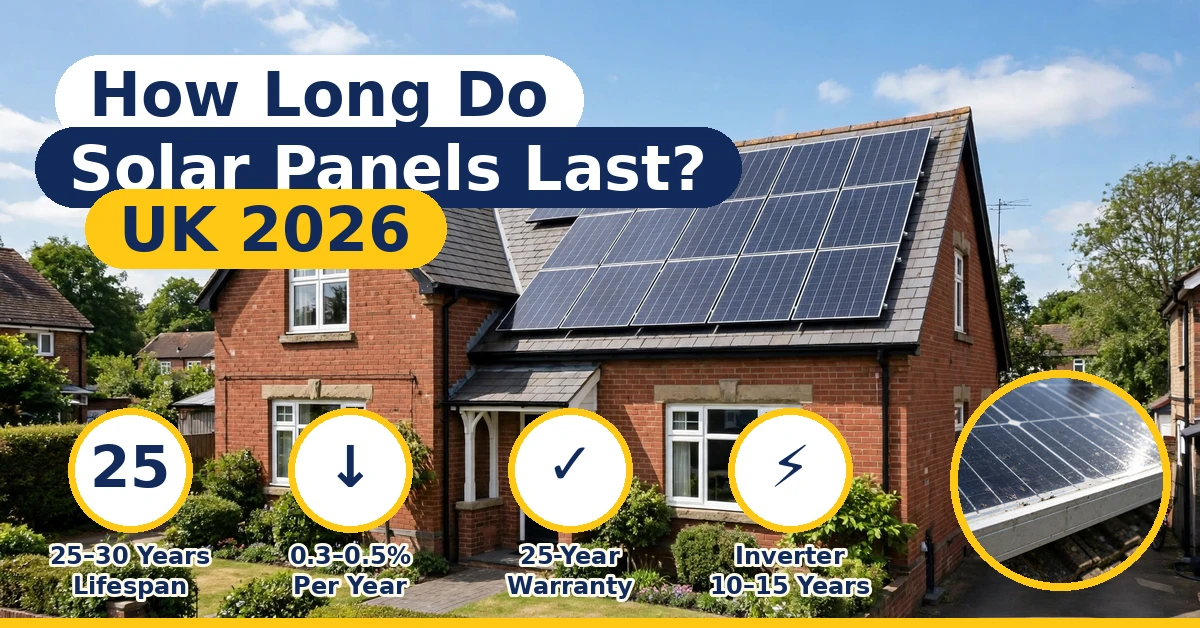
Most modern solar panels in the UK are designed to operate for 25 to 30 years or longer. They do not suddenly stop working when their warranty expires; electricity output gradually decreases as the panels age. Other system components, particularly the inverter and battery, may need replacing sooner.
How Long Do Solar Panels Last in the UK?
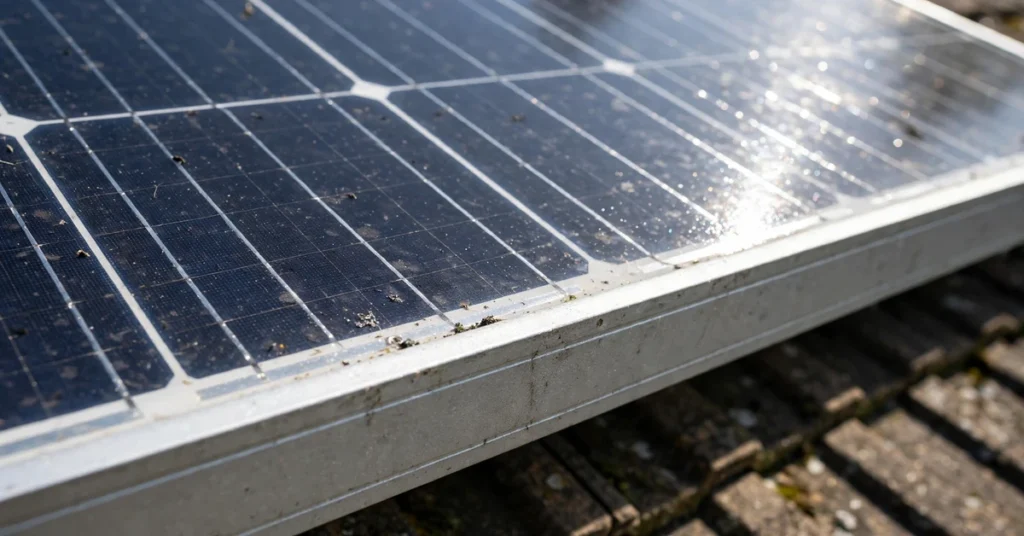
Most modern panels are expected to last 25 to 30 years, and many continue generating electricity beyond that. The Energy Saving Trust says panels should last 25 years or more.
A 25-year performance warranty is not an expiry date. It guarantees a minimum level of output at the end of the stated period. Panels can keep producing electricity after the warranty ends, although at a reduced level. Lifespan depends on panel quality, installation, roof conditions and weather exposure.
Solar Panel Lifespan Compared With Other System Components
Solar panels are generally among the longest-lasting parts of a home solar system. Other equipment can require maintenance or replacement during the panels’ working life.
| Solar system component | Typical lifespan |
|---|---|
| Solar panels | 25–30 years or longer |
| Solar inverter | Around 10–15 years |
| Solar battery | Depends on chemistry, usage and warranty; often shorter than panels |
| Mounting rails and fixings | Designed for long-term use; inspect for wear and corrosion |
The inverter converts panel-generated direct current (DC) into the alternating current (AC) used by household appliances. The Energy Saving Trust estimates that it may need replacing after around 12 years. Battery life depends on its model, chemistry, temperature and usage, so check its specific warranty.
What Is Solar Panel Degradation?
Solar panel degradation is the gradual reduction in electricity output as a panel ages. A common planning estimate for modern panels is 0.3% to 0.5% per year, although actual results vary by model, technology and conditions.
At a simplified 0.5% annual loss, a panel would retain roughly 88% of its original output after 25 years. Warranty calculations may use a larger first-year reduction followed by a lower annual rate. A 2025 research review also found that climate, mounting location and cell technology influence reported degradation. Always check the exact panel datasheet rather than treating one figure as universal.
What Affects Solar Panel Lifespan in the UK?
The following factors influence long-term solar panel performance.
1. Panel Quality and Technology
Panel cells, frame materials and protection against moisture affect durability. Compare the product warranty, performance warranty, degradation rate and guaranteed output at year 25 or 30, not just the advertised wattage.
2. Installation Quality
Incorrect mounting, unsuitable fixings, damaged cables or poor weatherproofing can undermine a good panel. Use a competent installer and ask about roof checks, electrical certification and workmanship cover.
3. UK Weather Conditions
Panels are built for outdoor conditions. Severe storms, hail, flying debris and physical damage can still cause problems. Cloudy weather and shorter winter days reduce generation seasonally; this is not necessarily degradation.
4. Shading and Dirt
Trees, chimneys, leaves and bird droppings can reduce output through shading or soiling. UK rainfall often removes ordinary dust from tilted panels, but heavy debris may require occasional cleaning.
5. Roof and Mounting Conditions
A sound roof and suitable mounting equipment matter. Have loose fixings, corrosion, water ingress or roof movement checked by a professional.
Solar Panel Product Warranty vs Performance Warranty
Panel manufacturers commonly provide two different warranties.
Product Warranty
A product warranty covers physical defects, such as manufacturing or material faults. Its length varies by manufacturer and model. Check exclusions and whether the remedy is repair, replacement or compensation.
Performance Warranty
A performance warranty guarantees a minimum electrical output over time, often for 25 to 30 years. The guaranteed percentage and degradation formula vary. Do not compare duration alone: check the year-25 or year-30 output and the claim conditions.
Workmanship and Inverter Warranties
A workmanship warranty covers installation faults, while inverter cover is separate and often shorter. Ask who handles each claim and whether labour, scaffolding and removal costs are included.
How Can You Make Solar Panels Last Longer?
Solar panels need little routine maintenance. Monitor generation in the inverter app, keep nearby trees trimmed where appropriate and look for visible damage from the ground. Arrange professional checks if output changes unexpectedly. Never walk on panels or climb onto the roof to clean them; follow the manufacturer’s instructions and use a qualified professional when needed. Keep invoices, serial numbers and warranty documents.
When Should You Replace Solar Panels?
Replacing an array is not automatic at 25 years. If panels are safe and still produce enough electricity, they may remain in service. Consider replacement if panels are damaged, repeatedly failing or significantly underperforming. Before replacing an array, ask an installer to check the inverter, wiring, shading and monitoring data; the fault may be elsewhere. Compare an upgrade’s cost and likely generation gains rather than basing the decision on age alone.
Final Thoughts
Solar panels in the UK typically last 25 to 30 years or longer, with output gradually declining. A common estimate is 0.3% to 0.5% annual degradation, but check the manufacturer’s datasheet. Inverters and batteries may need replacing sooner, so compare all warranties and plan for long-term component costs.
Frequently Asked Questions
Do solar panels stop working after 25 years?
No. A 25-year warranty is not an automatic expiry date. Panels can continue generating electricity beyond the warranty period, although output gradually decreases.
What is the average solar panel degradation rate?
A common planning estimate for modern panels is around 0.3% to 0.5% per year. The exact rate depends on the panel model, technology and operating conditions.
How long does a solar inverter last in the UK?
A typical home solar inverter may last around 10 to 15 years. The Energy Saving Trust gives an estimate of approximately 12 years, although actual lifespan varies.
Do solar panels need maintenance?
They need relatively little maintenance. Monitor system output, keep an eye out for visible damage and arrange professional checks if performance changes unexpectedly.
Is a 30-year solar panel warranty worth it?
It can be valuable, but check what it covers. Compare the product warranty, guaranteed output, exclusions, claim process and the company responsible for honouring the guarantee.
Sources
- Energy Saving Trust: Solar panels – costs, savings and benefits
- Energy Saving Trust: Solar power facts
- Solar Energy UK: How to read a solar panel datasheet
- NREL: PV Lifetime Project – 2024 report
- Renewable and Sustainable Energy Reviews: 2025 meta-analysis of photovoltaic degradation
Disclaimer: Lifespan and degradation figures are estimates, not guarantees. Always check the current datasheet and warranty for the specific panel, inverter and battery being considered.