October 2026: What Dealers Are Charging
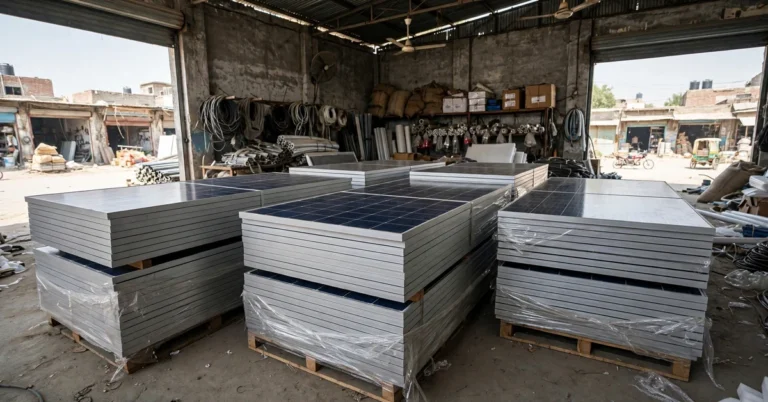
With winter approaching and grid electricity bills still biting, demand for solar panels in Pakistan continues to climb. Market reporting published this week puts October 2026 prices for leading Tier-1 panels between Rs 21,255 and Rs 25,010 per panel, depending on brand, wattage, generation and stock availability.
Here are the latest per-panel market rates reported for October 2026:
| Brand & model | Capacity | Price per panel |
|---|---|---|
| LONGi (older stock) | 545 W | Rs 21,255 |
| JA Solar | 585 W | Rs 23,545 |
| Trina | 590 W | Rs 23,600 |
| Jinko Tiger Neo | 580 W | Rs 24,505 |
| LONGi X7 | 585 W | Rs 25,010 |
The 545-watt LONGi panel from older stock is the cheapest listed model, while the 585-watt LONGi X7 — a newer-generation module — commands the highest price at Rs 25,010. Rates vary by city, dealer and available stock, and dealers advise buyers to compare rates across the market and verify the panel’s grade, warranty and actual power output before paying.
No Price Surge: The Daily Tracker Says Rates Are Steady
Before treating any single price list as the whole market, it is worth checking the broader data. The solarrate.pk daily price tracker — which aggregates real dealer listings — shows the daily median panel price at Rs 40.0 per watt on 22 October 2026, unchanged from 15 October. There is no sharp market-wide price move underway.
Brand-level medians on the tracker currently sit at roughly: Canadian Solar Rs 42.0/W, LONGi Rs 42.2/W, Jinko Rs 41.0/W, Trina Rs 40.0/W, JA Solar Rs 39.0/W, Astronergy Rs 39.0/W and Aiko Rs 42.3/W, across a typical market range of Rs 28.7–56.1 per watt. Independent guides from earlier in October put Tier-1 N-type panels at roughly Rs 38–45 per watt — consistent with the Rs 21,255–25,010 band above.
The takeaway: prices are stable, and the panels in this week’s lists sit squarely inside the market’s fair band. Anyone quoting far above or below it deserves a second look.
Why Demand Is Rising Ahead of Winter
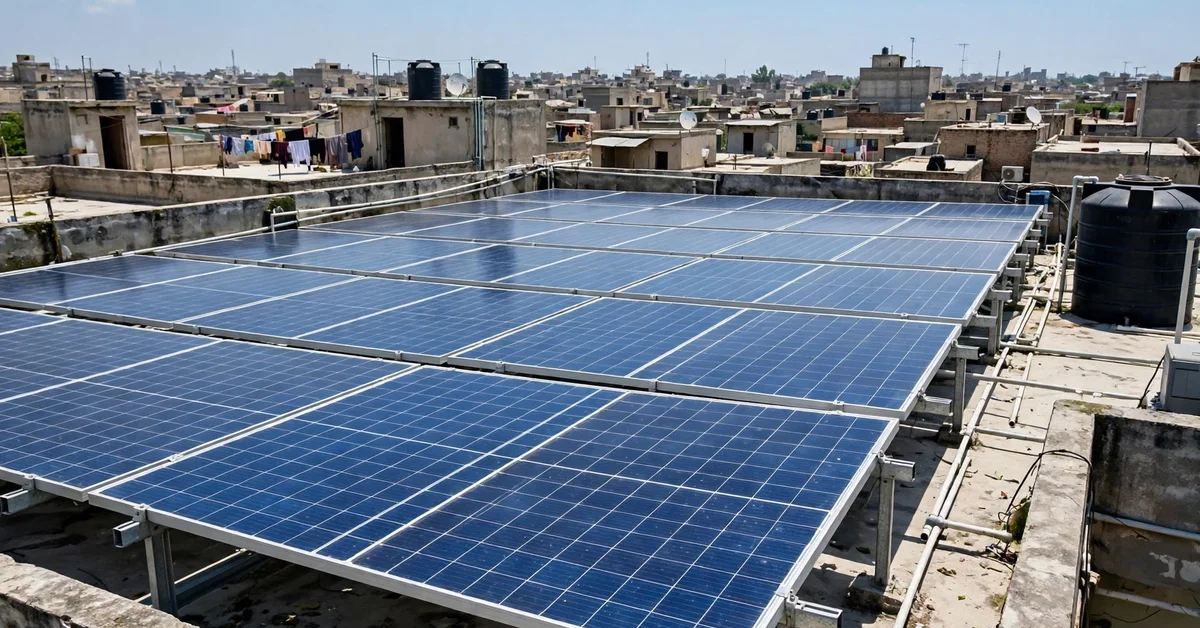
Winter may seem like an odd time to buy solar, but Pakistani buyers have good reasons. Heating loads push winter electricity bills up, and buyers want systems installed before the shortest days arrive. Households and commercial establishments are also reacting to a year of tariff pressure — with retail slabs reaching Rs 35–40 per unit in many cities, every unit a rooftop generates is a unit not bought from the grid.
Higher-wattage N-type bifacial modules (580–620 W) are now the usual choice for homes, because they need fewer panels and less roof space per kilowatt. That is exactly the segment this week’s price lists cover.
What to Check Before You Buy
Solar panel prices move with shipment timing, currency and stock, so a price list is a starting point, not a quotation. Before you pay:
- Do the per-watt maths: divide the panel price by its wattage. A Rs 23,545 JA 585 W panel works out to about Rs 40.25/W — right on the market median. Compare on per-watt terms, not headline prices.
- Verify the model code: “older stock” panels like the Rs 21,255 LONGi 545 W are cheaper for a reason — check the generation, cell technology and datasheet.
- Confirm what is included: panel-only prices exclude the inverter, mounting structure, wiring, batteries and labour, which can double the system cost.
- Ask about GST and warranty: confirm whether the quote includes sales tax, and get the manufacturer’s warranty in writing with a verifiable serial number.
- Buy genuine Tier-1: counterfeit and B-grade panels remain a risk in the open market. Our top 10 solar panels in Pakistan for 2026 comparison explains which brands hold up on warranty and performance.
For brand-specific detail, see our full JA Solar panel price guide with model-wise breakdowns.
Before you accept a quotation, compare the per-watt rate against our standing solar panel price reference for Pakistan in 2026, so you can tell whether the dealer’s offer is fair: Solar Panel Price in Pakistan 2026
Panels Are Only Part of the Bill
A working system needs much more than plates on a roof. Current installer quotes put hybrid inverters at roughly Rs 100,000-250,000 for a 5 kW home, mounting structures at Rs 25,000-60,000, and cabling, breakers and earthing at Rs 18,000-40,000. Lithium (LiFePO4) battery banks – increasingly popular under net billing, where self-consumption beats exporting – are commonly quoted at roughly Rs 45,000-70,000 per kWh of storage. See our lithium battery price guide for brand-wise rates.
One technical point many buyers miss: oversizing your panel array relative to the inverter causes inverter clipping, silently wasting generation. Size the system to your load first, then buy panels to match.
Frequently Asked Questions
What is the solar panel price in Pakistan in October 2026?
Market lists this month show Tier-1 panels from Rs 21,255 (LONGi 545 W, older stock) to Rs 25,010 (LONGi X7 585 W), with most 580-590 W N-type models between Rs 23,500 and Rs 24,500.
Are solar panel prices rising or falling?
The daily median is steady at about Rs 40 per watt, unchanged from mid-October. No sharp market-wide move is underway.
Which panel is best value right now?
Compare on a per-watt basis and weigh warranty and cell technology, not just the sticker price. Our top-10 comparison walks through the trade-offs.
Should I buy before winter?
Buying now means your system is generating through the winter billing months, but never rush – verify the dealer, the model code and the warranty first.
Follow our Solar News section for weekly price tracking and market updates.