
Most solar buyers spend weeks comparing panel brands and per-watt prices, but the decision that shapes how your system behaves every single day is the system type. In Pakistan you have three choices: on-grid, hybrid and off-grid. Pick the wrong one and you will either sit in the dark during load shedding or pay hundreds of thousands of rupees extra for batteries you never needed. This guide explains how each system works, what it realistically costs in 2026, and which one fits your home or business.
Before diving in, it helps to know how solar savings actually reach your bill. Pakistan moved to a net billing framework in 2026, where surplus units you export to the grid earn credits that offset your nighttime consumption. Both on-grid and hybrid systems qualify; off-grid systems do not, because nothing is ever exported. If you are new to the concept, read our complete net metering guide for 2026 first.
What Is an On-Grid (Grid-Tied) Solar System?
An on-grid system connects your solar panels directly to the WAPDA or DISCO grid through an on-grid inverter. During the day, your home runs on solar power first, and any surplus is exported to the grid for bill credits. At night or on overcast days, you simply draw electricity from the grid as normal. There are no batteries, which keeps the design simple, efficient and cheap.
The one critical limitation: when the grid goes down, an on-grid system shuts down completely. This is not a design flaw — it is a mandatory safety feature called anti-islanding, so a rooftop system can never feed power into dead lines while linemen are carrying out repairs.
Pros: lowest upfront cost; fastest payback (often 2.5 to 3.5 years for heavy daytime users); no battery maintenance or replacement; maximum conversion efficiency since there are no charging and discharging losses.
Cons: zero backup during load shedding; a poor fit anywhere outages are a daily reality.
What Is a Hybrid Solar System?
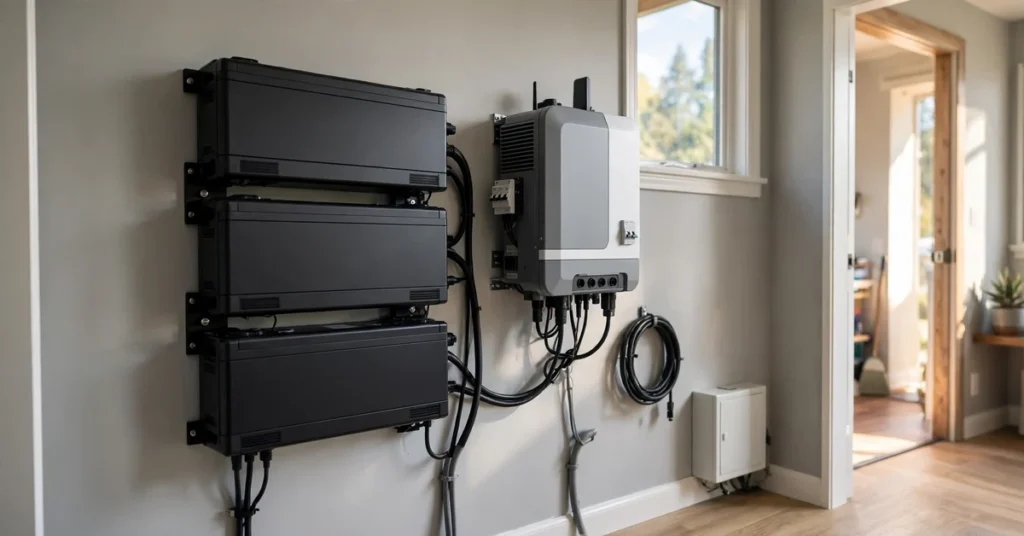
A hybrid system is essentially an on-grid system with batteries added. A hybrid inverter manages three power sources — solar, battery and grid — automatically. Daytime behaviour is identical to on-grid: your load runs on solar, the surplus charges the battery, and whatever remains is exported for credits under the net billing framework.
The difference appears the moment the grid fails. The system switches to battery power within milliseconds, so lights, fans, Wi-Fi, the refrigerator and often one or two inverter air conditioners keep running without a flicker. That is why hybrid has become the default residential choice in Pakistan in 2026, especially in cities where summer load shedding runs four to eight hours a day.
Pros: seamless backup during outages; still earns export credits; works with both lithium and tubular batteries.
Cons: roughly 50 to 70 percent more expensive than an equivalent on-grid system because of the battery bank and pricier hybrid inverter; batteries are a consumable — quality lithium (LiFePO4) banks last 8 to 12+ years before capacity fades, while tubular lead-acid batteries typically last 3 to 5 years. Our lithium battery guide for 2026 breaks down the lifespan and cost-per-kWh maths.
What Is an Off-Grid Solar System?
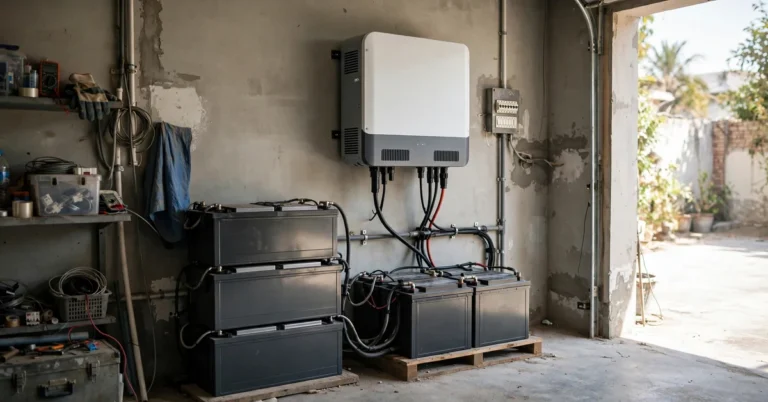
An off-grid system has no grid connection at all. It runs entirely on solar panels plus a large battery bank sized to carry your full load through nights and cloudy days. It is the answer for farmhouses, agricultural tube wells and remote sites where WAPDA lines simply do not reach.
Because the system must survive without any grid support, the battery bank is far bigger than a hybrid one — typically 15 to 20 kWh or more for a 10kW setup — and the panel array is often oversized too. That makes off-grid the most expensive option per kilowatt. It also earns no export credits, and most owners keep a small generator as insurance for long cloudy spells.
Pros: complete energy independence; the only option where the grid does not exist.
Cons: highest upfront cost; no net billing; batteries need replacement on a fixed cycle.
2026 Cost Comparison: On-Grid vs Hybrid vs Off-Grid
The table below shows indicative 2026 market ranges in Pakistan, including panels, inverter, mounting structure, cabling, protection devices and standard installation. Final quotes move with the dollar rate, panel brand and battery capacity — use our best solar panels comparison for 2026 to see how panel tier shifts the numbers.
| System Size | On-Grid (PKR) | Hybrid + Lithium (PKR) | Off-Grid (PKR) |
|---|---|---|---|
| 3kW | 350,000 – 580,000 | 500,000 – 650,000 | 550,000 – 750,000 |
| 5kW | 496,000 – 800,000 | 771,000 – 1,093,000 | 900,000 – 1,300,000 |
| 6kW | 620,000 – 870,000 | 870,000 – 1,150,000 | 1,100,000 – 1,600,000 |
| 10kW | 950,000 – 1,200,000 | 1,400,000 – 1,700,000 | 2,200,000 – 3,000,000 |
Note that a 10 percent GST on imported solar panels, introduced in July 2025, pushed system prices up by roughly Rs 80,000 to Rs 120,000 compared with late-2024 levels — factor that into any old quote a dealer shows you.
Which System Should You Buy?
- Choose on-grid if your grid supply is stable, load shedding is under about two hours a day, and your monthly bill is above Rs 40,000–50,000. You get the fastest payback with no battery cost — ideal for urban homes on reliable feeders and for daytime-heavy commercial loads.
- Choose hybrid if you face daily or unpredictable outages, have family members at home all day, run a home office, or rely on medical equipment. The battery premium pays back in reliability from day one, and you still earn export credits.
- Choose off-grid only if there is no grid access — farmhouses, tube wells, and remote sites. Size the battery bank generously; an undersized bank is the most common cause of off-grid failure.
Three Things to Check Before You Sign
- Confirm net billing eligibility. On-grid and hybrid systems qualify; off-grid systems do not. Understand the application process via our net metering explainer.
- Pick the battery type deliberately. Lithium costs more upfront but lasts two to three times longer than tubular lead-acid — the cheaper battery is rarely the cheaper choice over a decade.
- Size to your real load. A system sized for appliances you do not own wastes money; an undersized one trips on overload. List your simultaneous loads (ACs, motors, fridge, pumps) rather than guessing from room count.
Frequently Asked Questions
Can I add batteries to an on-grid system later?
Technically yes, but you would need to replace the on-grid inverter with a hybrid one, which makes the upgrade expensive. If you expect outages, buying hybrid from the start is cheaper overall.
Does a hybrid system work during load shedding at night?
Yes. Once the sun sets, the battery carries your essential loads until sunrise, provided the bank was sized for your nighttime consumption.
Is off-grid cheaper than hybrid?
No. The oversized battery bank and larger panel array needed for full independence make off-grid the most expensive of the three types.
How long do hybrid batteries last?
Quality lithium (LiFePO4) banks typically last 8 to 12+ years; tubular lead-acid batteries usually need replacement after 3 to 5 years.
Which system gives the fastest payback?
On-grid, because there is no battery cost. Hybrid follows once you value the backup, while off-grid is bought for independence rather than payback.


One Comment