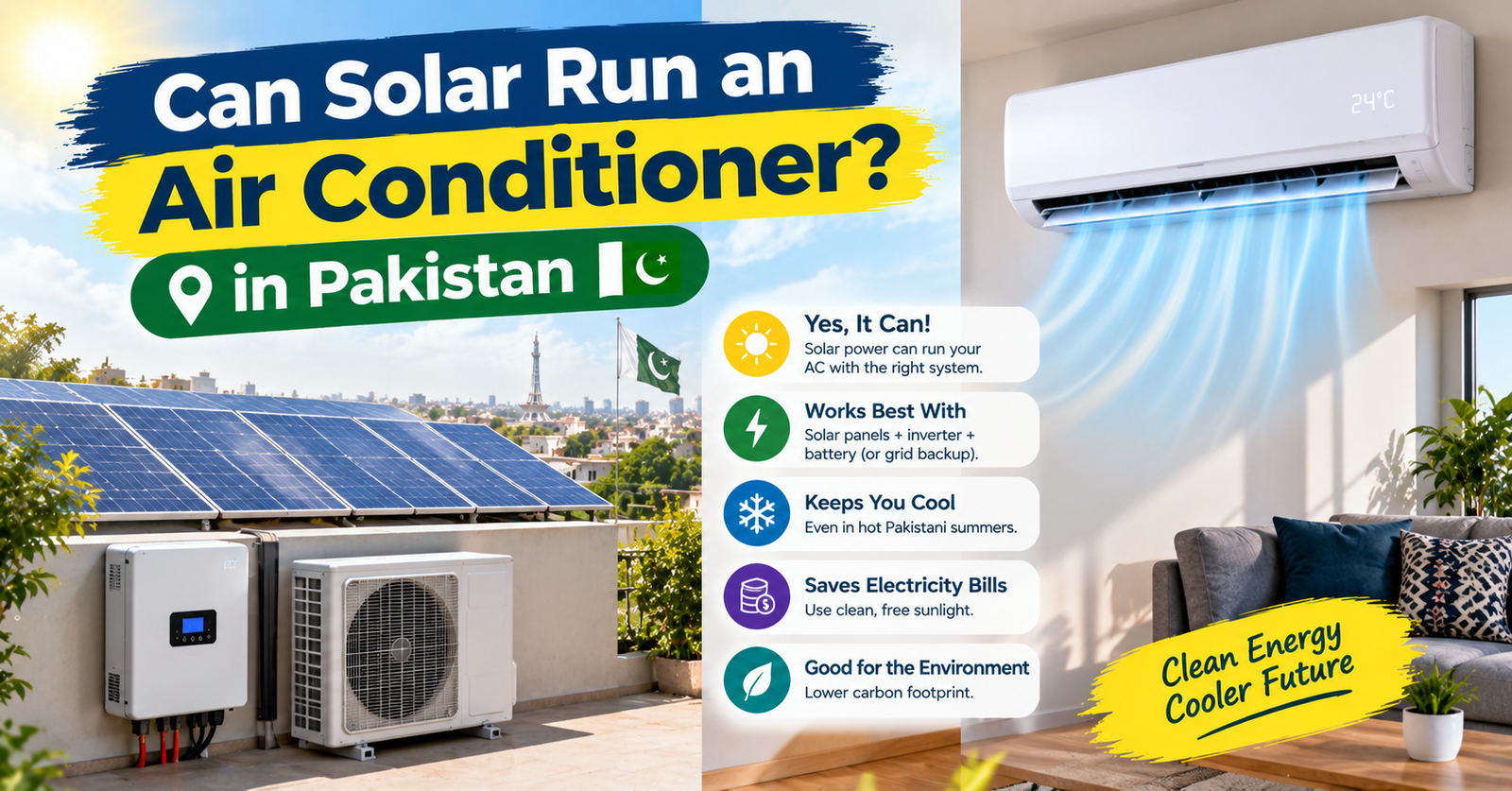
Yes, a solar power system can run an air conditioner in Pakistan. Modern DC inverter air conditioners operating between 1-ton and 2-ton capacities run efficiently on solar energy during daytime peak sun hours. Running an air conditioner on solar panels or battery backup requires calculating panel capacity, inverter ratings, and storage limits. To prevent sudden system overloads and keep electricity costs manageable, homeowners must account for both starting surge wattage and continuous operating wattage before installation.
💡 Key Takeaway: Modern inverter air conditioners adjust compressor speeds automatically, making them highly efficient for solar operation compared to fixed-speed non-inverter models.
Understanding Air Conditioner Power Dynamics in Pakistan
Variable-speed air conditioners can adjust compressor output as the room approaches its set temperature. Electrical demand still varies with model, room size, insulation, outdoor temperature and cooling conditions. Cooling tonnage is not electrical input power. Use the unit’s nameplate, manufacturer data and measured consumption instead of assuming a fixed wattage for every one-ton or two-ton appliance.
Fixed-speed compressors may have substantial starting demand and cycle on and off once the temperature is reached. A qualified installer should compare the actual starting characteristics with inverter capability. Extreme heat can increase cooling demand while reducing panel efficiency. The home solar system guide explains the equipment and site factors to consider together.
Sizing Inverter and Solar Panels for Air Conditioning
There is no single solar system size that suits every 1.5-ton air conditioner. First establish the appliance’s electrical demand, the other simultaneous household loads and the required operating hours. Then assess available solar output across those hours, including heat and shading losses. A panel array’s advertised rating is not guaranteed usable power throughout the day.
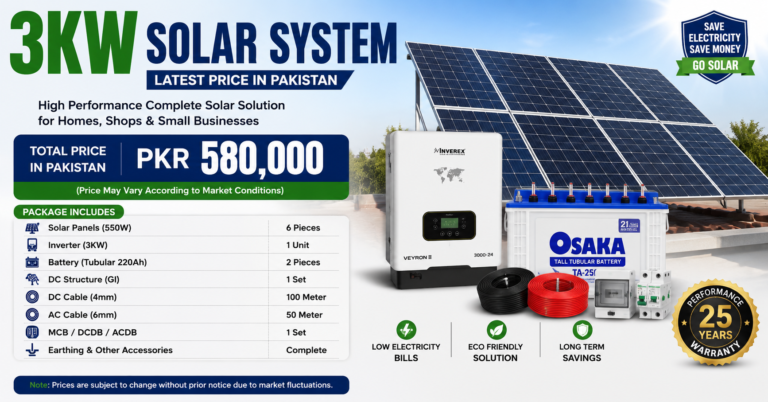
Some grid-connected hybrid systems can supplement solar power with grid electricity or a battery, but the supported behaviour depends on the model and settings. During a grid outage, the backup output may have a different rating from normal operation. Low battery, unavailable solar or excessive demand can stop operation for different reasons. The inverter size guide helps organise simultaneous load information before an installer confirms suitability.
Battery Backup Planning for Nighttime and Load Shedding
Solar panels produce power during daylight hours. Running air cooling systems during evening power outages or overnight requires battery storage banks using lithium-ion or deep-cycle tubular batteries. Because cooling compressors demand constant high wattage, sizing your energy storage properly is essential to avoid deep discharges that shorten battery life. To calculate precise battery bank sizing based on expected backup hours, refer to our comprehensive solar battery size calculator and backup guide.
Worked Example: Sizing Battery Storage for a 1-Ton Inverter AC
For an illustrative calculation only, suppose an air conditioner averages 700 watts for four evening hours. This is an assumed load, not a specification for every one-ton unit. Other household loads must be calculated separately.
- Total Energy Required: 700 watts x 4 hours = 2,800 watt-hours (2.8 kWh).
- System Losses & Depth of Discharge: Factoring 80% usable depth of discharge for lithium batteries and 10% inverter loss: 2.8 kWh / (0.80 x 0.90) = approx. 3.88 kWh total battery capacity needed.
- Equipment selection: The 3.88 kWh result is illustrative nominal energy under the stated assumptions. It does not select a battery model or prove sufficient discharge power. Check the exact pack’s voltage, usable capacity, current limit, reserve and inverter compatibility.
Air Conditioner Solar Load & Capacity Checklist
Compare proposed equipment using actual specifications rather than a universal tonnage-to-panel-count table.
| Item to check | Why it matters |
|---|---|
| Rated and measured AC electrical demand | Cooling tonnage alone does not establish wattage |
| Starting characteristics | Inverter surge capability must suit the actual compressor |
| Other simultaneous loads | The AC shares available power with the home |
| Backup output rating | Outage operation may differ from grid-connected operation |
| Usable battery energy and discharge power | Enough kWh does not automatically mean enough instantaneous output |
Inverter Matching
Ensure your inverter features pure sine wave output and peak surge capacity matching motor start currents.
Temperature Settings
Use a comfortable thermostat setting, clean filters and reduce unwanted heat gain. These measures can reduce cooling demand, but there is no universal percentage saving for one temperature setting.
Frequently Asked Questions
Can a 3kW solar system run a 1.5-ton inverter AC in Pakistan?
Possibly, but a 3kW label alone cannot answer the question. Compare actual solar production, AC electrical demand, other loads and supported grid or battery assistance. Outage operation needs a separate check of the backup output.
Is it possible to run an air conditioner on solar power without batteries?
Some systems can supply an air conditioner during daylight without storage when the grid is available. Battery-free operation and outage capability vary by inverter model. A normal grid-tied system generally stops supplying household loads during a grid outage unless a supported backup arrangement exists.
How many solar panels are required for a 1-ton inverter AC?
Calculate it from the actual appliance demand, operating hours, site conditions and panel specifications. There is no reliable universal panel count based only on cooling tonnage. Ask for a proposal showing expected daytime output and how cloudy periods are handled.
Does running an AC shorten inverter lifespan?
A correctly selected and installed inverter should operate within its manufacturer’s continuous, surge and temperature limits. There is no universal 80% rule for every inverter. Check derating requirements, ventilation and the particular backup output rating.
Check comfort measures before adding equipment
Roof shading, appropriate insulation, closed doors and clean air filters can reduce unnecessary cooling demand. A technician can assess an air conditioner that runs constantly without reaching its set temperature. Solving an appliance or building problem may be more useful than immediately buying additional panels.
Monitor consumption on several representative days, including hotter weather. Compare the total energy used over a cooling session with the peak electrical demand; these answer different sizing questions. Record the other appliances running at the same time so an installer can explain whether the proposed system covers the whole house or only a selected backup circuit.
Ready to Solarize Your Home Air Conditioning?
Plan your home load requirements accurately to maximize solar savings and secure reliable backup.
Source: NEPRA — National Electric Power Regulatory Authority