
Load shedding and rising per-unit electricity rates have pushed a lot of Pakistani households toward solar, and Primax has become one of the brands people keep asking about. It sits in that middle ground: cheaper than the big international names, but built with features that used to be reserved for premium inverters, including dual MPPT charging, lithium battery support, and Wi-Fi monitoring on several models.
If you’re comparing Primax solar inverters for your home or shop, here’s where prices actually stand in 2026, which models fit which kind of household, and what to watch out for before you buy.
Primax Solar Inverter Price in Pakistan 2026
Primax inverter prices run from around Rs. 65,000 for the smallest hybrid unit up to roughly Rs. 295,000 for the top end three-phase commercial model. Where a specific inverter lands in that range depends on its capacity, whether it’s single or dual MPPT, and which series it belongs to.
| Primax Model | Capacity | Type | Estimated Price (PKR) |
|---|---|---|---|
| Primax Galaxy PV2500+ MAX | 2.5kW | Hybrid | 65,000 – 75,000 |
| Primax Galaxy PV4000+ (3kW) | 3.6kW | Off-grid / battery inverter | 65,000 – 90,000 |
| Primax Galaxy Dual PV5000+ | 4kW | Off-grid / battery inverter | 80,000 – 95,000 |
| Primax Galaxy Dual PV6500+ Pro | 5.6kW | Hybrid | 80,000 – 150,000 |
| Primax Venus 4200 | 4.2kW | Hybrid, Dual Output | 135,000 – 170,000 |
| Primax Galaxy Dual PV7000+ PRO | 6kW | Hybrid | 145,000 – 260,000 |
| Primax Galaxy Dual PV7500+ MAX | 7.5kW | Hybrid | 145,000 – 170,000 |
| Primax Nexa PSE-Dual 8kW | 8kW | Hybrid | 200,000 – 280,000 |
| Primax Galaxy Dual PV11000+ PRO | 10kW | Hybrid | 200,000 – 220,000 |
| Primax Galaxy Dual PV12000+ MAX | 12kW | Hybrid | 235,000 – 295,000 |
These are estimated ranges. Dealer margins, warranty length, and stock availability shift prices from one city to the next, so it’s worth calling two or three suppliers before you commit to a purchase.
Why People Keep Choosing Primax
Most budget inverters do one thing: they convert DC to AC. Primax tries to do more than that. Its hybrid line manages solar input, battery charging, and grid power together, and several models will run your home directly off solar during the day even without a battery installed, which is useful if you’re staging your solar setup and adding batteries later.
Dual MPPT is the other selling point. If your panels face two different directions, or one string gets shaded in the afternoon while the other doesn’t, dual MPPT controllers charge each string independently instead of averaging them out. That alone can make a real difference in daily generation for homes where a single, unobstructed south-facing roof isn’t an option.
Primax Galaxy Series
The Galaxy series is Primax’s entry point and its best seller. It’s aimed at homes and small offices that mainly need dependable backup during outages plus some daytime solar offset.
What you get:
- Hybrid operation with automatic switching between solar, battery, and grid
- LCD display for quick status checks
- Smart load management
- Intelligent battery charging that adjusts to battery type
Best for: apartments, small homes, and offices running fans, lights, a TV, and a router.
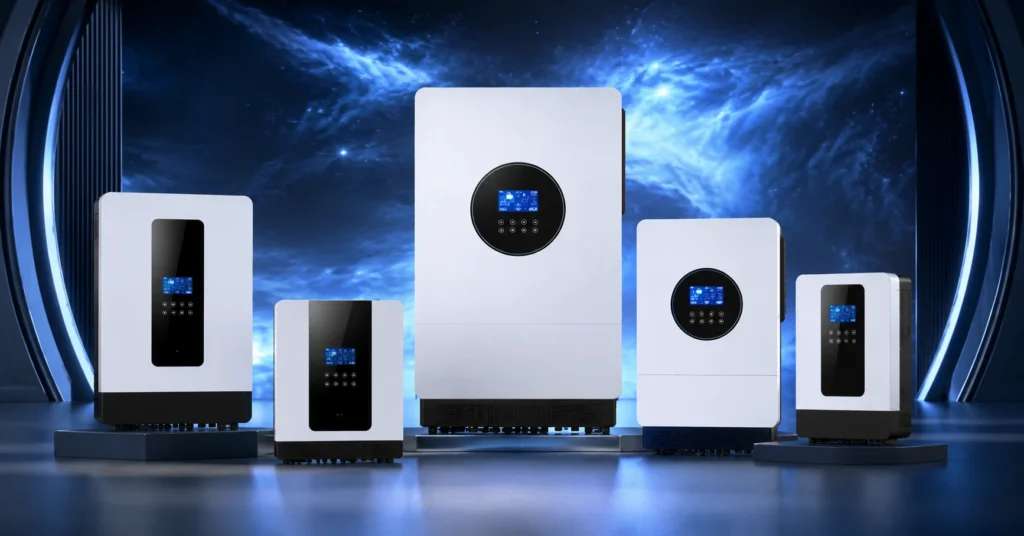
Primax Galaxy Dual Series
The Dual series adds a second MPPT controller and a bigger PV input window, which is why it costs more than the standard Galaxy line. If your roof has any shading at all, or you’re planning to add more panels down the road, this series pays for itself faster than it looks like on paper.
Advantages:
- Higher solar yield from mismatched or partially shaded arrays
- Better charging efficiency across the day
- Battery backup that holds up under heavier loads
Primax Venus Series
Venus is Primax’s off-grid and dual-output line, built for households that want backup power without necessarily tying the system to net metering. The Venus 4200, for example, sits in the 4.2kW range and typically costs more than an equivalent Galaxy model because of its dual-output design. It can be worth the premium if your household’s peak load includes an inverter AC or a water pump running alongside normal appliances.
Primax Nexa and Commercial Grade Models
For shops, offices, and larger residential loads, the Nexa series and the 3-phase 12kW Galaxy Dual model handle the heavier end of the market. These are priced closer to Rs. 200,000 to Rs. 295,000 and are meant for setups where you’re running commercial refrigeration, multiple ACs, or industrial equipment rather than a typical household load.
Technical Specifications
| Specification | Details |
|---|---|
| Output Waveform | Pure Sine Wave |
| Maximum Efficiency | Up to 98% |
| MPPT Technology | Dual MPPT (selected models) |
| Battery Support | Lithium-ion, Lead-Acid, GEL, Tubular |
| Monitoring | LCD display, Wi-Fi (selected models) |
| Protection | Overload, short circuit, reverse polarity, over-temperature |
| Cooling | Intelligent fan cooling |
| Warranty | Up to 2 years |
Which Primax Inverter Fits Your Home?
| Requirement | Recommended Model |
|---|---|
| Small home / apartment | Galaxy PV4000+ (3.6kW) |
| Medium home | Galaxy Dual PV5000+ |
| Family house with AC | Galaxy Dual PV6500+ Pro |
| Larger home, mixed loads | Venus 4200 or Galaxy Dual PV7000+ Pro |
| Farmhouse / heavy load | Galaxy Dual PV7500+ MAX |
| Commercial office | Nexa PSE-Dual 8kW or Galaxy Dual PV11000+ Pro |
| Large commercial project | Galaxy Dual PV12000+ MAX (3-phase) |
Primax vs Inverex
| Feature | Primax | Inverex |
|---|---|---|
| Price | More affordable | Premium |
| Hybrid models | Yes | Yes |
| Dual MPPT | Available | Available |
| Lithium battery support | Yes | Yes |
| Mobile monitoring | Yes | Yes |
| Best for | Budget and mid-range buyers | Premium residential systems |
Inverex generally costs more for comparable capacity, and buyers who choose it are usually paying for brand reputation and a longer track record. Primax closes a lot of that feature gap at a lower price point, which is the main reason it’s gained ground so quickly.
Battery Compatibility, Including Lithium
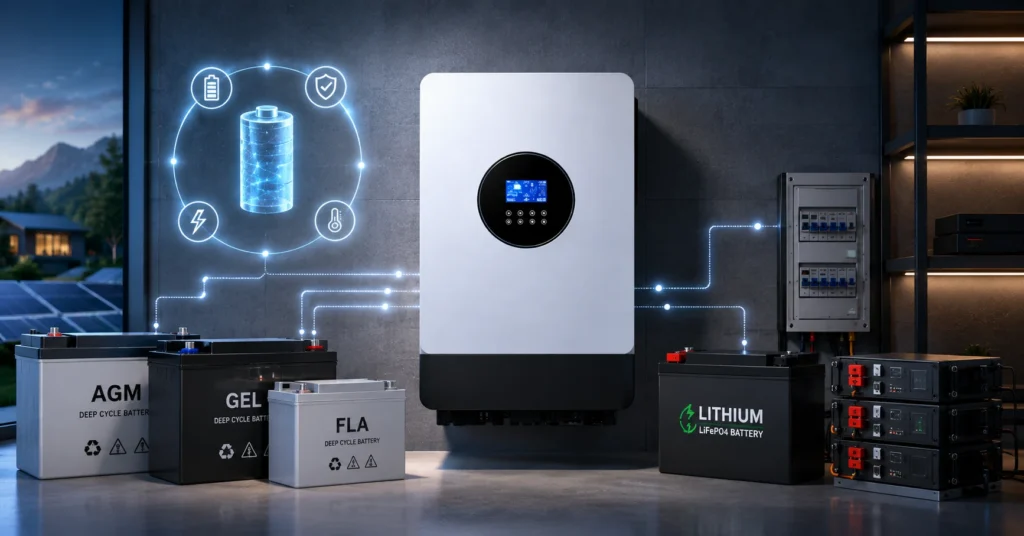
Primax hybrid inverters work with lithium-ion, lead-acid, GEL, and tubular batteries. Lithium batteries cost more upfront (a decent lithium battery in Pakistan typically runs from around Rs. 150,000 to well over Rs. 300,000 depending on capacity and brand), but they last longer, charge faster, and don’t need the maintenance tubular batteries do. If you’re buying a Primax inverter now with the plan to add lithium later, check the battery voltage and BMS compatibility before you finalize the inverter model, since not every unit accepts every lithium configuration out of the box.
Installation Tips
A few things matter more than people expect once the inverter is actually running:
- Install it somewhere cool, dry, and ventilated. Heat shortens the lifespan of the internal components.
- Match the inverter’s PV input rating to your actual panel array. Oversizing the panels beyond what the inverter can handle wastes generation capacity.
- Use proper gauge DC and AC cabling; undersized cables cause voltage drop and, over time, heat damage.
- Get a qualified installer to commission the system rather than doing it yourself, especially for anything above 5kW.
Common Mistakes to Avoid
- Buying a bigger inverter than your solar panel array can actually feed
- Ignoring the PV input voltage limit printed on the inverter’s spec sheet
- Picking the wrong battery voltage for the inverter’s charging profile
- Going cheap on DC cables to save a few thousand rupees
- Skipping the warranty terms; some dealers offer only 1 year even though the inverter itself is rated for 2
Is Primax Worth Buying?
For most homeowners upgrading from a plain UPS to a proper hybrid solar setup, Primax is a reasonable middle ground choice. You’re not getting the 10+ year track record of a Chinese or German premium brand, but you are getting dual MPPT, lithium compatibility, and monitoring at a price that’s noticeably lower than Inverex or similar competitors. The trade-off is a shorter standard warranty and a smaller installed base to draw reviews from, so it pays to buy from a dealer who can actually service the unit if something goes wrong.
FAQs: Primax Solar Inverters
What is the Primax solar inverter price in Pakistan right now?
Prices range from about Rs. 65,000 for a 2.5kW to 3.6kW Galaxy model up to roughly Rs. 295,000 for a 12kW three-phase commercial unit, depending on the series and dealer.
Which Primax solar inverter is best for a normal home?
For a typical 3 to 4 bedroom house running fans, an inverter AC, a fridge, and a washing machine, the Galaxy Dual PV6500+ Pro or the Venus 4200 usually covers the load comfortably.
Does Primax support lithium batteries?
Yes, most hybrid models accept lithium-ion batteries alongside lead-acid, GEL, and tubular options, though it’s worth confirming BMS compatibility with your dealer before buying.
Can a Primax inverter run without a battery installed?
Yes, several Galaxy and Dual models can power your home directly from solar during daylight hours even without a battery connected, switching to grid power once the sun goes down.
Does Primax support net metering?
Most hybrid Primax inverters are compatible with net metering setups, but you’ll still need approval and a bi-directional meter from your local distribution company (DISCO) to actually connect to the grid.
Where can I find genuine Primax inverters near me?
Check with authorized solar dealers in your city rather than unverified online listings. This matters for warranty claims, since Primax’s warranty is typically honored only through registered sellers.
What’s a fair price for a Primax 6kW inverter in 2026?
Primax 6kW-class models should be compared by exact series rather than grouped under one generic specification. The Galaxy Dual PV7000+ Pro is documented as a 6kW off-grid inverter, while the NEXA PSE-DUAL-6KW is a single-phase hybrid inverter with two MPPT trackers, 9kW maximum DC input and 48V battery support. Pakistan retail prices vary by exact model, warranty, stock and dealer, so confirm the model code and a current written quote before buying.