What Is Community Solar?
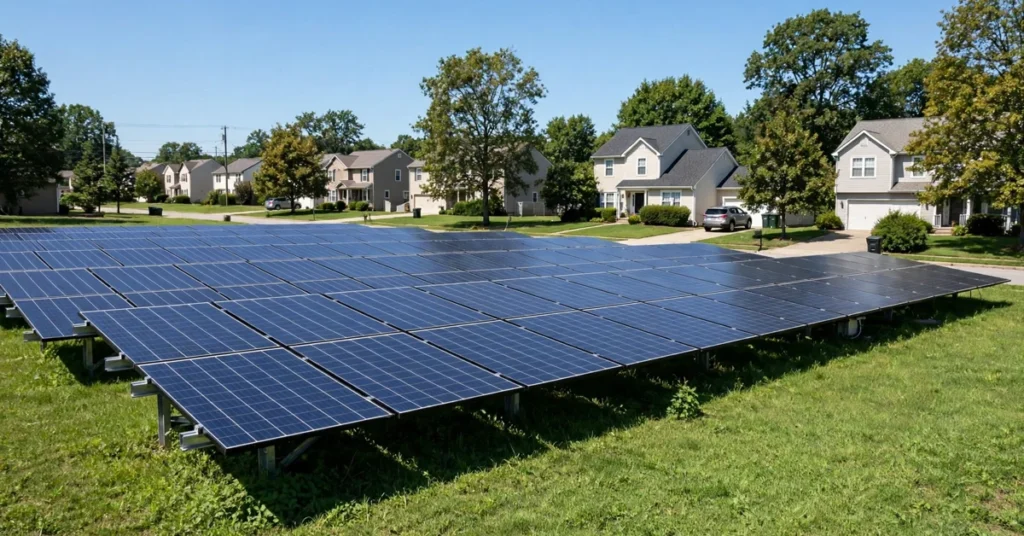
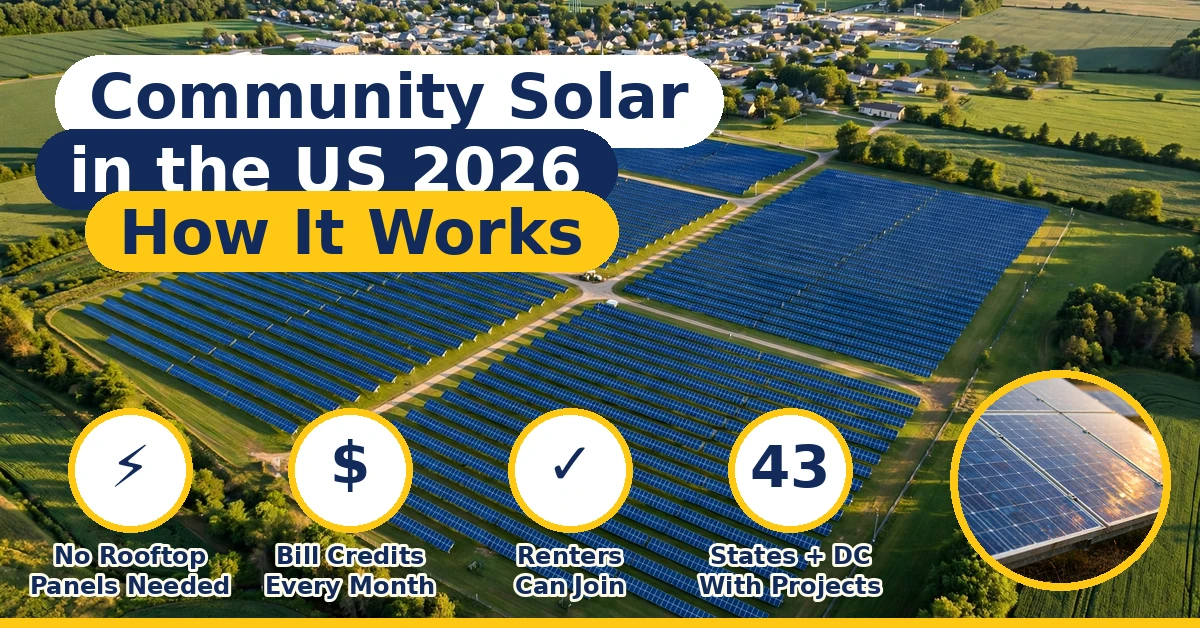
Community solar is a way for households, businesses, and organizations to benefit from electricity generated by a shared solar installation without putting panels on their own roofs. A project may be built on open land, a warehouse roof, a parking area, or another suitable site, then connected to the local electric grid. Customers enroll in a program and receive a portion of the project’s financial or electricity benefits, commonly as credits on their utility bills. The exact arrangement depends on the project, state rules, utility, and subscription provider.
The idea is straightforward: instead of every household investing in its own solar equipment, a group of customers shares the output of one larger solar array. This can make solar accessible to renters, apartment residents, homeowners with shaded roofs, people who cannot afford rooftop equipment, and customers who prefer not to manage a home installation. Community solar is sometimes called shared solar, although the terms and program structures can vary. It is important to understand that subscribers generally do not receive electricity directly from a particular panel; the project supplies power to the grid, and the subscriber receives credits or other benefits based on their share.
Community solar has grown into a significant part of the US clean-energy market. The US Department of Energy and national laboratory research track projects and state policies, but the market is not uniform: availability, consumer protections, bill-credit calculations, and eligibility can differ widely from one state or utility territory to another. For this reason, checking the program rules in your own location is more useful than assuming that a national description applies everywhere.
How Community Solar Works
A community solar program usually involves a solar project owner, a utility, and participating customers. The owner develops and operates the solar array, which produces electricity when sunlight reaches the panels. The electricity is delivered to the grid, where it mixes with power from other generators. Subscribers enroll for a designated share of the project and receive bill credits or financial benefits based on the project’s output and the rules established by the program.
The subscription provider may handle customer enrollment, billing, communication, and account management. In some programs, the utility administers the credits; in others, the subscriber pays a separate company for the subscription while the utility bill shows the credit. These two transactions can occur at different times, so customers should examine both bills or statements to understand their net savings. A good program explains its pricing clearly and does not require customers to guess how much they will owe.
Step 1: A Shared Solar Farm Generates Electricity
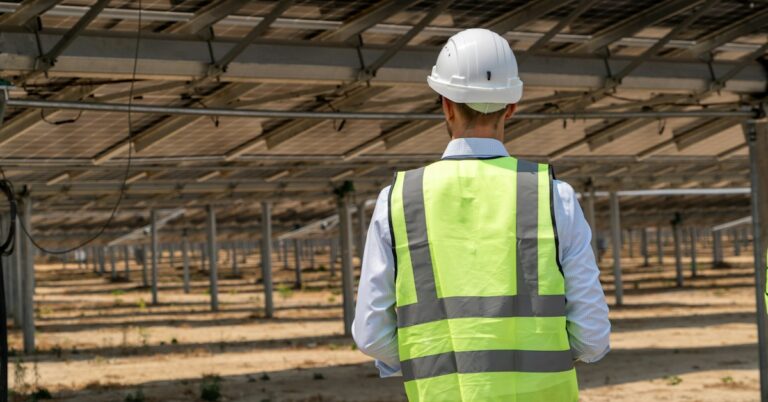
The project developer installs solar panels at a site with suitable sunlight, grid access, and land or roof space. The panels convert sunlight into direct-current electricity, and inverters convert that electricity into alternating current that can be delivered to the electric grid. The project may be relatively small or large, depending on local rules, the utility, and the developer’s business model. Subscribers typically do not need to visit the site, maintain panels, or arrange an installation at their homes.
Step 2: Subscribers Receive Utility Bill Credits
When the project generates electricity, a subscriber’s allocated share is used to calculate credits under the program’s billing rules. The utility applies those credits to the subscriber’s electricity bill, often in relation to the energy produced during a billing period. The credit value may not equal the retail price of every kilowatt-hour, and some programs use different rates, fees, or crediting schedules. Subscribers should confirm how credits are calculated, whether unused credits carry forward, and whether credits expire or are lost when they leave the program.
Community Solar vs. Rooftop Solar
Community solar and rooftop solar both allow customers to benefit from solar generation, but they involve different commitments. Rooftop solar generally requires a suitable property, a system installation, and a financing, purchase, or lease arrangement. Community solar lets a customer participate in a project located elsewhere, usually through a subscription. The choice is not simply about which option produces more energy; it is about access, cost, ownership, flexibility, and the customer’s circumstances.
| Feature | Community solar | Rooftop solar |
|---|---|---|
| Installation at your property | Usually no | Yes |
| Roof suitability required | No | Yes |
| Upfront equipment purchase | Usually not required | May be required |
| Maintenance responsibility | Typically handled by project operator | Owner or contract provider, depending on agreement |
| Suitable for renters | Often, if eligible | Usually difficult without landlord approval |
| Savings structure | Bill credits and subscription payments | Reduced utility purchases and possibly export credits |
| Moving | Depends on project and service-area rules | System remains at property; contract may affect sale |
| Control over equipment | Limited | Greater control for system owner |
A rooftop system can be a strong fit for a homeowner with a suitable roof, favorable financing, and a long-term plan to stay in the property. Community solar may be more practical for renters, households with roof repairs or shade concerns, or customers who do not want installation work. Compare the total expected savings, contract terms, and risk—not just a headline discount.
Who Can Benefit From Community Solar?
Community solar can serve a wide range of customers. Renters may be able to participate without asking a landlord to install panels, although program rules may require the subscriber’s utility account to be in their own name. Apartment residents can sometimes enroll, provided the project and utility billing arrangement allow it. Homeowners who have shaded roofs, older roofing, complicated electrical systems, or limited space may also find it appealing.
Small businesses, nonprofits, and public organizations can potentially subscribe too. A business may use community solar to reduce electricity expenses or support renewable-energy goals without making a major investment in on-site equipment. However, commercial subscriptions can use different pricing and contract terms from residential offers. Organizations should evaluate credit calculations, accounting treatment, contract duration, and the effect of the subscription on their electricity procurement strategy.
The model is not automatically suitable for everyone. If a household has very low electricity consumption, a subscription sized for a larger customer could generate credits that are difficult to use. Customers who expect to move may need a transfer option or a short cancellation period. Before enrolling, estimate your annual electricity usage and ask whether the subscription can be adjusted to match changes in your consumption.
Which States Offer Community Solar in 2026?
Community solar projects operate across a broad part of the United States, but having a project in a state does not guarantee that every resident can sign up. The US Department of Energy’s community solar resources and national-laboratory datasets distinguish project locations from state policies that actively enable or regulate programs. Recent national data reported more than 11 gigawatts of community solar capacity across 43 states and the District of Columbia as of June 2025, with much of the capacity concentrated in a handful of leading markets. Policy and project availability continue to evolve, so use state and utility program listings to confirm current enrollment.
States with enabling legislation or formal programs have often created clearer routes for developers and subscribers. In other locations, projects may exist through utility initiatives, local programs, voluntary arrangements, or pilot programs even where a statewide framework is less developed. The distinctions matter: legislation, program design, utility participation, and actual open subscriptions are not the same thing.
States With Established Community Solar Programs
States frequently identified as major or established community solar markets include New York, Minnesota, Massachusetts, Illinois, Colorado, Maryland, New Jersey, Maine, Oregon, Rhode Island, and other states with enabling policies or active programs. Florida is also a major market by installed project capacity, although its market structure is different from states with dedicated statewide community-solar legislation. California, Connecticut, Delaware, New Mexico, Virginia, Washington, and additional jurisdictions have policy frameworks or programs that may support participation.
The following table is a practical starting point—not a guarantee that a subscription is available at every address. The status of programs and their enrollment windows can change.
| State or jurisdiction | General market context |
|---|---|
| New York | A prominent community solar market with established programs and project activity |
| Minnesota | A long-running market with substantial project development |
| Massachusetts | Established policy framework and multiple program mechanisms |
| Illinois | State programs and policy provisions supporting shared solar access |
| Colorado | Community solar policy and programs, including access provisions |
| Maryland | Program and policy support for community solar, with subscriber options varying |
| New Jersey | Community solar initiatives and program structures |
| Maine | State-supported community solar arrangements, with program details varying |
| Oregon | Community solar program framework and subscriber options |
| Rhode Island | Program pathways and eligibility requirements vary |
| California | Shared-solar and community-solar policy options, with availability dependent on program |
| Connecticut | Policy-supported program options |
| New Mexico | Program pathways and income-qualified opportunities may be available |
| Virginia | Community solar and shared-solar policy options, depending on utility and program |
| Washington | Program and policy options, including provisions related to access |
Other states may have individual projects or local arrangements even without a broad statewide program. The best way to check is to search the state’s energy office or public utility commission website, contact your utility, and verify whether the project is accepting subscribers. The National Renewable Energy Laboratory’s state-policy dataset is useful for checking current policy details, but project-level enrollment information should be confirmed directly with the program provider.
Community Solar Savings: What Can Subscribers Expect?
Savings depend on the value of the utility bill credits, the subscription charge, your electricity consumption, and any additional fees. A program may advertise a discount, but customers should calculate the actual difference between the credits received and the payments made to the subscription provider. For example, if a subscriber receives $100 in bill credits and pays the provider $90 for those credits, the net benefit is $10 before any other fees or effects. The numbers in this example are illustrative rather than a typical or guaranteed offer.
Some subscriptions use a fixed discount on the value of credits, while others use a variable payment structure. Credit rates can differ by utility and program, and credits may be calculated using energy output, a credit rate, or another method specified in the contract. If your project generates less than expected, your savings may change. Similarly, if your electricity usage drops, you might have credits you cannot fully use during the period.
A useful comparison is to request an estimate based on your actual electricity bills from the past 12 months. Ask the provider to show the expected credit value, subscription payment, any monthly fee, the net savings estimate, and assumptions about production. Look for a realistic projection rather than a best-case scenario. A trustworthy provider should be able to explain the numbers in plain language and give you a copy of the agreement before you commit.
Subscription Models, Fees, and Contracts
Community solar subscriptions are not all structured the same way. Some providers charge a percentage of the bill credits, some charge a set price per kilowatt-hour, and some programs use other arrangements. A customer may be billed by the utility and separately by the subscription company, so payment dates and billing processes deserve attention. Make sure you understand whether you must pay the subscription invoice even if your utility bill credit is delayed or smaller than expected.
Contract length is another important consideration. Some subscriptions are flexible and allow cancellation with little notice; others require a longer commitment or have specific procedures for moving. Cancellation charges, transfer restrictions, minimum subscription sizes, and credit expiration rules can affect the value of a deal. Before signing, ask whether the agreement can be terminated if you move out of the service area, whether a new address can be added, and what happens to accumulated credits.
Avoid relying on verbal assurances. Review the written terms for fees, savings calculations, customer service contacts, dispute processes, and any guarantee. A provider that rushes you, hides the contract, or promises savings without explaining the calculation deserves extra scrutiny.
How to Find and Join a Community Solar Program
Start by checking your electric utility’s website or contacting its customer-service team. Utilities may list approved community solar projects, explain the crediting process, and clarify whether your address is eligible. Next, check your state’s energy office or public utility commission for program information. The US Department of Energy and national laboratory resources can help you understand the market and identify relevant policy and program directories.
Once you find a provider, compare at least two offers if multiple options are available. Ask for a sample bill, an estimate based on your usage, and the complete contract. Make sure the program does not require you to switch electricity suppliers unless that requirement is clearly explained and you understand its consequences. If the offer is income-qualified, confirm what documentation is needed and whether the program provides assistance during enrollment.
A practical enrollment process generally includes the following:
- Confirm that your address and utility account qualify.
- Review your recent electricity usage.
- Compare the subscription charge with the expected bill credits.
- Read the cancellation, transfer, and credit-expiration rules.
- Confirm the provider’s contact details and complaint process.
- Keep copies of your agreement and enrollment confirmation.
After enrolling, monitor both your utility bill and any subscription invoice for the first several months. Check whether the credits appear as promised, whether the subscription payment matches the agreement, and whether your net savings are consistent with the estimate. If anything looks incorrect, contact the utility and subscription provider promptly and keep written records.
What to Check Before Signing Up
The most important question is whether the offer will deliver measurable net savings. Ask the provider to explain the credit rate, subscription payment, fees, and expected production in a written estimate. Understand whether the advertised discount is applied to the bill-credit value or to the entire utility bill. Those are different calculations, and the wording of an advertisement can make them sound similar.
Review the contract for cancellation fees, renewal rules, minimum commitment periods, transfer options, and what happens when a project underperforms. Check whether unused bill credits carry over, expire, or are capped. Find out whether the provider has customer support you can contact and whether complaints are handled by the utility, the state regulator, or the company.
Be cautious of aggressive sales tactics, guaranteed savings that are not supported by a calculation, and requests for unnecessary personal information. You should not need to make a rushed decision to obtain a legitimate subscription. If you are eligible for an income-qualified program, use official state, utility, or program channels to verify the application process.
Benefits and Potential Drawbacks
Community solar offers several practical benefits. It can expand access to solar energy for renters and households with unsuitable roofs, reduce the need for personal equipment investment, and allow customers to participate in renewable-energy projects at a distance. Depending on the program, subscribers may receive bill credits and potentially lower their net electricity costs. Larger shared installations can also make project development and maintenance more centralized than installing many individual rooftop systems.
There are trade-offs, however. Savings are not guaranteed and depend on the subscription agreement and utility credit rules. Customers may face separate billing, credit delays, cancellation restrictions, or limited availability. A subscription is not the same as owning a solar system, and subscribers typically do not own the equipment or control its operation. Programs can also vary in consumer protections and transparency.
| Potential benefit | Possible drawback |
|---|---|
| No rooftop installation needed | Availability depends on local projects and rules |
| May suit renters and apartment residents | Moving may complicate subscription transfer |
| Potential utility-bill savings | Savings vary and may not be guaranteed |
| Project maintenance handled by operator | Subscribers have limited control over equipment |
| Can support renewable generation | Contract terms and fees require careful review |
| May offer income-qualified options | Eligibility and enrollment requirements may apply |
A balanced decision considers both sides. Community solar can be worthwhile when the terms are clear, the credit value exceeds subscription costs, and the agreement fits your circumstances. If the provider cannot explain how savings are calculated, consider another offer.
Community Solar for Low-Income Households
Low- and moderate-income households are an important focus of many community solar programs. State policies may set aside a portion of project capacity for qualifying customers, offer additional incentives, or require specific consumer protections. Some programs aim to reduce enrollment barriers by providing subscriptions with no upfront cost, simplified applications, or discounts designed for eligible households. The details depend on the state and program, and not every project includes these features.
The Department of Energy’s Energy Connector initiative works with participating programs to connect income-qualified households to community solar subscriptions. Its availability is limited to participating jurisdictions and eligibility requirements, so it is not a nationwide enrollment portal for every project. Eligible households should check official program information and their local energy-assistance agency to see whether they can apply.
Income-qualified customers should pay particular attention to consumer protections. Ask whether the subscription charge is fixed or variable, whether credits can be lost, and whether the program has a clear complaint process. A program that is designed to serve lower-income households should explain its terms transparently and avoid placing unexpected financial burdens on participants. Always verify the application through an official program or utility source before sharing personal documents.
The Future of Community Solar in the US
Community solar is likely to remain an important way to expand renewable-energy access, particularly for households that cannot install solar on their own property. Policy changes, utility planning, project financing, and consumer-protection requirements will influence how quickly programs expand. States may refine credit rates, enrollment standards, low-income participation requirements, and project-size limits as they learn from existing programs. The market’s future will depend not only on new installations but also on whether subscribers receive reliable and understandable benefits.
Developers, utilities, regulators, nonprofits, and community organizations all play a role. Better information about subscription pricing and credit calculations can help customers compare offers. More flexible transfer rules may make subscriptions easier for people who move. Programs that prioritize meaningful savings and accessible enrollment could help community solar reach customers who have historically faced barriers to rooftop solar.
For consumers, the most useful trend to watch is the development of local programs and clearer enrollment pathways. National market statistics can show where projects are growing, but your utility’s rules determine what you can actually subscribe to. As new projects become available, compare the terms carefully and focus on net savings, contract flexibility, and credible consumer protections.
Conclusion
Community solar in the US offers a way to benefit from solar energy without installing panels on your own roof. Customers subscribe to a shared project, and the electricity it generates is generally delivered to the grid while subscribers receive credits or other benefits under the program’s rules. This arrangement can help renters, homeowners with unsuitable roofs, businesses, and income-qualified households access solar, but program availability and savings vary by state, utility, and provider.
In 2026, the community solar market includes established programs in several states and project activity across a wider geographic area. Before signing up, verify local eligibility, compare the subscription payment with expected credits, review cancellation and transfer rules, and confirm how unused credits are handled. A clear contract and realistic savings estimate are more valuable than a flashy promise. With careful comparison, community solar may offer a practical way to participate in clean energy while potentially lowering electricity costs.
Frequently Asked Questions
1. What is community solar in the US?
Community solar is a shared solar project that allows multiple customers to benefit from electricity generated by one solar installation. Subscribers typically receive utility bill credits or other financial benefits without installing panels on their own properties.
2. Do I need to own a home to join community solar?
No. Many community solar programs are open to renters and homeowners, although eligibility depends on the project, utility service area, and program requirements. Renters should confirm that their utility account and address qualify.
3. Which states offer community solar in 2026?
Community solar projects and programs are available across many states, with established markets including New York, Minnesota, Massachusetts, Illinois, Colorado, Maryland, New Jersey, Maine, Oregon, and others. Actual subscription availability varies by utility and location, so verify locally.
4. Can community solar really lower my electric bill?
It may lower your net electricity costs if the value of your utility credits exceeds the subscription payments and fees. Savings are not universal or guaranteed, so review a written estimate and contract before enrolling.
5. Is community solar worth it if I plan to move?
It can be, but check the agreement first. Some programs allow you to transfer your subscription to a new eligible address, while others require cancellation or have restrictions. Confirm any fees and credit-handling rules before signing.
Sources and Further Reading
- US Department of Energy — Community Solar — US Department of Energy — Community Solar.
- US Department of Energy — Community Solar Basics — US Department of Energy — Community Solar Basics.
- EnergySage — Community Solar Guide — EnergySage — Community Solar Guide.
Prices, scheme details and eligibility rules can change. Always check the latest official guidance before applying or signing a contract.