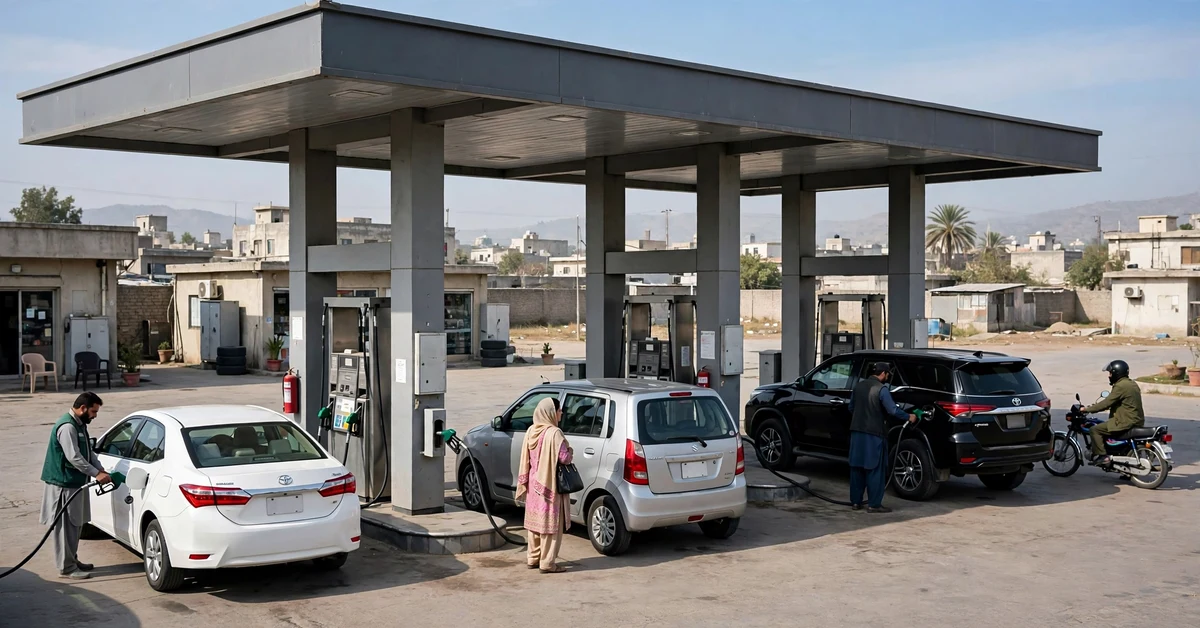
The federal government has revised fuel prices for the weekend, and this time the pain is concentrated on diesel. Under the latest notification from the Petroleum Division, the price of high-speed diesel (HSD) has risen by Rs 1.91 per litre to Rs 393.66, while petrol remains unchanged at Rs 377.71 per litre. The revised rates apply from 24 to 26 October 2026, covering Saturday, Sunday and the weekend break in the daily pricing cycle.
For petrol users, the freeze is a small piece of relief after a week of almost daily movement. For diesel users — transporters, farmers, bus operators and anyone running a generator — it is another increase on top of two earlier rises this week, and it widens the gap between the two fuels to nearly Rs 16 a litre.
New Petrol and Diesel Prices from 24 October 2026
| Fuel | Previous price | Change | New price |
|---|---|---|---|
| Petrol (Super) | Rs 377.71 | No change | Rs 377.71 |
| High-Speed Diesel | Rs 391.75 | +Rs 1.91 | Rs 393.66 |
In practical terms, a 40-litre tank of petrol still costs Rs 15,108.40, exactly what it cost yesterday. A 100-litre diesel fill, on the other hand, now costs Rs 191 more than it did on Friday, at Rs 39,366. For a truck or bus doing several fills a week, that adds up quickly — and transport costs have a habit of finding their way into the prices of everything else, from vegetables to construction material.
How Prices Moved This Week
The daily pricing mechanism means there is no longer a fortnightly announcement to wait for. Rates are now revised every day, using a rolling seven-day average of international prices, and they stay fixed over weekends and public holidays. Here is how the week unfolded:
| Revision date | Petrol (Rs/L) | Diesel (Rs/L) |
|---|---|---|
| 22 October 2026 | 379.31 | 390.11 |
| 23 October 2026 | 377.71 | 391.75 |
| 24 October 2026 | 377.71 | 393.66 |
Petrol has now fallen by Rs 1.60 over the last two revisions, from Rs 379.31 on 22 October to Rs 377.71 today. Diesel has moved the other way, rising by Rs 3.55 over the same two days, from Rs 390.11 to Rs 393.66. The diesel-petrol gap, which stood at Rs 10.80 on 22 October, is now Rs 15.95 — the widest it has been this month. That matters because diesel is the fuel of freight, farming and public transport, so a rising diesel price tends to push up costs across the economy even when petrol is flat. Our earlier coverage tracked the 22 October revision, when petrol was cut and diesel edged up in the same pattern we are seeing now.
Why Did Diesel Go Up While Petrol Stayed Flat?
According to the official notification, the Oil and Gas Regulatory Authority (OGRA) revised ex-depot prices under the federal government’s petroleum pricing mechanism, citing global developments including changes in Platts reference rates, import premiums and incidental costs. Petrol and diesel do not always move together because they are priced off different international benchmarks and carry different import premiums. When the diesel benchmark rises while the petrol benchmark is steady, you get exactly this kind of split revision.
The broader backdrop has not changed. The daily pricing system, introduced on 17 July 2026, replaced the weekly review so that domestic prices track international markets more quickly. Petroleum Minister Ali Pervaiz Malik has said the daily system was adopted to improve transparency and pass the impact of international movements to consumers immediately, amid continued volatility in global oil markets linked to hostilities in the Middle East and disruptions to energy shipments through the Strait of Hormuz. Brent crude was reported around US$114–115 a barrel as the latest revision was announced, up on supply concerns.
It is worth remembering that this volatility is precisely why the government moved from fortnightly to weekly and then to daily revisions during 2026. The daily system gives consumers faster relief when international prices fall — as petrol users saw on 23 October — but it also means increases arrive just as fast, as diesel users are finding out today.
Where Your Money Goes: Taxes and Levies on Fuel
A large share of what you pay at the pump is not the fuel itself. Recent official breakdowns reported alongside these revisions put total taxes and duties at around Rs 114 per litre on petrol and Rs 100 per litre on diesel, including the petroleum levy and the climate support levy, plus dealer and oil marketing company margins. That is why even a sharp fall in crude prices does not translate one-for-one into cheaper petrol at a Pakistani pump: a fixed block of the retail price is government revenue and distribution margin, not fuel cost.
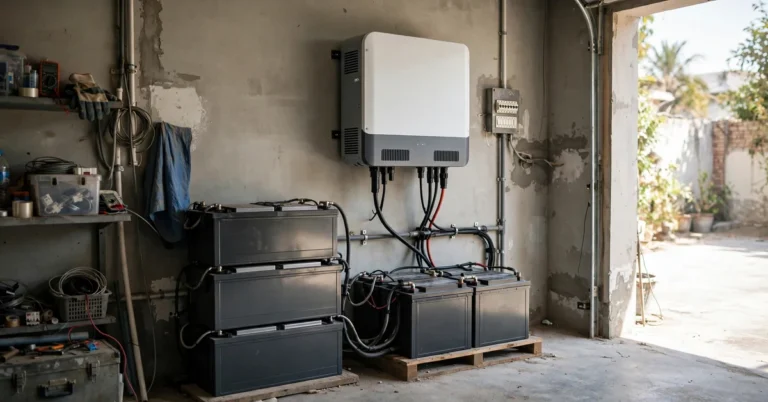
For households, the more useful number is the one that actually leaves the wallet. At Rs 377.71 a litre, a motorcycle using 20 litres a month spends Rs 7,554 on petrol. A small car using 60 litres spends Rs 22,663. And a diesel generator or tube-well engine burning 100 litres a month now costs Rs 39,366 just for fuel — before maintenance. Those are the numbers that make people look seriously at alternatives, and they are a big part of why rooftop solar has grown so fast: a 5kW solar system produces its power after installation with no fuel bill at all, and current solar panel prices in Pakistan have made that maths work for far more households than it did a few years ago.
Rs 100 Relief Scheme Still in Place for Bikes and Small Cars
One cushion remains in place. On 13 September, Prime Minister Shehbaz Sharif announced a relief scheme offering Rs 100 per litre off petrol for motorcycles, three-wheeler rickshaws and cars with engines up to 800cc. Under the scheme, two-wheeler and three-wheeler users can claim relief on up to 20 litres of petrol per month — a maximum benefit of Rs 2,000 a month — while owners of cars up to 800cc can claim relief on up to 30 litres, worth up to Rs 3,000 a month. Eligible citizens register via SMS. If you ride a bike or drive a small car, that relief is worth far more than any single daily revision, and it is still the single biggest protection against fuel price volatility for lower-income motorists.
Separately, the government’s CM Punjab e-bike scheme aims to cut running costs further by shifting riders to electric bikes, though its current phase is at the balloting stage rather than open for new applications.
Tips: How to Limit the Damage from Rising Diesel
First, if you buy diesel in bulk for a business, farm or fleet, the weekend freeze is your friend: today’s rate is locked until the next working-day revision, so filling up over the weekend avoids any Monday increase. Second, keep tyres at the correct pressure and avoid unnecessary idling — both are free and both cut consumption measurably. Third, for tube-well and irrigation users, diesel is now the most expensive way to pump water; it is worth costing a solar tube-well conversion against a full season of diesel, because the fuel saving alone can be substantial. Finally, track the daily OGRA sheet rather than the fortnightly headlines of the past: under daily pricing, yesterday’s price is already out of date.
Frequently Asked Questions
What is the petrol price in Pakistan today?
Petrol costs Rs 377.71 per litre, unchanged from yesterday, effective 24 to 26 October 2026.
What is the diesel price in Pakistan today?
High-speed diesel costs Rs 393.66 per litre, up Rs 1.91 from Rs 391.75.
Why did only diesel increase?
Petrol and diesel are priced off different international benchmarks. The diesel benchmark and import premiums rose, while petrol’s did not, so OGRA revised only diesel in this round.
When will prices change next?
Under the daily mechanism, prices are held over weekends and public holidays. The next revision is due on the next working day, Monday 27 October 2026, unless the government announces otherwise.
Does the Rs 100 relief apply to diesel?
No. The relief scheme announced on 13 September applies to petrol only, for motorcycles, rickshaws and cars up to 800cc.
The bottom line for the weekend is simple: petrol drivers get a breather, diesel users get another bill increase, and the gap between the two fuels keeps widening. If you run anything on diesel — a vehicle, a generator, a tube well — this is a good weekend to look at how much of that cost you can take out of the fuel equation altogether. Our guide to the best solar panels in Pakistan in 2026 is a useful place to start that calculation.