
Sindh Chief Minister Syed Murad Ali Shah has invited Chinese companies to invest in Sindh’s clean energy, water infrastructure and other key development sectors, aiming to strengthen economic cooperation, attract foreign investment and support sustainable growth in the province. The announcement came during the chief minister’s official visit to China, where he held discussions with Chinese companies and explored collaboration opportunities in renewable energy, water supply, infrastructure development and modern technology.
For a province with some of Pakistan’s richest wind and solar resources, the move signals a fresh push to convert renewable potential into real projects — and deeper China-Pakistan cooperation in clean energy.

What the Sindh CM announced
According to the announcement, the chief minister invited Chinese firms to partner in several priority areas:
- Clean energy — wind and solar power projects across the province
- Water infrastructure — supply systems, irrigation strengthening and flood/drought protection
- Industrial manufacturing and export-oriented businesses
- Modern technology and infrastructure development
Discussions with Chinese companies also covered cooperation on Karachi’s K-IV water supply pipeline and the rehabilitation of the Sukkur Barrage, which plays a vital role in Sindh’s agricultural economy. The chief minister stressed the importance of improving water management to address shortages, strengthen irrigation systems and protect communities from floods and droughts.
Why Sindh is a natural fit for clean energy
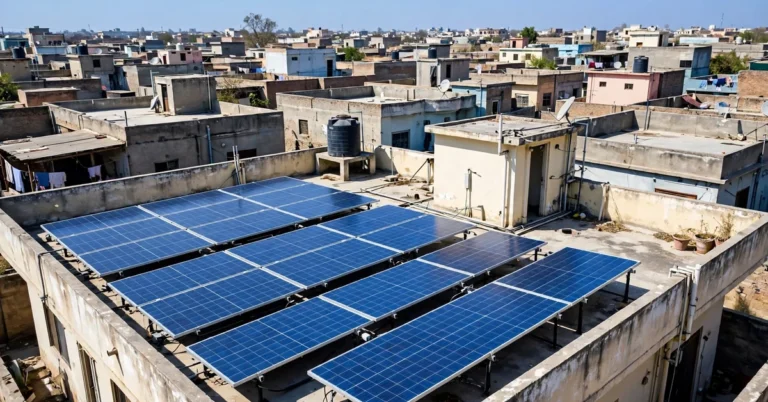
Sindh’s renewable credentials are among the strongest in South Asia. The Jhimpir-Gharo wind corridor in Thatta district is Pakistan’s most developed wind zone, hosting dozens of wind farms that feed power into the national grid. The province also enjoys high solar irradiation, particularly in Tharparkar and the coastal belt, making large-scale solar parks and distributed rooftop solar highly viable.
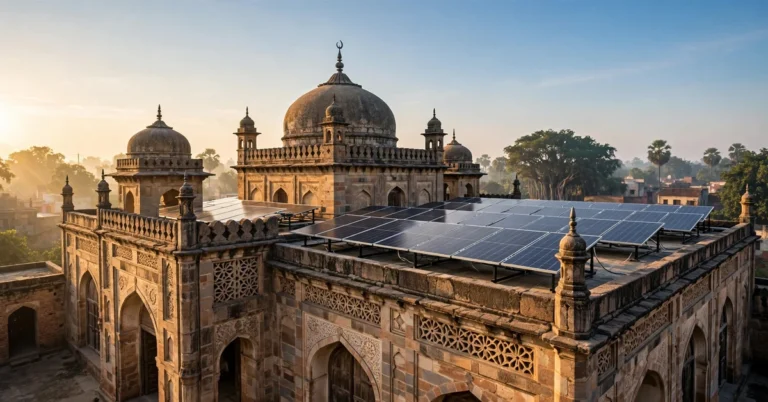
Tharparkar’s vast open land offers some of the cheapest potential sites for utility-scale solar in the country, while Karachi’s massive commercial and industrial load creates a ready market for rooftop and industrial solar. Provincial solar initiatives across Pakistan are gaining momentum — Punjab is simultaneously advancing its CM Punjab solar panel scheme for households and a 50 MWp rooftop solar tender under the RESCO model — and Sindh is now positioning itself to attract the next wave of investment.
China-Pakistan clean energy ties
China is already Pakistan’s most important partner in the power sector. Chinese companies built and financed major energy projects under CPEC, including coal, hydro and wind plants. The relationship is now shifting toward renewables: Pakistan imported more than 58 GW of solar panels from China between early 2017 and mid-2026, with around 40 GW arriving just since 2024, making Pakistan China’s largest solar panel customer in 2025 and the second-largest single-country market globally.
The Sindh government’s pitch fits this trend: move Chinese capital and manufacturing know-how from merely supplying panels to actually building, owning and operating clean-energy assets in the province — alongside water and infrastructure projects that improve public services.
Water projects on the table
The K-IV water supply pipeline and Sukkur Barrage rehabilitation are significant in their own right. The K-IV project is designed to bring additional water to Karachi, a city of over 20 million people facing chronic shortages. The Sukkur Barrage, commissioned in the 1930s, irrigates millions of acres in Sindh; its rehabilitation is critical to the province’s agricultural economy. Chinese engineering involvement in both would extend a long history of foreign-financed water infrastructure in the province.
Jobs and long-term development
The Sindh government frames the initiative as part of broader efforts to deepen Pakistan-China economic ties and encourage investment in projects that generate employment, improve public services and support industrial development. Clean-energy projects are labour-intensive during construction and create long-term technical jobs in operation and maintenance — including the solar installation and servicing skills now in high demand across Pakistan.
Whether the announcements convert into signed deals will depend on follow-up agreements. Investment outcomes “will depend on further agreements and progress on the ground,” the announcement acknowledged. For now, the signal is clear: Sindh wants a bigger share of the renewable-energy build-out, and it wants Chinese partners to help deliver it.
Challenges and open questions
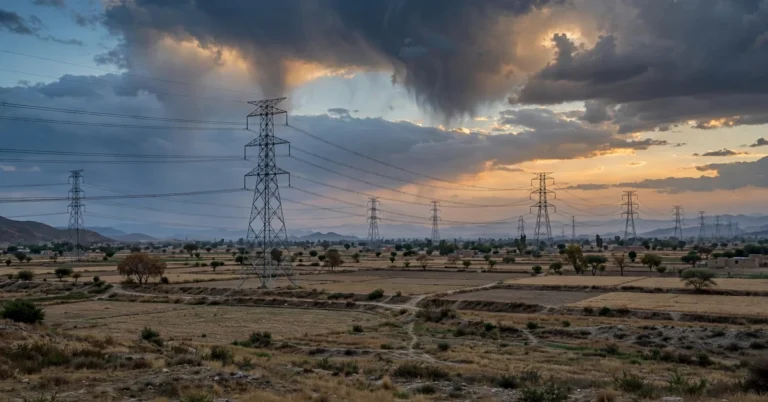
Announcements of this kind have a long history in Pakistan, and investors will be watching the details. Clean-energy developers routinely cite land acquisition, grid interconnection queues, and tariff certainty as the deciding factors for new projects. Wind and solar plants are only as valuable as the transmission capacity that carries their power to load centres — a constraint Sindh has faced before in the Jhimpir corridor. Chinese firms will also weigh payment security, since Pakistan’s power sector carries a well-known circular-debt burden.
On the water side, the K-IV pipeline has seen multiple delays and cost revisions over the years, and the Sukkur Barrage rehabilitation is a complex engineering undertaking on a century-old structure. Political consensus between federal and provincial authorities on financing will matter as much as the engineering. None of these obstacles is new, but each one will shape whether today’s invitation becomes tomorrow’s project.
What this means for Pakistan’s solar market
Provincial competition for clean-energy investment is good news for consumers and businesses. More projects mean more panels installed, more installer capacity, and downward pressure on system costs over time. For homeowners, the immediate economics of rooftop solar still depend on today’s net-billing rules — our guide to net metering and billing in Pakistan explains how exported units are credited. And if you are sizing a system, our solar DC-to-AC ratio guide helps match panels to your inverter.
Frequently asked questions
What did the Sindh CM announce in China? An invitation to Chinese companies to invest in Sindh’s clean energy, water infrastructure, industrial manufacturing, export-oriented businesses and modern technology.
Which water projects were discussed? Cooperation on Karachi’s K-IV water supply pipeline and the rehabilitation of the Sukkur Barrage.
Why is Sindh attractive for clean energy? The province hosts Pakistan’s leading wind corridor (Jhimpir-Gharo), has strong solar irradiation, and a large urban demand base in Karachi.
Are any deals signed yet? No — the announcement covers discussions and invitations; implementation will depend on further agreements.

One Comment