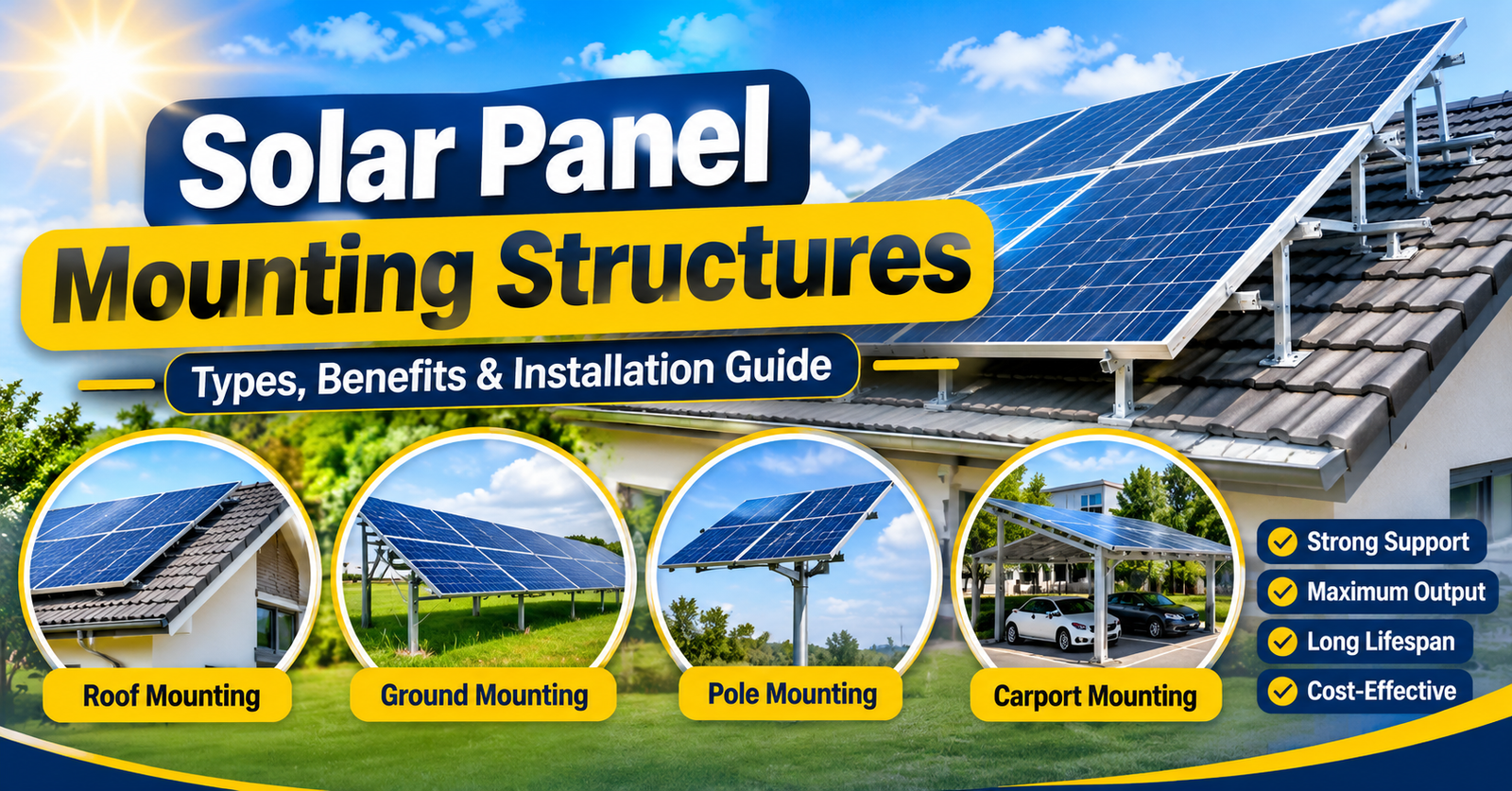
A solar panel mounting structure is the metal framework that holds your panels at the right angle and anchors them to a roof or the ground. It looks like a minor part of the system, but it decides whether your panels survive storms, heat, and 20 to 25 years of weather. A weak structure can damage panels, cause roof leaks, or bring down the whole array.
How a Solar Mounting Structure Works
Panels are clamped onto rails or channels, which connect to legs, brackets, or concrete footings. The frame does three jobs:
- Sets tilt and direction. In Pakistan, panels face south at roughly 25 to 35°. Flat roofs often use about 15° to reduce wind pressure, at a small cost to winter output.
- Carries the loads. It handles panel weight, wind uplift, and in northern regions, snow.
- Allows airflow. Space under the panels keeps them cooler, which helps efficiency and cleaning access.
Main Types of Solar Structures
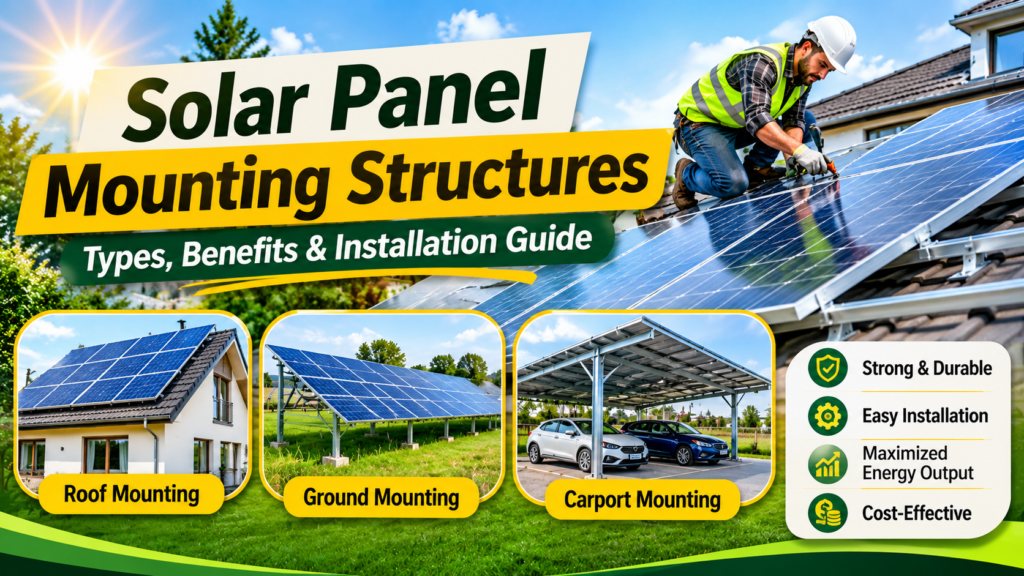
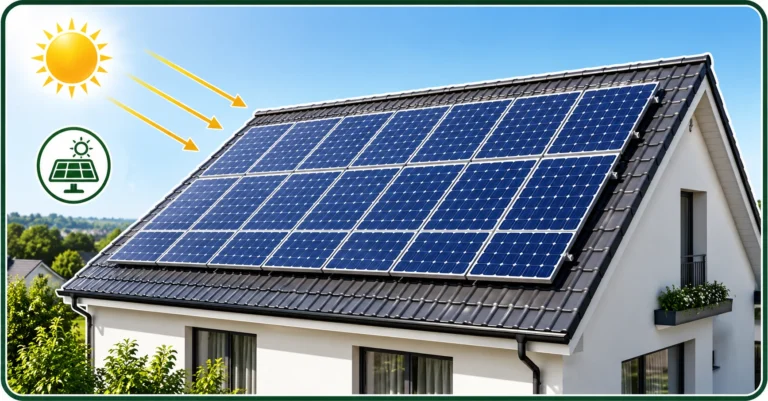
Rooftop structures are the most common for homes. On RCC flat roofs, elevated frames are bolted down or ballasted with concrete. On metal sheds, clamps or brackets attach to the roof profile with little or no drilling.
Ground-mounted structures use steel frames on concrete footings or driven piles. They suit farms, factories, and open land, and they are easier to clean and service.
Solar carports are raised canopies over parking areas, giving shade and power together. They cost more and need proper engineering.
Fixed vs adjustable. Fixed-tilt frames are cheapest and need almost no maintenance. Adjustable frames let you change the angle by season for slightly higher yield, but add cost and moving parts.
L2, L3, L4, L5: What the Names Mean
In Pakistan, the “L” series refers to how many panels one frame holds. An L2 frame holds 2 panels, an L3 holds 3, and so on. A system with 8 panels might use four L2 frames. You will also hear C-type and U-type, which describe the steel channel shape. Designs vary by fabricator, so always ask for a drawing and the steel thickness.
Materials
- Hot-dip galvanised (GI) steel is strong, affordable, and the standard for most rooftops and ground mounts. The zinc coating must be thick enough to resist rust.
- Anodised aluminium is lighter and naturally corrosion-resistant, so it suits light roofs and humid or coastal areas. It costs more.
- Stainless steel fasteners prevent rust at bolts, which are often the first failure point.
Design and Load Considerations
Engineers size a structure by checking three loads. Dead load is the weight of panels and frame. Wind load is the main risk in most of Pakistan, because panels act like sails and uplift forces can be strong. Snow load matters in northern and high-altitude areas.
Good structures are designed for a stated wind speed, and steel thickness, leg height, and bolt size should match it. Row spacing also matters: panels in front must not shade those behind. Typical reference standards include IEC 61215 and 61730 for modules and ASCE 7 for loads. The metal frame should also be properly earthed for safety.
Installation Overview
- Inspect the roof or site and confirm it can take the load.
- Mark the layout and leave walkways for maintenance.
- Fix anchors or pour footings.
- Assemble legs and rails.
- Mount and clamp the panels.
- Earth the frame, torque the bolts, and seal any roof penetrations.
On open rooftops and ground sites, anti-theft breakaway nuts are a smart, low-cost addition.
Cost in Pakistan
Structure prices move with steel and aluminium rates, so treat these as rough guides. One vendor quote priced L2 galvanised frames at about Rs 4,200 to 4,800 per frame. Another guide puts the structure for a 5 kW on-grid system at roughly Rs 25,000 to 40,000. An anodised aluminium bracket-and-rail setup was listed at about Rs 5,000 to 8,000 per kW in one 2026 guide. Elevated, ground-mounted, and carport structures cost considerably more because they use more steel and need foundations. Solar System Price in Pakistan +2
Main cost drivers are material and thickness, structure height, panels per frame, wind rating, coating quality, and labour.
Maintenance and Lifespan
Check bolts, rust spots, and roof sealing once or twice a year. A properly galvanised or anodised structure can last 20 to 25 years or more. Touch up scratches in the coating quickly, and keep drainage clear so water does not sit around the base.
How to Choose the Right Structure
- Match it to your site: RCC roof, metal shed, or open ground.
- Ask for galvanising thickness or aluminium grade, steel gauge, and wind rating.
- Compare quotes on the same specification, not just the lowest price.
- Use an AEDB-registered installer, especially if you plan net metering.
- Choose aluminium for light roofs or coastal humidity, and galvanised steel when strength and budget matter most.
Frequently Asked Questions
What is a solar panel mounting structure?
It is the metal frame that holds panels at the correct tilt and secures them to a roof or the ground.
What is the difference between L2, L3, and L5 structures?
The number is how many panels each frame holds. Higher numbers mean larger, heavier frames that use fewer legs per panel.
Is aluminium or galvanised steel better?
Aluminium is lighter and resists corrosion well, but costs more. Galvanised steel is stronger and cheaper. Both last long if well made.
What tilt angle is best in Pakistan?
Roughly 25 to 35° facing south for best yearly output. About 15° is common on flat roofs to reduce wind load.
How long does a solar structure last?
Typically 20 to 25 years or more with quality coating and basic inspections.
Can I install panels on a metal roof?
Yes. Clamps or brackets fix to the roof profile, often without drilling, but check that the sheet and purlins can bear the load.
How much does a solar structure cost in Pakistan?
It varies widely by type and material. Small rooftop frames can cost a few thousand rupees each, while a full 5 kW structure often runs from tens of thousands upward. Get at least two or three written quotes.
Do I need a structural check before installation?
For older roofs, large arrays, ground mounts, or carports, yes. A quick check avoids overloading and leaks.
What wind speed should a structure handle?
Ask the vendor for the design wind speed. Many local designs target around 120 to 150 km/h or more, depending on location and height.
Why use anti-theft nuts?
They make panels harder to remove on exposed rooftops and open ground.
Conclusion
A solar structure is inexpensive insurance for a much larger investment. Choosing the right type, material, thickness, and installer protects your panels through storms and summer heat for decades. Compare specifications, not just prices, and your system will perform reliably for its whole life.
I can also turn this into a Word document, or add a meta title, meta description, and keyword-optimised headings if you plan to publish it.

2 Comments