Fuel prices have gone up again in Pakistan, and this time both main fuels have moved together. Under the latest notification from the Petroleum Division, petrol has risen by Rs 1.54 per litre to Rs 379.25, while high-speed diesel (HSD) has risen by Rs 2.16 per litre to Rs 395.82. The revised rates take effect from Tuesday, 27 October 2026, after being announced on Monday, 26 October.
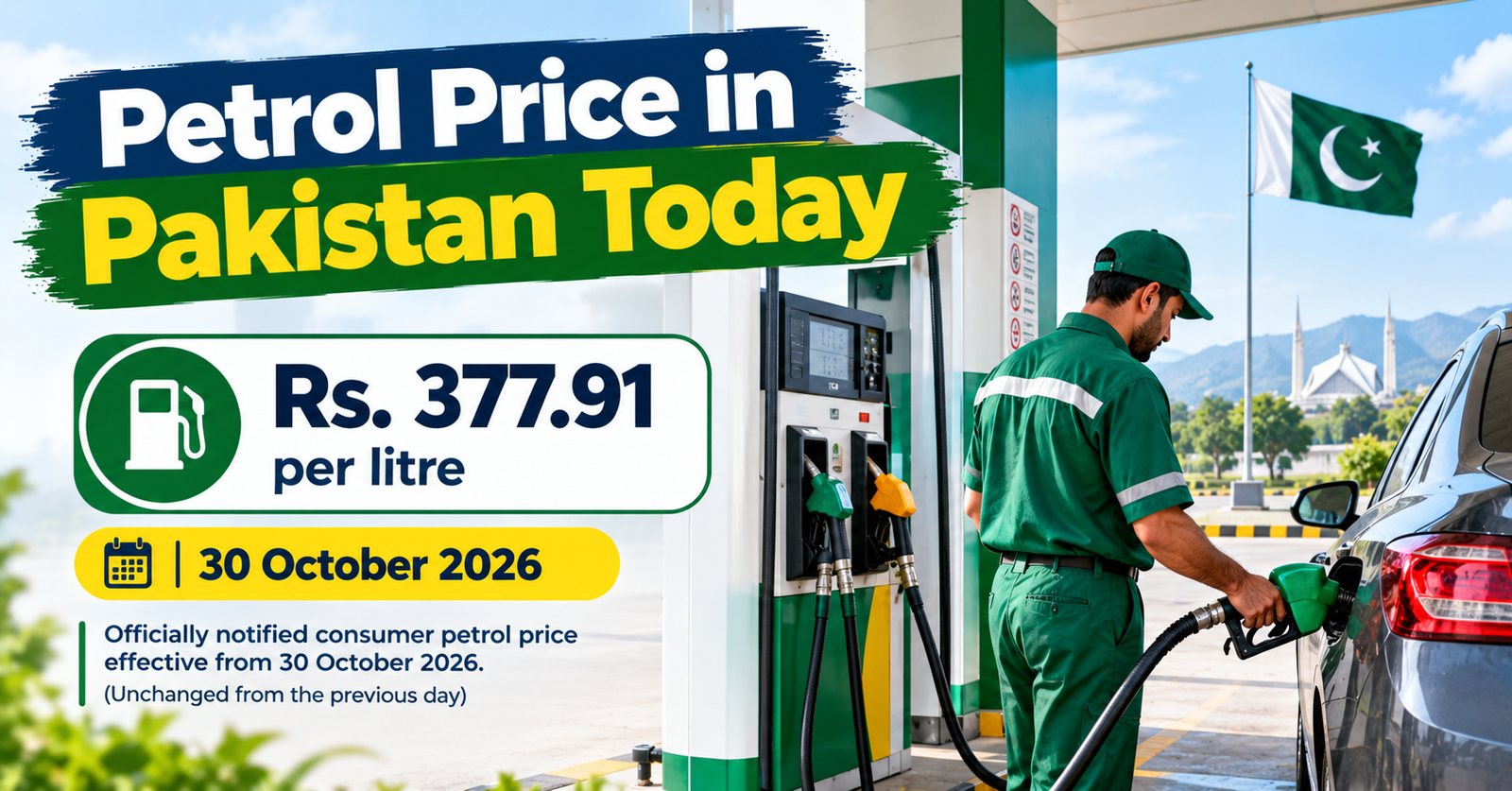
The increase ends a short period in which petrol had been flat. In the previous revision, effective 24 to 26 October, petrol was left unchanged at Rs 377.71 while diesel alone rose by Rs 1.91. That post is covered in detail in our report on petrol price on 24 October 2026. This time, motorists and diesel users both face a higher bill at the pump.
New Petrol and Diesel Prices from 27 October 2026
| Fuel | Previous price | Change | New price |
|---|---|---|---|
| Petrol (Super) | Rs 377.71 | +Rs 1.54 | Rs 379.25 |
| High-Speed Diesel | Rs 393.66 | +Rs 2.16 | Rs 395.82 |
Put in everyday terms, a 40-litre tank of petrol now costs Rs 15,170, up Rs 61.60 from Rs 15,108.40. A 100-litre diesel fill now costs Rs 39,582, up Rs 216 from Rs 39,366. For a motorcycle using 20 litres of petrol a month, the monthly fuel cost rises to Rs 7,585. For a small car using 60 litres, it rises to Rs 22,755. The gap between diesel and petrol has also widened slightly, from Rs 15.95 to Rs 16.57 a litre.
This revision covers petrol and diesel only, as reported from the Petroleum Division notification. It is separate from the secondary-fuel revision that took effect on 25 October, when jet fuel, kerosene and light diesel oil were all revised; those rates are covered in our report on jet fuel, kerosene and light diesel prices from 25 October 2026.
Why Did Prices Rise This Time?
According to Business Recorder, citing the Petroleum Division, the Oil and Gas Regulatory Authority (OGRA) revised ex-depot prices under the federal government’s petroleum pricing mechanism, in view of global market developments, including changes in Platts reference rates, import premiums and incidental costs. The report gives the refined-product benchmarks behind the move: the average price for refined petrol rose to US$118.41 a barrel, from US$117.52 on 24 October, while the HSD benchmark also edged up, to US$110.58 a barrel.
That distinction matters. Retail fuel prices in Pakistan follow refined-product benchmarks and import costs, not the crude oil price alone. In the same reporting, Brent crude was quoted at US$114.70 a barrel and West Texas Intermediate at US$100.71, both lower on the day. A fall in crude does not automatically mean cheaper petrol at a Pakistani pump if the refined petrol and diesel benchmarks, premiums and incidental costs have moved the other way. Petrol and diesel also move independently of each other, because they are priced off different benchmarks and carry different premiums. That is why earlier revisions this month split the two fuels, and why this revision, in which both benchmarks rose, has lifted both.
The ex-refinery figures reported alongside the revision tell the same story. The ex-refinery price of petrol climbed to Rs 268.49 a litre, from Rs 266.95, a rise of Rs 1.54. The import cost of HSD rose to Rs 288.27 a litre, from Rs 286.11, a rise of Rs 2.16. In other words, the full increase in the ex-refinery and import cost was passed through to the retail price in this round, because the levies and margins in the price build-up were left unchanged.
Price Breakdown: Where Each Rupee Goes
| Component (per litre) | Petrol | High-Speed Diesel |
|---|---|---|
| Ex-refinery / import cost | Rs 268.49 | Rs 288.27 |
| Petroleum Levy | Rs 80.00 | Rs 80.00 |
| Climate Support Levy | Rs 5.00 | Rs 5.00 |
| Dealer margin | Rs 9.98 | Rs 9.98 |
| Oil marketing company margin | Rs 7.87 | Rs 7.87 |
| Inland Freight Equalisation Margin | Rs 7.91 | Rs 4.70 |
| Retail price | Rs 379.25 | Rs 395.82 |
The table, based on the figures reported by Business Recorder from the Petroleum Division notification, adds up exactly to the new retail prices. It also shows why fuel prices feel so sticky. Even before a single litre is pumped, Rs 85 a litre in petroleum levy and climate support levy, plus dealer and marketing margins and freight equalisation, are already built into the price. Government levies and fixed margins did not change in this revision, so the entire retail increase came from the fuel cost itself.
How Prices Have Moved in October
| Revision | Petrol (Rs/L) | Diesel (Rs/L) |
|---|---|---|
| 17 October 2026 | 386.30 | 396.96 |
| 22 October 2026 | 379.31 | 390.11 |
| 23 October 2026 | 377.71 | 391.75 |
| 24 October 2026 | 377.71 | 393.66 |
| 27 October 2026 | 379.25 | 395.82 |
The table shows a month of two-way movement rather than a one-way climb. Petrol fell from Rs 386.30 on 17 October to Rs 377.71 on 23 October, and has now given back part of that fall. Diesel fell to Rs 390.11 on 22 October and has risen in each revision since, by Rs 1.64, then Rs 1.91, and now Rs 2.16. Even after today’s increase, petrol remains Rs 7.05 below its 17 October level, while diesel is only Rs 1.14 below its level on that date. In short, diesel users have now lost almost all of the relief they gained in the 22 October cut, while petrol users still retain most of theirs.
What This Means for Solar and Electric Alternatives
Every fuel revision renews the same calculation for households and businesses that can shift part of their energy use away from liquid fuel. A diesel tube well, for example, now burns fuel at Rs 395.82 a litre before maintenance, while a solar tube well produces its power after installation with no fuel bill. That comparison is the reason behind Punjab’s solar tube-well programme, covered in our guide to the CM Punjab solarization of tube wells, and it applies just as much to a diesel generator as to an irrigation pump.
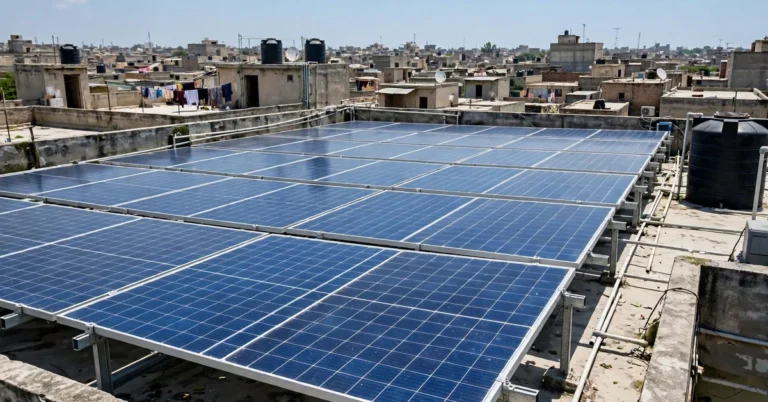
The same logic applies to homes. A rooftop system does not remove the petrol bill for a car, but it does remove a large part of the electricity bill, and it insulates the household from the next electricity tariff or fuel adjustment. Our comparison of the best solar panels in Pakistan in 2026 gives a starting point for that calculation, but the right system size depends on actual daytime use, roof space and budget, and should be sized by a reputable installer rather than by a headline price.
Tips to Limit the Damage
First, keep tyres at the correct pressure and avoid unnecessary idling; both are free and both cut fuel consumption. Second, plan longer trips and combine errands, since cold starts and stop-start city driving use more fuel per kilometre than steady highway driving. Third, for businesses and farms that buy diesel in bulk, the timing of fills matters under daily pricing: today’s rate is the rate until the next working-day revision, so there is no advantage in waiting for a weekend in the hope of a cut that has not been announced. Fourth, check whether you qualify for the Rs 100 per litre petrol relief scheme announced on 13 September for motorcycles, three-wheelers and cars up to 800cc, which is worth far more than any single daily revision for eligible users. Finally, track the OGRA sheet itself rather than social-media forwards: under daily pricing, yesterday’s price is already out of date, and forwarded rate cards are a common source of confusion.
Frequently Asked Questions
What is the petrol price in Pakistan today?
Petrol costs Rs 379.25 per litre, up Rs 1.54 from Rs 377.71, effective 27 October 2026.
What is the diesel price in Pakistan today?
High-speed diesel costs Rs 395.82 per litre, up Rs 2.16 from Rs 393.66, effective 27 October 2026.
Why did both fuels rise this time?
Both refined-product benchmarks rose: refined petrol to US$118.41 a barrel and HSD to US$110.58, according to Business Recorder citing the Petroleum Division. Levies and margins were unchanged, so the higher fuel cost passed straight through to retail prices.
When will prices change next?
Under the daily pricing mechanism, rates are revised on working days and held over weekends and public holidays. The next revision will be the next working-day notification; no future rate has been announced.
Does this revision change jet fuel, kerosene or light diesel prices?
No. This notification covers petrol and diesel. Jet fuel, kerosene and light diesel were revised separately with effect from 25 October 2026.
The bottom line is straightforward: both fuels are up, diesel by more than petrol, and the diesel-petrol gap is now Rs 16.57 a litre. For petrol drivers, most of October’s earlier relief is still intact. For diesel users, it is almost gone, and that is the cost increase most likely to feed through into transport, farming and goods prices in the days ahead.
Source: OGRA — Oil and Gas Regulatory Authority, Pakistan