PM chairs review meeting on the 100 MW Gilgit-Baltistan solar project
Prime Minister Shehbaz Sharif has directed the authorities to ensure complete transparency and the timely completion of the 100 MW solar energy project for Gilgit-Baltistan, describing it as a significant step toward promoting clean and sustainable energy in the region.
The directives were issued during a review meeting on the project chaired by the Prime Minister in Islamabad, where officials presented a detailed briefing on the progress so far and the phases ahead. Addressing the meeting, the Prime Minister said the promotion of environment-friendly, clean, affordable and sustainable energy is a key component of the government’s national energy policy, and described the 100 MW solar project as a gift from the federal government to the people of Gilgit-Baltistan.
The Prime Minister instructed the Power Division to ensure the effective implementation and timely completion of the project. The meeting was attended by Federal Minister for Power Sardar Owais Leghari, Minister of State for Finance and Railways Bilal Azhar Kayani, and other senior government officials.
18 MW rooftop solar on 499 government buildings by December 2026
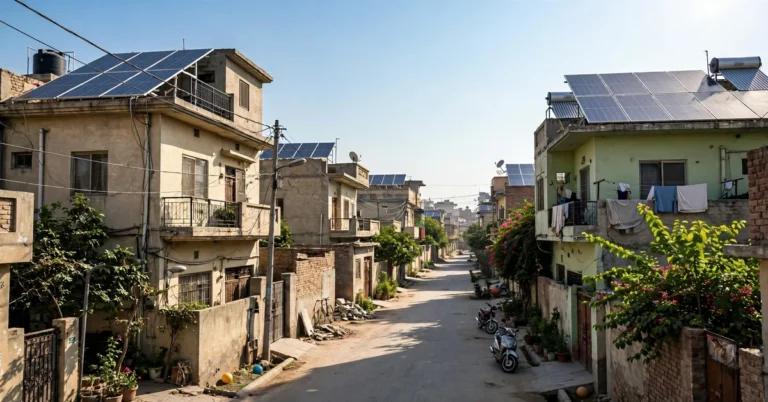
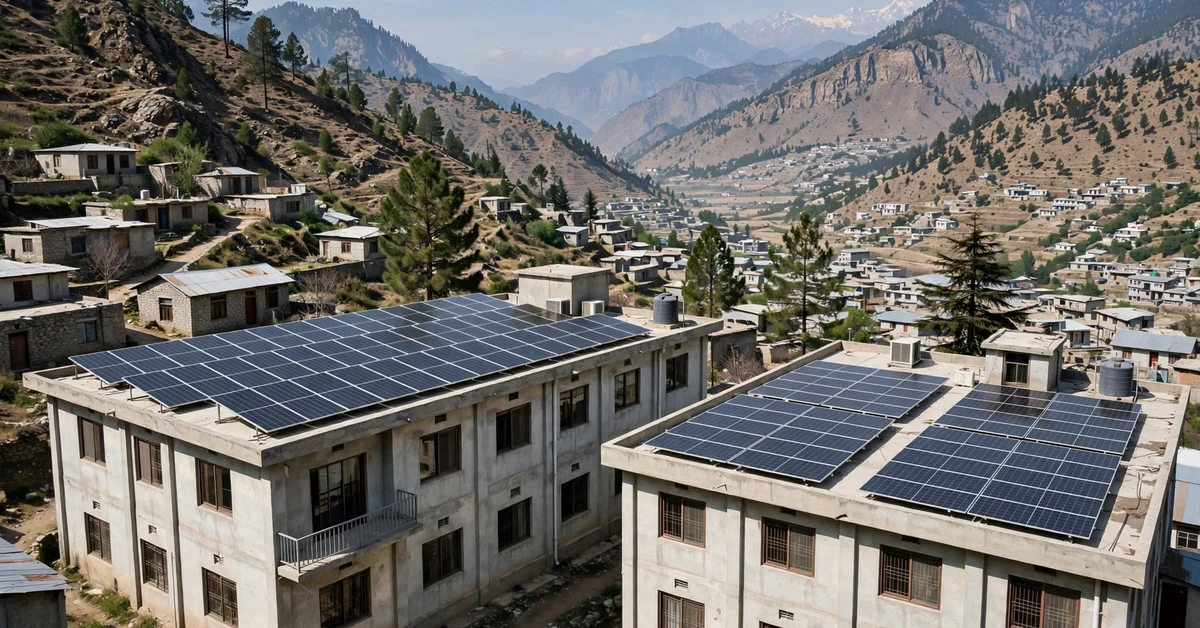
According to the briefing presented to the Prime Minister, the project has two main components. Under the first, 18 MW of rooftop solar systems with battery storage will be installed on 499 government buildings across Gilgit-Baltistan by December 2026.
Putting solar on government buildings first is a deliberate choice. Public buildings in the region — offices, schools and health facilities — face some of the worst load shedding in the country, and daytime solar generation with battery backup can keep essential services running through outages. The approach also creates a visible, working demonstration of solar technology for communities that have had limited exposure to it.
82 MW utility-scale project: PC-1 submitted to ECNEC
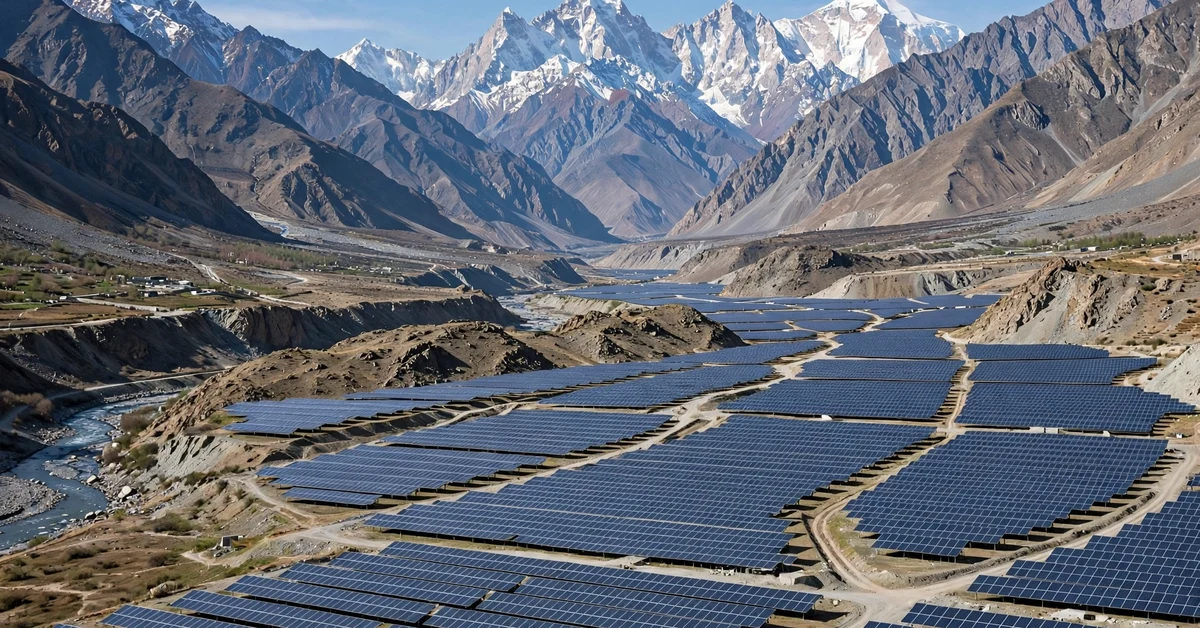
The larger second component is an 82 MW utility-scale solar project. Officials informed the meeting that its PC-1 has been submitted to the Executive Committee of the National Economic Council (ECNEC) for approval — the key planning hurdle before a project of this scale can move to implementation.
Once approved and built, the 82 MW plant is expected to benefit approximately 1.3 million people by improving the quality of electricity supply in Gilgit-Baltistan and helping to reduce load shedding across the region. For a region where winter energy shortfalls are severe and grid supply is limited, utility-scale solar paired with the rooftop programme represents the most significant federal energy investment in the area in years.
Transparency: payments only after third-party verification
One of the strongest directives from the meeting concerned procurement integrity. The Prime Minister emphasised that complete transparency must be maintained throughout the procurement process and directed that all payments be made only after third-party verification.
The instruction matters because large public energy projects in remote regions have historically faced questions over equipment quality and installation standards. Third-party verification of deliveries and installations before payments are released is designed to ensure that the panels, inverters and batteries reaching Gilgit-Baltistan meet specification — protecting both public money and the long-term performance of the systems.
Part of a wider federal solar push in Gilgit-Baltistan
The 100 MW project is not the only federal solar initiative for the region. The government has also moved ahead with a separate PM free solar panel scheme for Gilgit-Baltistan — a 58.8 MW programme distributing 147,873 free panels to households. Taken together, the two programmes combine utility-scale generation, public-building solarisation and household-level distribution into a single regional strategy.
The federal approach mirrors what is happening at the provincial level. In Punjab, the government is running the CM Punjab Free Solar Panel Scheme for low-consumption households, and the agricultural tube-well solarisation programme is converting thousands of diesel and grid-powered tube wells to solar. The common thread is a recognition that distributed solar reaches consumers faster than grid extension, particularly in areas the national grid serves poorly.
Why Gilgit-Baltistan needs this
Gilgit-Baltistan’s energy situation is among the most difficult in Pakistan. The region is not connected to the national grid and depends on a limited local generation and distribution network. Demand already outstrips supply, winter shortfalls are acute, and the gap is widening as the population and tourism grow.
Solar is a natural fit for much of the region: high altitude, clear skies and strong solar irradiance for much of the year. The challenge has always been financing and implementation in difficult terrain — which is precisely what federal backing and structured procurement are meant to solve. The December 2026 deadline for the rooftop component will be the first real test of whether the execution matches the announcements.
For households watching these developments, the broader lesson is that the economics of solar keep improving as equipment costs fall. Our 2026 comparison of the best solar panels in Pakistan shows Tier-1 panels now available at highly competitive per-watt rates, and our guide to net metering and net billing rules explains how grid-connected households can still benefit under the current regulations.
What to watch next
Three milestones will determine whether the project delivers on its promise:
- ECNEC approval of the 82 MW PC-1 — the gateway to the utility-scale phase.
- Completion of the 18 MW rooftop installations on 499 government buildings by December 2026 — the near-term, verifiable deliverable.
- Transparent procurement with third-party-verified payments — the governance test the Prime Minister himself set.
If all three land, Gilgit-Baltistan will have a working model for how federal funding, transparent procurement and solar technology can together close one of Pakistan’s starkest energy gaps.
Frequently asked questions
What is the Gilgit-Baltistan 100 MW solar project?
A federal government initiative comprising 18 MW of rooftop solar with battery storage on 499 government buildings plus an 82 MW utility-scale solar plant, aimed at improving electricity supply and reducing load shedding in Gilgit-Baltistan.
When will the rooftop installations be completed?
Officials briefed the Prime Minister that the 18 MW rooftop component will be completed by December 2026.
What is the status of the 82 MW plant?
Its PC-1 has been submitted to ECNEC for approval.
How many people will benefit?
Officials estimate approximately 1.3 million people will benefit from the 82 MW solar project.
Is this the same as the PM’s free solar panel scheme for Gilgit-Baltistan?
No. The free panel scheme is a separate 58.8 MW household distribution programme. The 100 MW project covers government buildings and utility-scale generation.