A 3KW solar system price in Pakistan currently ranges between PKR 350,000 and PKR 650,000, depending on the panel brand, inverter type, and whether you add battery backup. For a household consuming 300 to 400 units of electricity every month, this system size hits the sweet spot: enough capacity to cut your bill significantly, without paying for power you’ll never use.
Rising electricity tariffs, unpredictable fuel adjustments, and daily load shedding have pushed thousands of Pakistani homeowners toward solar in the last two years. Among all the options available, the 3KW solar system has become the most searched and most installed configuration for small to medium homes. It’s affordable enough for a middle-class family to finance, yet powerful enough to run the appliances that matter most.
This guide breaks down exactly what a 3KW solar system in Pakistan should cost you, what’s included in that price, how much electricity it produces, and whether it’s the right size for your home.
What Is a 3KW Solar System?
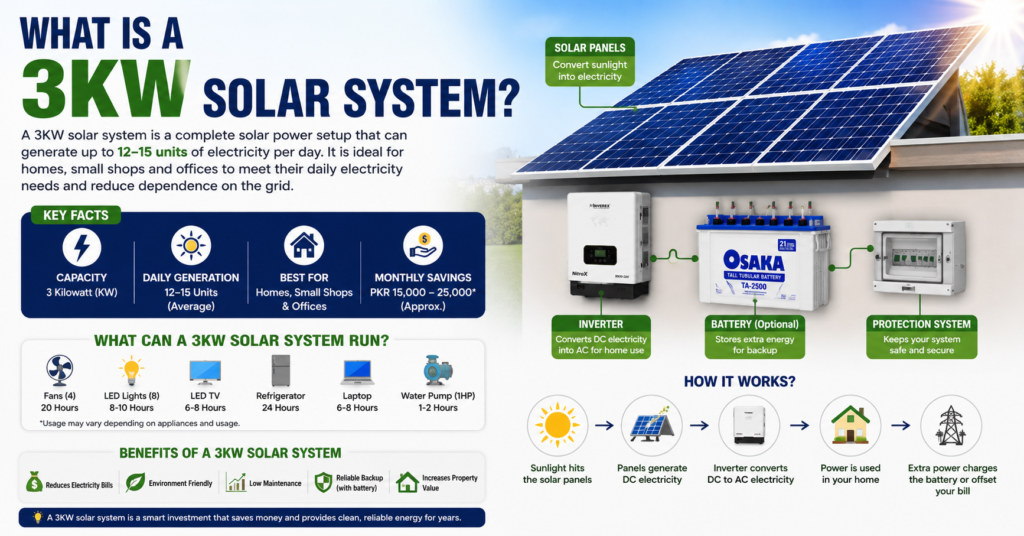
A 3KW solar system is a solar power setup with a total panel capacity of 3,000 watts. In practical terms, it typically produces between 12 and 15 units (kWh) of electricity per day, depending on sunlight hours and the season.
Most 3KW setups use 5 to 6 solar panels rated between 540W and 585W each, paired with a 3KW inverter. This combination is suitable for:
- Small to medium-sized homes
- Single-portion houses
- Homes consuming 300–450 units of electricity monthly
- Small shops or home offices with light equipment
If your household regularly runs multiple air conditioners, a water pump, and heavy motors together, a 3KW system will feel undersized. For that kind of load, a 5KW or larger system is usually recommended instead.
3KW Solar System Price in Pakistan
The average 3KW solar system price in Pakistan falls between PKR 350,000 and PKR 450,000 for a standard on-grid setup with Tier-1 panels and a reliable inverter. Add battery backup, and the hybrid version typically costs PKR 550,000 to PKR 850,000, depending on battery type and capacity.
Here’s a rough breakdown of what you’re paying for:
- Solar panels (6 pieces, Tier-1 brand): PKR 130,000 – 180,000
- On-grid or hybrid inverter (3–3.5kVA): PKR 120,000 – 180,000
- Mounting structure, cables, and protection equipment: PKR 40,000 – 60,000
- Installation and labor charges: PKR 25,000 – 40,000
- Batteries (optional, 2–4 tubular or lithium units): PKR 120,000 – 400,000
Installation charges usually depend on your roof type, distance from the main installer’s base city, and whether structural reinforcement is needed. Most reputable installers include net metering paperwork and basic system commissioning in their quoted price — always confirm this before signing a contract.
Keep in mind that prices shift weekly because of dollar-rupee fluctuations and import duties on inverters and batteries. During peak summer months, demand spikes and prices can rise by 10–15%. It’s worth getting quotes from at least three vendors before committing.
Components of a 3KW Solar System
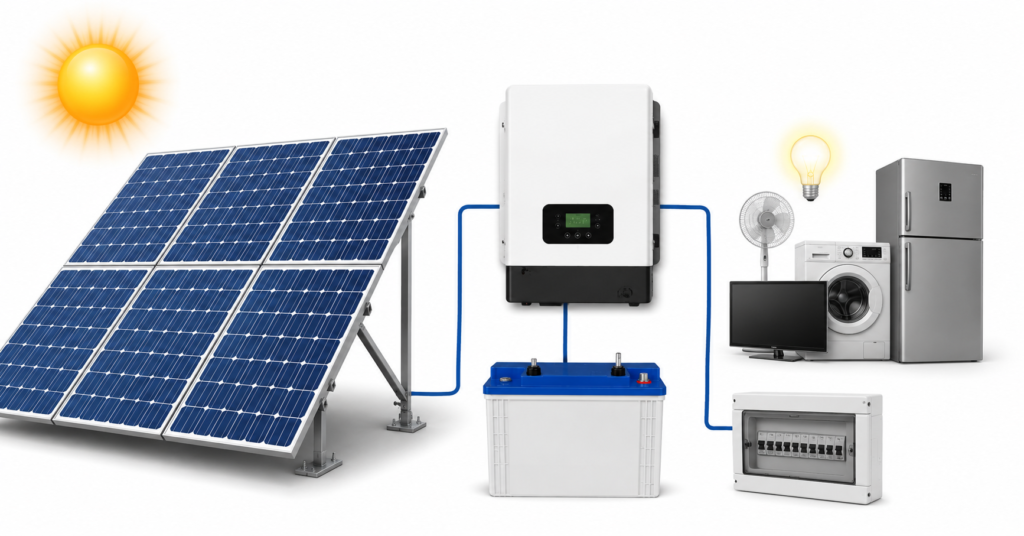
A complete 3KW solar system in Pakistan is built from the following parts:
- Solar panels: Convert sunlight into DC electricity. Most systems use Tier-1 monocrystalline panels rated 540W–585W.
- Solar inverter: Converts DC power from the panels into usable AC electricity for your home. This can be on-grid, off-grid, or hybrid.
- Mounting structure: Usually galvanized iron or aluminum, holds the panels securely on the roof at the correct angle.
- DC and AC cables: Carry electricity between the panels, inverter, and your home’s electrical panel.
- Protection equipment: Circuit breakers, surge protectors, and fuses that guard the system against electrical faults.
- Batteries (optional): Store excess solar energy for use at night or during power outages. Required for hybrid and off-grid systems, not needed for a pure on-grid setup.
Types of 3KW Solar Systems
On-Grid System
An on-grid solar system stays connected to the national grid at all times. It has no batteries, which keeps costs lower. Any extra electricity you generate can be exported to the grid through net metering, reducing your bill further. The downside: during load shedding, an on-grid system shuts down along with the grid, so it offers no backup power.
Off-Grid System
An off-grid system operates completely independent of the grid, relying entirely on batteries for storage. It’s less common for residential use in Pakistan because of the higher battery cost, but it suits areas with no reliable grid connection at all.
Hybrid Solar System
A hybrid solar system combines the best of both worlds — it stays connected to the grid for net metering benefits, while also storing power in batteries for use during outages. This is the most popular configuration in Pakistan today, especially in cities where load shedding still runs several hours a day.
Electricity Production
A 3KW solar system typically generates:
- Daily output: 12–15 units (kWh), depending on sunlight hours
- Monthly output: 350–450 units, under normal weather conditions
- Seasonal performance: Production peaks in summer (May–August) when sunlight hours are longest, and drops by 20–30% in winter and foggy months, particularly in Punjab
This output comfortably covers the electricity needs of a household consuming 300–400 units per month, which describes a large share of homes across Pakistan.
Appliances You Can Run
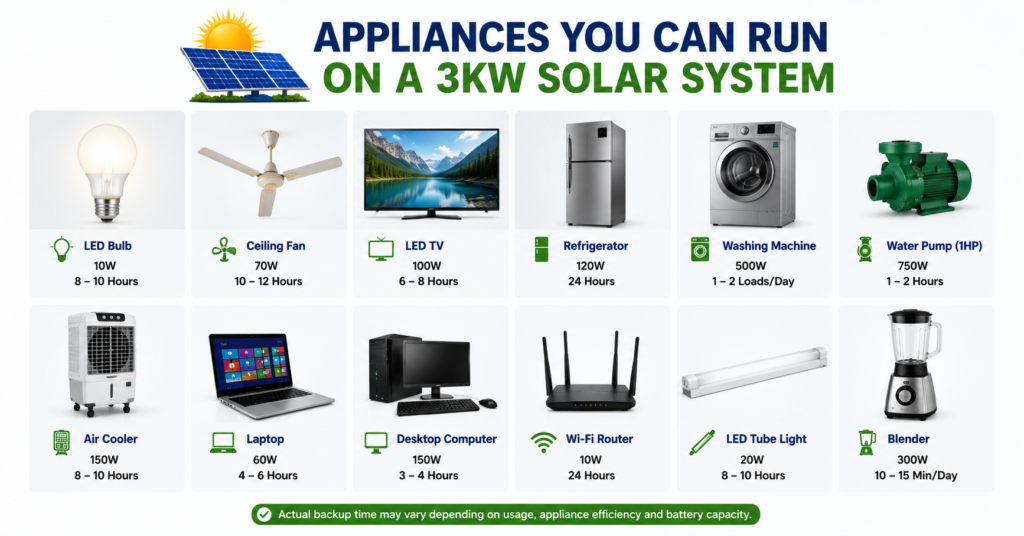
A properly installed 3KW solar system can power:
- 3–4 ceiling fans
- 6–8 LED lights
- A refrigerator
- A washing machine
- An LED TV
- Laptops and mobile charging
- One small inverter air conditioner (used a few hours a day, ideally during peak sunlight)
Running multiple air conditioners, a water pump, and an iron simultaneously will overload a 3KW system. For that usage pattern, a 5KW or 7KW system is a better fit.
Benefits of Installing a 3KW Solar System
- Lower electricity bills: Many households see their WAPDA or DISCO bill drop by 60–100%, depending on consumption and net metering terms.
- Clean energy: Solar power reduces reliance on fossil-fuel-generated grid electricity.
- Long lifespan: Quality solar panels come with 10–25 year warranties and can perform well beyond that.
- Low maintenance: Aside from occasional cleaning, solar systems require very little upkeep.
- Increased property value: Homes with an installed solar system typically command a higher resale value in Pakistan’s property market.
Factors That Affect the Price
Several variables push the 3KW solar system price in Pakistan up or down:
- Solar panel brand: Tier-1 brands like Jinko, Longi, and Canadian Solar cost more than lesser-known imports but offer better efficiency and longer warranties.
- Inverter quality: Premium brands such as Huawei, Sungrow, and Fronius are priced higher than entry-level options like Solis or Growatt.
- Battery type: Lithium batteries cost significantly more upfront than tubular or lead-acid batteries but last 10–15 years compared to 3–5 years, and need far less maintenance.
- Installation location: Transportation costs and local competition mean prices can vary between cities like Karachi, Lahore, and Islamabad.
- Warranty: Longer warranty periods on panels and inverters usually come with a higher price tag, but they protect your investment over the system’s 25-year lifespan.
Maintenance Tips
- Cleaning panels: Dust, smog, and bird droppings reduce output. Clean panels every 2–4 weeks, more often during dry or dusty seasons.
- Monitoring performance: Most modern inverters come with an app or monitoring dashboard — check it regularly to catch any drop in output early.
- Annual inspections: Have a technician check wiring, connections, and mounting structure once a year to catch wear before it becomes a costly repair.
Is a 3KW Solar System Worth Buying?
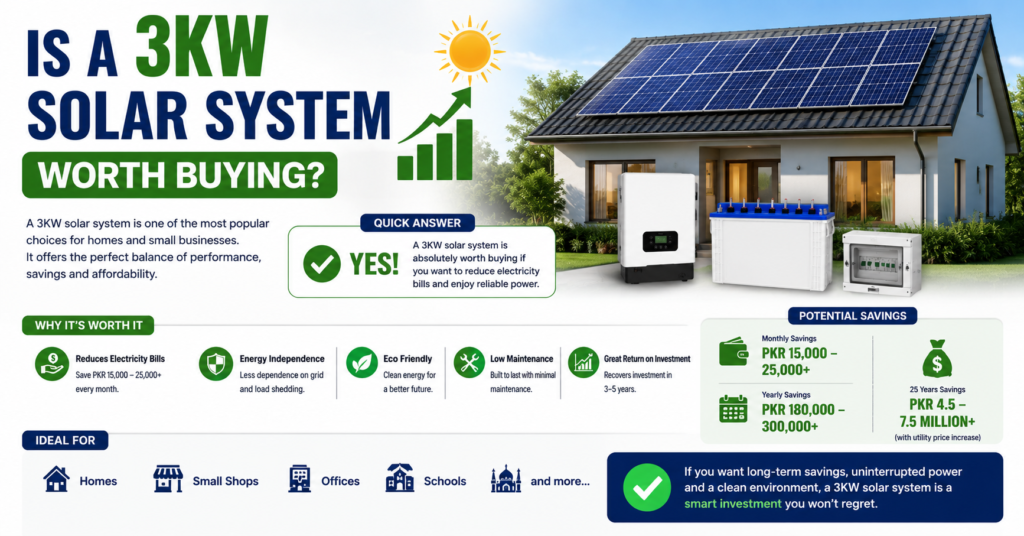
For a household with a 300–400 unit monthly bill, the numbers work strongly in favor of solar. A well-installed on-grid system typically pays for itself within 2.5 to 5 years through bill savings, while a hybrid system with batteries takes slightly longer — usually 5 to 7 years — because of the added upfront battery cost.
After the payback period, the system continues generating free electricity for another 15-20+ years, and since grid tariffs in Pakistan keep rising, the savings only grow larger over time.
Best suited for:
- Homes with 300–450 units of monthly consumption
- Families wanting to eliminate or drastically reduce their electricity bill
- Areas with moderate to heavy load shedding (hybrid option)
- Homeowners planning to stay in the property long-term to capture full ROI
Less suited for:
- Homes running multiple air conditioners or heavy machinery
- Very large households with consumption above 500 units monthly
Final Thoughts
A 3KW solar system price in Pakistan typically lands between PKR 350,000 and PKR 650,000, and for the right household, it’s one of the smartest financial decisions available today. It covers the essentials — fans, lights, a fridge, a washing machine, and even a small AC — while cutting your electricity bill dramatically and protecting you from future tariff hikes. Before buying, get quotes from at least two or three vendors, confirm what’s included in the price, and choose Tier-1 components wherever your budget allows.
Frequently Asked Questions
What is the average 3KW solar system price in Pakistan?
The average price ranges from PKR 350,000 to PKR 450,000 for an on-grid system, and PKR 550,000 to PKR 850,000 for a hybrid system with batteries, depending on component quality.
How many solar panels are required for a 3KW solar system?
Most 3KW systems use 5 to 6 panels rated between 540W and 585W each.
How much electricity does a 3KW solar system generate daily?
It typically generates 12 to 15 units (kWh) per day, depending on sunlight availability and season.
Which inverter is best for a 3KW solar setup?
Popular and reliable choices in Pakistan include Inverex, Growatt, Solis, and Fronius, with hybrid inverters costing more than on-grid versions.
Can a 3KW solar system run an air conditioner?
Yes, it can run one small inverter AC for a few hours a day, ideally during peak sunlight, but it can’t support multiple ACs running together.
Is net metering available for a 3KW solar system in Pakistan?
Yes, net metering is available through your local DISCO (such as LESCO or K-Electric), allowing you to export surplus electricity back to the grid and offset your bill.
What is the difference between on-grid and hybrid solar systems?
An on-grid system has no batteries and shuts down during load shedding, while a hybrid system includes batteries, providing backup power during outages along with net metering benefits.
How long does a 3KW solar system last?
Solar panels typically come with 10 to 25-year warranties and can function well beyond that, while inverters usually need replacement or servicing every 8 to 12 years.
What maintenance does a 3KW solar system require?
Regular panel cleaning every few weeks, periodic monitoring of system output, and an annual professional inspection are usually enough to keep it running efficiently.
Is a 3KW solar system suitable for a small home in Pakistan?
Yes, it’s ideal for small to medium homes consuming 300–400 units monthly, covering essential appliances like fans, lights, a refrigerator, and a washing machine comfortably.